Israeli breakthrough: man addicted to painkillers detoxes in 20 minutes with sound waves
A first-of-its-kind treatment in Israel was recently performed at Rambam Health Care Campus, where specialists helped a man in his 40s detox from an extreme dependence on opioid painkillers, which had reached about 130 pills a day, in a procedure that lasted just 20 minutes.
The treatment was carried out using unique Israeli technology developed by Insightec, as part of an international study underway at a small number of medical centers in the United States, and now also in Israel.
Gallery
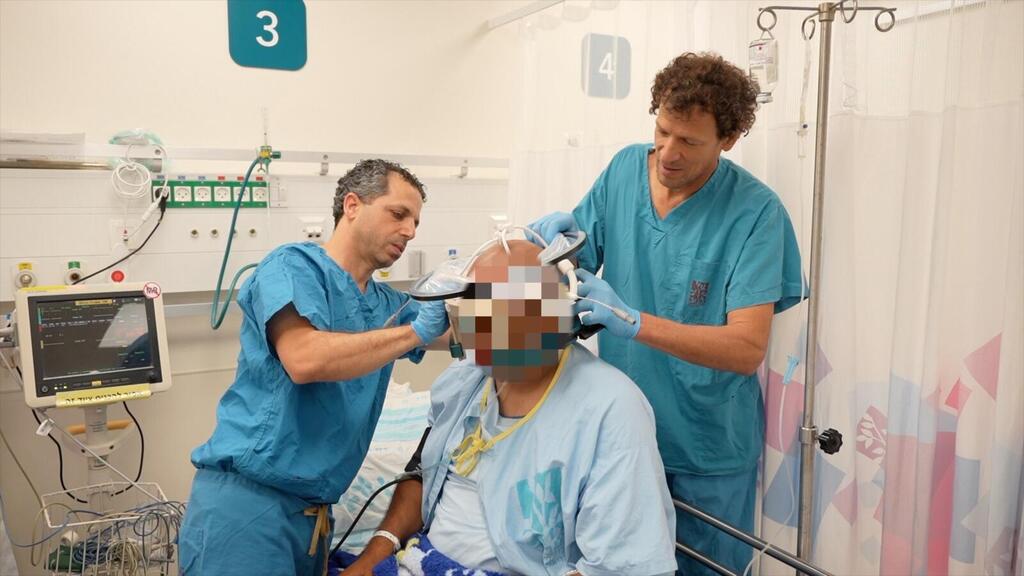
Rambam specialists helped H. overcome opioid addiction using Insightec's sound waves technology
(Photo: Rambam Health Care Campus)
“This is a new therapeutic platform that allows us to offer a range of noninvasive treatments for many problems affecting people around the world,” said Dr. Lior Lev Tov, head of the Functional Neurosurgery Unit in Rambam’s neurosurgery department and the study’s lead investigator. “This is a major scientific breakthrough that could have far-reaching implications and reshape the way we approach treatment.”
MAKE ynetGlobal MY TRUSTED SOURCE
The patient, identified only as H., is a northern Israel resident in his 40s who suffered a neck injury several years ago. Following the injury, he began using painkillers and eventually became addicted to them.
“Over time, the pain subsided, but he could not free himself from dependence on the pills, and the doses kept increasing, reaching a peak of about 130 pills a day,” said Dr. Amir Minerbi, director of Rambam’s Institute for Pain Medicine, where H. was treated in the painkiller withdrawal clinic.
“H. was no longer suffering from pain. He simply needed the substance in his bloodstream to feel calm and function,” Minerbi added.
Opioids are a group of medications that affect the brain’s reward system. they activate brain mechanisms associated with pleasure and reward, which may drive repeated use even after their original pain-relieving purpose is no longer needed.
During the experimental procedure, Rambam specialists intervened in the electrical activity of the nucleus accumbens, a region of the brain that is central to feeling satisfaction, pleasure and reward.
The treatment is based on technology developed by Israeli company Insightec, similar to technology already used today to treat neurological disorders such as essential tremor and Parkinson ’s-related tremor. In those cases, focused sound waves are directed deep into the brain under MRI guidance to ablate areas responsible for tremor.
In this case, however, the team used a new noninvasive technology that performs neuromodulation, meaning it modulates the activity of nerve cells, without heating or damaging brain tissue. Instead, it precisely affects nerve cell activity in the target area, allowing doctors to increase or suppress activity according to the therapeutic need.
This allows doctors to reach deep, sensitive brain regions involved in craving and impulse control without the risks of invasive surgery.
H. underwent the treatment about two weeks ago. “Already during the treatment itself, we identified a drop in the patient’s craving for the drug,” Lev Tov said. Tests conducted a week later came back negative for opioids and other substances. “The patient reported a craving level of zero out of 10 for using the drug, and even an unexpected side effect, a drastic decline in his desire for cigarettes.”
According to Lev Tov, H. went from smoking three packs a day to only a few cigarettes, and reported no urge to drink alcohol. “In a treatment that took about 20 minutes, our patient was able to detox from an extreme dependence that had been part of his daily life for years,” Lev Tov said. “This is nothing less than a medical and therapeutic revolution.”
“From the moment of the treatment until today, he has been clean. The urge and craving to use have disappeared entirely. He told us he got his life back. The tests show that his body is completely clean, and his physical and functional condition is entirely normal.”
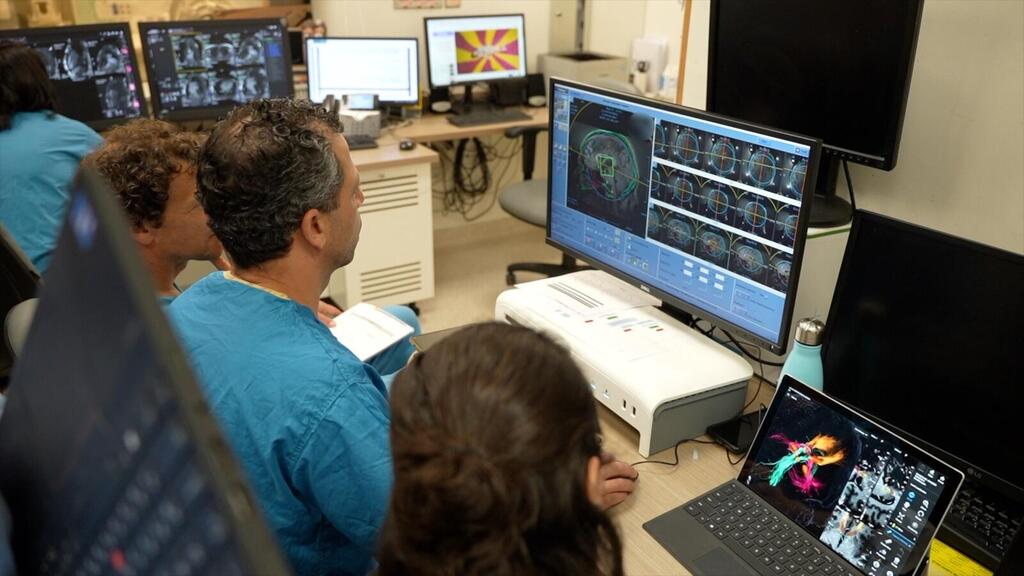
“The urge and craving to use have disappeared entirely"
(Photo: Rambam Health Care Campus)
The study is being conducted at three centers in the United States as part of a multicenter trial that, according to Rambam, has so far produced excellent results in maintaining opioid withdrawal achievements. Some of the patients in the study were addicted to heroin, a drug from which withdrawal can take years, hospital officials said.
H. was also the first patient to undergo the treatment while in active withdrawal, a therapeutic challenge that doctors said contributed significantly to the research.
Opioid addiction has been defined as a global epidemic. In the United States, it has claimed hundreds of thousands of lives, with damage estimated at $60 billion a year. Israel, which several years ago ranked first in the world in the rate of increase in opioid use, is now curbing the trend.
Minerbi stressed that opioid painkillers remain an important medical tool for short-term pain treatment, but that a small and significant proportion of long-term users may develop addiction.
“Among those who take the medication over time, it becomes less effective in treating pain and contributes to worsening side effects, including health damage, an increased risk of early mortality, impaired ability to participate in daily life and a decline in quality of life,” he said.
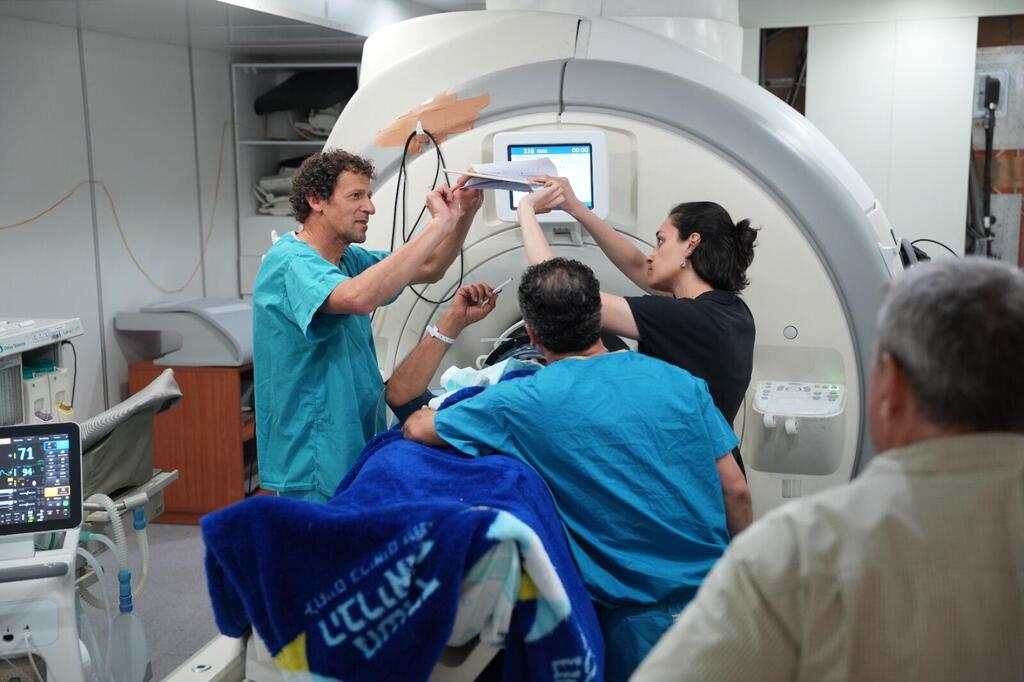
"We hope this new development can help many thousands of people dependent on opioids, in a safer and less traumatic way”
(Photo: Rambam Health Care Campus)
Today, there are two main approaches to treating addiction: gradual dose reduction until use stops, with success rates of only about 5%, and the use of a substitute medication that acts on the same brain mechanism.
Withdrawal includes two components: physical withdrawal, which involves coping with withdrawal symptoms, and psychological withdrawal, meaning the persistent urge to return to use, which can last for a long time.
“We hope this new development will be able to help many thousands of people dependent on opioids, in a safe and less traumatic way,” Minerbi said.
“We are talking about a noninvasive way to reach deep, highly sensitive areas of the brain involved in reward, satisfaction, craving and impulse control,” Lev Tov said. “This experience opens the door to treating a range of serious conditions, including PTSD, OCD, eating disorders, other addictions, severe depression and severe pain disorders.”
He added that he hopes the technology could eventually reach cognitive areas of the brain and help treat attention deficit disorders, Alzheimer’s and Parkinson’s. Lev Tov added that Rambam Health Care Campus has become a global center of excellence in the use of focused ultrasound technology and will continue advancing it for additional indications.