State attorney general says looking at public documents now will cost 17 TIMES as much * WorldNetDaily * by Adam Herbets, The Center Square

(The Center Square) — First, the Colorado Attorney General’s Office refused to accept payment for public records related to their lawsuits. Then, they delayed processing the request until after Attorney General Phil Weiser secured the Democratic nomination for governor. Now, his office wants to charge a total of $5,129.88 for those same records, an increase of $4,840.29 compared to his initial estimate.
Weiser’s lawsuits are politically significant. He frequently touts his ability to fight and win cases against the Trump Administration. His 69+ cases against the federal government have been the centerpiece of his campaign for governor. Public records requested by The Center Square would show how much those lawsuits have cost taxpayers and whether outside law firms have been responsible stewards of public money.
Employees of the Colorado Attorney General’s office have previously acknowledged that its public-facing list of 66 lawsuits against the Trump Administration was “not comprehensive.” The full list was also kept behind a paywall. Three new cases have since been added, bringing the total to 69 lawsuits.
His most-recent announcement of another new lawsuit, challenging a merger between Paramount and Warner Bros., was met with hundreds of comments criticizing his lack of focus on issues important to Colorado residents. The Center Square did not independently verify the identifies of each commenter.
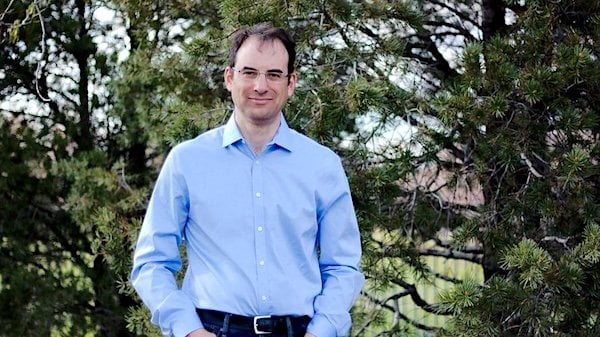 Phil Weiser
Communications Director Lawrence Pacheco has declined to say how many of the 69+ lawsuits are being handled by outside counsel.
“After compiling the responsive records, we determined that each page requires detailed review and redaction to protect privileged information,” Pacheco wrote. “We estimate that your request will take a minimum of 117 more hours of review time… Please let us know how you would like to proceed with your request.”
Pacheco has repeatedly declined to explain how the initial $289.59 cost estimate was calculated. He said the updated estimate of $5,129.88 includes 2,517 invoice record pages and 983 pages related to the appointments and approvals of special prosecutors who do not already work for the Colorado Attorney General’s Office.
Colorado law allows government agencies to charge requestors for certain costs associated with producing public records. Transparency advocates have criticized the state’s system for years.
Jeff Roberts, executive director of the Colorado Freedom of Information Coalition, said high fees have created barriers to public access. He questioned the extent to which documents would need to be redacted for attorney-client privilege. In many cases, the people of Colorado would be considered the “client” of the Colorado Attorney General’s Office. Weiser often refers to himself as “the people’s lawyer.”
“These public records belong to us, so there shouldn’t be so many obstacles,” Roberts said. “My hope is that anybody out there working in government on a public records request would be willing to work with records requestors to help them find the records they’re looking for without having to pay exorbitant fees.”
Roberts said the outcome of a public records request in Colorado often depends on whether an agency likes the requestor, which doesn’t always bode well for journalists or citizens who seek accountability.
‘Cost prohibitive’
The Colorado Freedom of Information Coalition published research in 2020 questioning why the state has “failed to rein in out-of-control and wide-ranging fees charged to records requesters” after 2014 amendments to the Colorado Open Records Act (CORA).
Researcher Justin Twardowski wrote the state’s public records law is “unbalanced, negatively affecting those who work for the public good.”
“It is clear that CORA’s fee provision can be used to make public records so cost prohibitive they effectively are off limits to the public,” Twardowski wrote.
The research also compared Colorado’s public records laws to other states that have more effectively prioritized transparency.
“Ohio operates under the belief that, based on the form of public employment, agencies already compensate records custodians for performing their duty of fulfilling records requests,” Twardowski wrote. “With this reasoning, the agency should not need to recover a cost for research and retrieval because the employee is merely performing duties for which he or she already receives a salary.”
Colorado law previously allowed government agencies to only charge a “nominal” fee for public records. Nominal was defined as “trifling, especially as compared to what would be expected.”
Won’t answer questions
The Colorado Attorney General’s Office declined to answer questions related to the massive increase in fees.
The Center Square has also reached out to Weiser directly. A read receipt showed the email was opened but Weiser has not responded otherwise. Instead, The Center Square received an email response from a subordinate after the email was opened.
“Nothing in CORA requires a custodian to cap costs at the initial estimate when circumstances change,” wrote Senior Assistant Attorney General Kerry Colburn. “CORA does not obligate the Office to create new records by answering questions… CORA allows agencies discretion to reduce or waive fees, but it does not obligate custodians to do so.”
Records obtained by The Center Square show the Colorado Attorney General’s Office has also declined to answer questions from other records requestors.
In one 2024 request, a citizen named Anthony Reed sought public records related to complaints against local law enforcement agencies. When Reed asked questions about the status and scope of his request, the office responded: “This request is now closed. We are unable to provide you with legal advice in response to your inquiries.”
Years later, the Colorado Attorney General’s Office used that same tactic to avoid answering questions from The Center Square about the calculation of its fees: “The agency does not have a record that provides a detailed fee breakdown… The Attorney General’s Office does not have authority to provide legal advice or legal representation to individuals.”
Reed said he believes the Colorado Attorney General’s Office repeatedly uses the phrase “unable to provide legal advice” to avoid being transparent with the public.
“It has definitely been pretty discouraging,” Reed said. “They do treat you like an adversary. It just feels frustrating, like they’re lying to you. Ultimately they understand exactly what you’re requesting. You’re not asking for legal advice. They’re trying to stonewall you.”
Dick Wadhams, former chair of the Colorado Republican Party, said he was disappointed in the Colorado Attorney General’s Office strategy to effectively deny access to public records.
“I’m amazed that they’re trying to conceal public documents like this… If Weiser is going to brag about all these lawsuits, he damn well ought to share all the information with the public,” Wadhams said. “Why wouldn’t he want to be totally forthcoming?”
Jon Caldara, president and CEO of the Independence Institute in Denver, said he has been especially suspicious of Weiser since April, when a representative from the Colorado Attorney General’s Office voted against a bipartisan ballot initiative that called for greater government transparency, effectively killing the citizenry’s ability to vote on transparency initiatives.
“What’s it costing me for you to sue Trump all the time?” Caldara asked. “Maybe they are spectacular lawsuits. Maybe they’re worth every penny. Maybe when people find out how much of our money is being spent, they will hail him… but we have a right to know.”
This story originally appeared in The Center Square.