British Monarch Redefines Role to Protect 'Multi-Faith Nation'
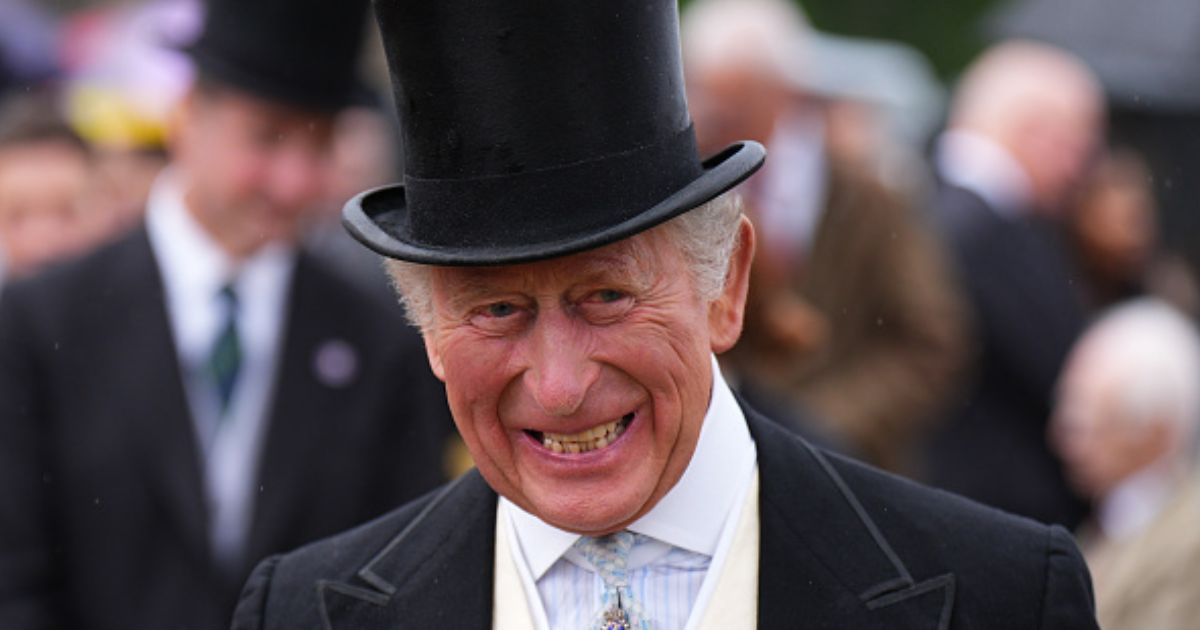
When Buckingham Palace says “multi-faith nation,” King Charles III appears to have a broad range of religions in view. British news testifies that he “maintains active relationships with Jewish, Muslim, Sikh, Orthodox Christian and other faith communities across Britain and internationally.”
“I have always thought of Britain as a ‘community of communities,’” Charles said in 2022. “It is the duty [of the Sovereign] to protect the diversity of our country, including by protecting the space for Faith itself and its practice through the religions, cultures, traditions, and beliefs to which our hearts and minds direct us as individuals.”
This declaration borrows ideas from principles of religious liberty, such as the notion that no government action can coerce the beliefs a person holds in his heart or mind. At the same time, the phrase, “Faith itself,” participates in the absurd fiction that faith is a substance with significance in its own right, instead of a posture defined by its object. Not all faith is equal because not all faiths are equal.
The most significant surrender is King Charles’s commitment to protect different “religions, cultures, traditions, and beliefs” through which faith is expressed. This reflects a commitment to no longer defend British culture against other cultures currently warring against it in England.
Indeed, the timing of the British monarchy’s redefinition of its own responsibilities is at least unfortunately (some would say “suspiciously” timed). British society has recently been rocked by several shocking incidents exposing the live cultural fault lines in the country. In one incident, a young Brit was stabbed by a Sikh wielding a ceremonial knife, a weapon that is allowed through a religious exemption from the nation’s general ban on citizens carrying knives. The police then handcuffed the victim and ignored his protestations until he bled out — all because his assailant accused him of shouting ethnic slurs.
Also recently, a parliamentary inquiry uncovered “the organized, systematic mass rape of white British girls, mostly underage, by Muslim gangs,” as TWS reported, with at least 250,000 victims.
For King Charles to signal that his role is now to defend Islam, Sikhism, and other foreign religions — not only as religions but also as cultures — is to throw the weight of the crown against British nationalists, who would see the crown as one institution they want to defend. It also gives tacit approval to the social travesties deteriorating the island’s social fabric.
Timing aside, however, there is a silver lining to King Charles’s change in the definition of his role. That is, recognizing the U.K. as a “multi-faith nation” avoids a hypocrisy in which the crown has participated for some time. Since at least the Reformation, England has defined itself as a Christian nation. This was questionable at first and has only become less true with time.
According to theologians like Thomas Hooker, England’s version of a “Christian nation” was one in which every individual was considered to be a Christian. But Christianity comes through individual regeneration by the Holy Spirit, not through national identity. In each new generation, people must be converted to faith in Jesus; they are not born that way. Thus, it was never true that England was a nation comprised entirely of believers.
When the United Kingdom became a global empire, its claim to be universally Christian became even less true. At one time, the British ruled large numbers of Hindus in India, Muslims in Egypt and North Africa, Native Americans in Canada, and adherents of traditional eastern religions in Hong Kong. While the homeland remained largely “Christian,” at least in the cultural sense, cultural interchange with these pagan lands gradually lessened this identity, and more individuals from these cultures relocated to England, the first seeds of its current social diversity.
More recently, the U.K. has become far less recognizably Christian. According to the National Centre for Social Research last month, “only 5% of all British adults now attend a Christian service weekly.” Weekly gathering has defined the body of Christ since the first century A.D. Doctrinally, the official church of England also continues to stray further from biblical orthodoxy, particularly with regard to the LGBT agenda.
In other words, the crown of England stopped acting as a “Defender” of the Christian faith a long time ago. Now, King Charles III seems to have officially dropped the title in favor of multicultural pluralism. While this change may boost the growing influence of non-Christian cultures in the U.K., at least the title change is honest about the state of Christianity in the U.K. The British government long ago ceased to defend (or even represent) Christianity.