Maduro says Venezuela is ready to discuss an agreement to 'combat drug trafficking'
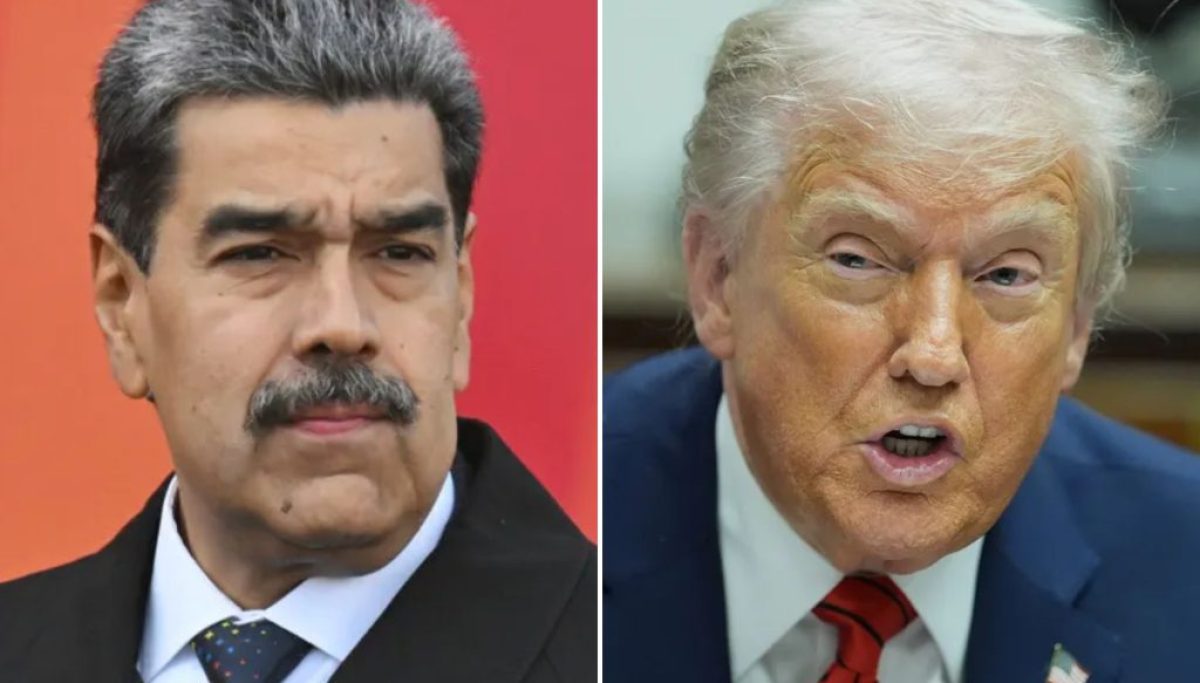
Venezuelan President Nicolas Maduro announced that his regime was open to negotiations with President Donald Trump to come to a deal regarding drug trafficking.
Maduro’s admission comes after U.S. military strikes on suspected drug-trafficking vessels in the Caribbean Sea and Eastern Pacific Ocean as part of Operation Southern Spear. Maduro announced he was ready to come to an agreement with the United States in an interview on Thursday on Venezuelan state television with journalist Ignacio Ramonet, according to Fox News.
Maduro recorded the interview in an unusual format, answering questions during a car ride on New Year’s Eve with three other passengers, including Ramonet. In the backseat, a red baseball cap, similar in style to the famous “Make America Great Again” caps worn by President Donald Trump, was conspicuously visible on the seat between two passengers. It featured text in white capital letters which read, “NO WAR, YES PEACE.”
He spoke on a variety of topics with Ramonet, ranging from his rise to power and Venezuela’s controversial 2024 presidential election to other political experiences. He then shifted the conversation to the rising tensions between Venezuela and the U.S. He criticized the Trump administration’s interest in the “Monroe Doctrine,” suggesting it is an outdated model and “not viable in the 21st century, totally not viable,” according to a translated transcript of the interview.
Maduro also criticized Maria Machado, Venezuela’s opposition leader and political opponent of Maduro’s regime. Machado was the recipient of the 2025 Nobel Peace Prize.
Speaking of the U.S., Maduro said people need to know that “95% rejects what is being done by the current government of the U.S., of militarily threatened Venezuela,” said Maduro. “It is the immune reaction of the entire Venezuelan society. They need to know that this person that they have put as the chief of the right is very isolated and repudiated in Venezuela today. We could say the U.S. has no political force aligned in Venezuela because this lady named Maria Machado, in Venezuela, called ‘La Sayona’, has the 85% of rejection, of repudiation, total of the Venezuela society, never nor her, nor what she represents would have the capacity to rule this country.”
Later in the interview, Maduro said his country is ready to hold serious conversations with the Trump administration with “data in hand,” mentioning possible discussions involving drug trafficking and oil investments.
“The U.S. government knows, because we’ve told many of their spokespeople, that if they want to seriously discuss an agreement to combat drug trafficking, we’re ready,” said Maduro. “If they want oil, Venezuela is ready for U.S. investment, like with Chevron, whenever they want it, wherever they want it, and however they want it.”
Maduro’s interview came after the latest strike by the U.S. military on suspected drug-trafficking vessels on Dec. 30 and Dec. 31. Southern Command posted on X about each strike and claimed eight people total were killed in the operation.
On Dec. 31, at the direction of @SecWar Pete Hegseth, Joint Task Force Southern Spear conducted a lethal kinetic strike on two vessels operated by Designated Terrorist Organizations. Intelligence confirmed the vessels were transiting along known narco-trafficking routes and… pic.twitter.com/4AE5u4cEff
— U.S. Southern Command (@Southcom) January 1, 2026
ALLEGED DRUG TRAFFICKERS JUMP OVERBOARD AFTER STRIKE ON BOAT CONVOY, US SAYS
“On Dec. 31, at the direction of @SecWar Pete Hegseth, Joint Task Force Southern Spear conducted a lethal kinetic strike on two vessels operated by Designated Terrorist Organizations,” read the post. “Intelligence confirmed the vessels were transiting along known narco-trafficking routes and engaged in narco-trafficking. A total of five narco-terrorists were killed during these actions – three in the first vessel and two in the second.”
Maduro brushed aside questions about the latest U.S. strike in the interview, saying that he would “talk about it in a few days.”