America’s authoritarians operate with impunity. It’s time to take action | Jan-Werner Müller
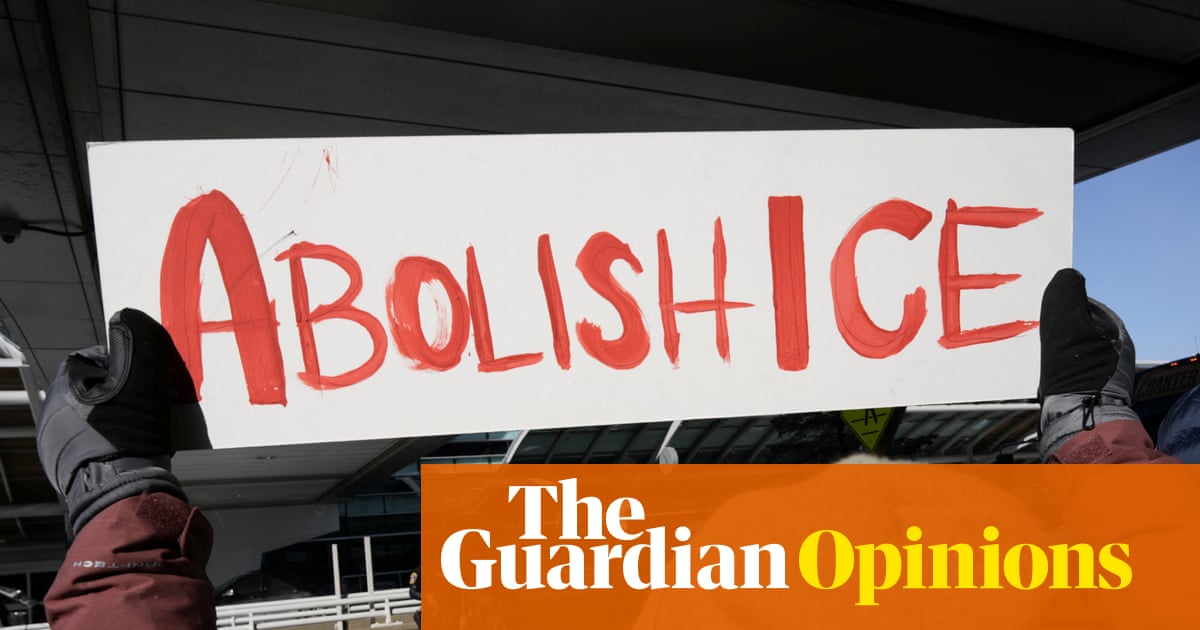
Recently Greg Bovino, infamous former Border Patrol commander, served as a star attraction at a “remigration summit” in Portugal; there he took selfies with Austrian activist Martin Sellner, one of Europe’s most notorious rightwing extremists, and told him: “We’ve never talked before – face to face, that is – until yesterday, and we were on the same sheet of music almost immediately.”
Meanwhile, Tina Peters, the disgraced former elections clerk whose sentence was commuted by Colorado governor Jared Polis, pontificates on Steve Bannon’s show about how Democrats will cheat in the midterms. It is rare that those out of government service show contrition, but it is also rare that they immediately monetize past cruelty and present-day conspiracy theories. Presumably it is only a matter of time before the men who killed Renee Good and Alex Pretti get to cash in with podcasts for Maga world.
All of this can happen only against the background of the second Trump administration promising impunity from day one – when the president pardoned even the most violent January 6 insurrectionists. If Democrats fail to ensure accountability, it is time that citizens seeking justice start peacefully taking matters into their own hands.
Authoritarianism is hardly a novel experience for Americans; the south was long subject to it, and the failures of Reconstruction – an abruptly halted transition to democracy – still hold important lessons. But we have rather little sense today of just how to deal with perpetrators of human rights violations in our midst; that is one reason why we should learn from countries that transitioned to democracy more recently. In Argentina, generous amnesty provisions – forced by the military threatening a coup d’etat – meant that plenty of those who had committed atrocities during the dictatorship went on to lead peaceful and prosperous lives. Eventually, citizens could stand the scandalous impunity no longer: they organized escraches, slang for scratching off something to reveal an identity. Specifically, people organized marches and even theatre performances around the houses or apartments of perpetrators. There was zero violence, but there was graffiti, red paint signifying blood thrown at walls, as well as plenty of music or sometimes just outright noise to draw attention to someone enjoying a life of impunity in the midst of unsuspecting neighbors. Particular outrage was reserved for people who had adopted – in fact kidnapped – the children of imprisoned mothers.
Such performances have precedents going back as far as medieval times; back then, villagers organized mock parades and “serenades” – what came to be called “rough music”, usually banging pots and pans – to protest outside the houses of officials accused of misdeeds (but also ordinary neighbors suspected of transgressions).
Known as charivari, these protests were precisely not revolutionary, but in their own way conservative: they sought to remind the powerful – but also simple adulterers – of the moral commitments of a particular community and, ideally, sought to reintegrate them into the community. Popular justice took the shape of a kind of carnival, uncomfortable for those being subject to the proceedings, but also supremely enjoyable for those eager to enforce shared moral ideals.
The obvious worry is that popular justice becomes uncontrolled and deteriorates into public shaming for the sake of accountability such that its own practitioners remain unaccountable. Vigilantism is hardly progressive in and of itself, and the promise not just of the rule of law, but also modern parties that seek to hold political adversaries in check is that everyone can, at least in principle, rely on fair treatment. There is also the danger of tit-for-tat; and, eventually, there looms the specter of civil war: if Greg Bovino can become subject to escraches, so can – well, pick your favorite defender of civil and other rights during Trump 2.0. And, as everyone knows, one side is also likely to have more guns.
What’s more, any attempts at ensuring accountability from below could serve as a pretext for Trumpists to double down on repression. The infamous executive order designating “antifa” as a domestic terrorist threat was accompanied by the no less ominous National Security Presidential Memorandum 7, which specifically targeted “doxing”. Rightwingers are also pushing state-level legislation against “civil terrorism” – shorthand for leftist protest and perfectly civil, non-violent forms of civil disobedience. These all-purpose tools to suppress dissent can easily be framed as protecting heroic law enforcement from crazed leftists.
The fact that one worries about such measures proves in and of itself that government intimidation works. Still, the fact that protesters have been winning in courts – most recently those who came to be designated as the “Broadview Six”, activists wrongly accused of conspiring to impede a officer – might lessen the fear somewhat. More importantly still, it has become clear that repression of protesters has less to do with what they actually do than with the whims of mid-level officials and, of course, ultimately the president himself. An administration that just makes up stuff about dissent does not really need pretexts.
In principle, something like escraches – in Argentina usually announced and with police between protesters and perpetrators from the very beginning – should be protected by both the principles of free speech and free assembly enshrined in the first amendment; after all, they inform the public about a matter of common concern, rather than threaten an individual as such or simply cause what the law knows as severe emotional distress. Of course, one could also say that there’s nothing to scratch and reveal: figures like Bovino and Peters revel in their fame in the far-right universe. But that might change, and, even for now, public shaming – peaceful but unquiet – is an appropriate response to shameless perpetrators.