Inside America’s Growing ‘Fix It’ Culture
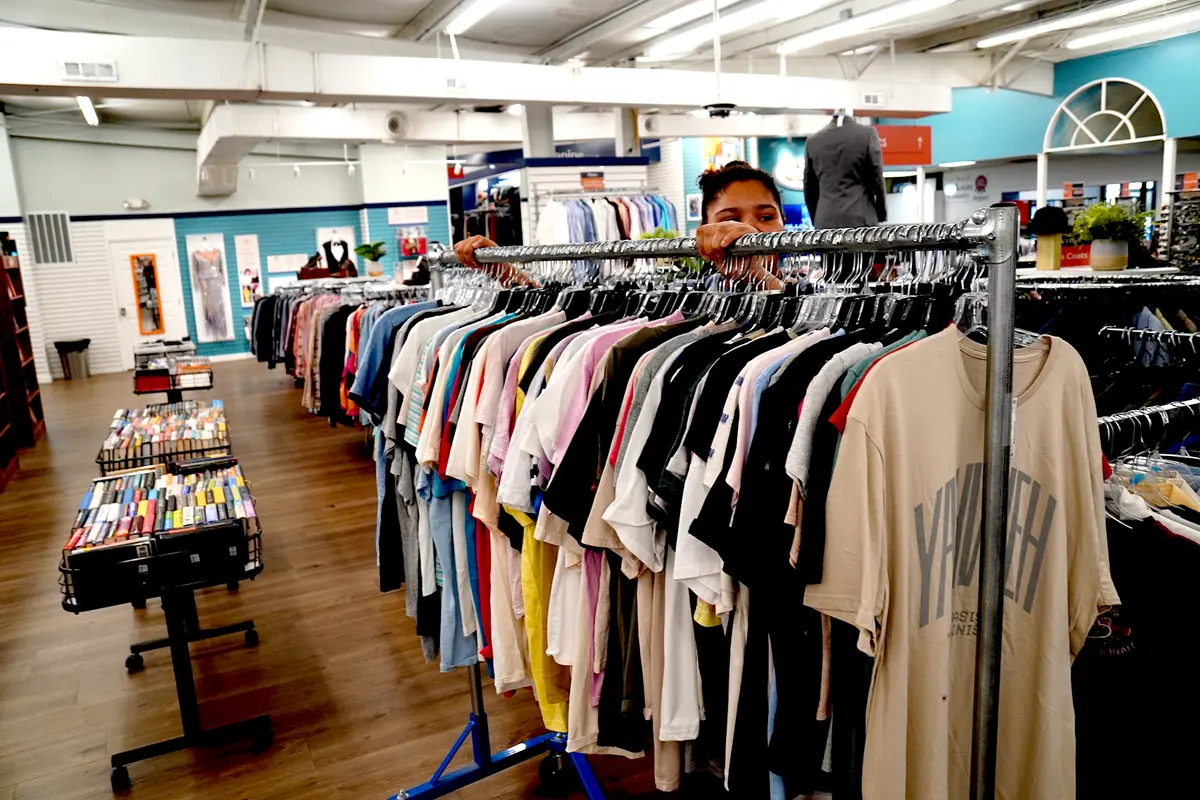 An employee moves a rack of recently arrived clothing at Unclaimed Baggage in Scottsboro, Ala., on Oct. 8, 2025. Allan Stein/The Epoch Times
When Misty Kaiser finds a hole in a shirt, she reaches for a needle and thread instead of her wallet.
The Minneapolis-area resident repairs clothing, fixes household items when possible, and watches online tutorials to learn how to repair everything from small appliances to sports equipment.
She said volunteer-led repair clinics, where locals can go and learn how to fix everyday items for free, are becoming more popular than ever where she lives.
“They’re absolutely needed, things are way too expensive to just go out and buy a whole new thing,” Kaiser told The Epoch Times.
Kaiser lives in the greater Twin Cities area of Minnesota and said retail prices are the main reason she chooses to make stuff around the house last as long as possible.
“If there’s a hole in a shirt, I sew it. I don’t buy a new one. We only just replaced our 1980s washer that you can’t find replacement parts for anymore,” she said.
Related Stories
In the suburb where she lives, repair cafes have become a regular fixture over the past couple of years.
“Around here, there are classes you can take like ‘learn to fix your toaster.' Ramsey County hosts a lot of fix-it clinics. It teaches you how to fix stuff for free—small electronics, household appliances, clothes,” Kaiser said.
After years of cheap goods and one-click replacement shopping, an increasing number of Americans are choosing to repair or purchase second-hand items rather than buy new.
The driving factors range from higher in-store prices to artistic expression and greater self-sufficiency. Online repair tutorials, community fix-it events, and new right-to-repair laws are helping pave the way for a return to pride in ownership.
Cost Savings and Second-Hand DemandRetail prices aside, Kaiser said repairing or “upcycling” either found or second-hand items is a lifestyle trend where she lives.
“My brother-in-law refurbishes furniture he finds on the side of the road,” she said, adding that he does it for “the creative challenge,” as much as avoiding the marked-up thrift store prices.
Kaiser doesn’t like to buy new, but feels that second-hand stores are starting to get “greedy.”
“It’s kind of sad thrift store prices aren’t really thrift store prices anymore because of the fix-it and upcycle trend,” she said.
Kaiser’s seen a significant price uptick for second-hand items on Facebook Marketplace and at Goodwill.
“You used to walk into Goodwill and find a dresser for like $50 bucks. Now that same dresser is $200.”
She believes the price isn’t fair for more modern items because the materials are mass-produced and often don’t last as long as things made 30 or 40 years ago.
Online forums and social media are filled with complaints about increasing second-hand store prices. Industry insights point to soaring demand, online resale or “thrift flipping” businesses, and rising costs as key culprits.
Retail prices have increased 4.2 percent before seasonal adjustment over the past 12 months, according to the Consumer Price Index Summary.
Between 2022 and 2025, the amount of foot traffic at thrift stores climbed more than 20 percent, according to a Placer.ai trend analysis. The second-hand apparel market grew nearly four times faster than the retail clothing market in 2025 and is expected to be worth more than $78 billion by 2030.
Many second-hand movement supporters say they prefer buying old rather than new items like clothing to reduce their carbon footprint. It also provides an opportunity to express themselves.
Creativity and Preserving CraftsmanshipKaiser’s daughter enjoys upcycling worn-out items that can find a new life within the household. One of her 10-year-old daughter’s plush toys was getting worn out, and she quickly adapted it into a festive costume for the family cat.
“We do this with the bikes, too. My son is learning to make repairs to his bicycle, and we harvest parts from old bikes when we can,” she said.
John Raisor, the growth director at Occam’s Raisor, shares this sentiment.
“Sewing and buying secondhand clothes and customizing them isn’t really about saving money. It’s about creative expression. You cut a pair of worn-out jeans into 1985-length jorts, use interesting fabric to patch the pocket holes, and you get a lot more attention and compliments than if you'd bought a pair of shorts,” Raisor told The Epoch Times.
“When you grow up rural poor, you value repairing things over buying new. Especially the big things,” he said.
When it comes to Raisor’s vehicles, he said: “I’ve driven brand new [cars], and the peace of mind of new is nice. However, I drive a thirty-year-old Toyota that I’ve had for many years, and it also gives me peace of mind. It’s never left me stranded because I take great care of it. It’s a tradeoff.”
For Raisor, it comes down to a simple question: Would he rather spend time and energy on vehicle maintenance, or spend a lot more money and buy new?
“If you know how to choose an old car wisely, you can save a fortune. Compared to purchasing a similar car new, I’ve saved tens of thousands,” he said.
On average, Americans save $1,452 per year by shopping for items second hand, according to a March Capital One Shopping analysis.
But the notion of getting more mileage out of your belongings goes beyond everyday essentials. Businesses that sell luxury items are also seeing a surge in demand for repairs.
“We have observed increased interest in restoring and preserving jewelry rather than replacing it. This is especially true for signed designer pieces, vintage engagement rings, luxury watches, and family heirlooms,” a spokesperson for DSF Antique Jewelry told The Epoch Times.
The spokesperson said sustainability, a deep appreciation for artistry, and the desire to own unique jewelry and other accessories are core catalysts.
“Many younger buyers value the idea of preserving and restoring existing objects rather than purchasing newly manufactured replacements,” they said.
“Repairing jewelry is no longer viewed simply as a way to save money. Increasingly, consumers see restoration as a way to preserve craftsmanship, history, and personal stories. A well-made piece of jewelry can often be enjoyed for generations, making repair a meaningful alternative to replacement.”
Autonomy Through SkillsLast year, a Talker Research survey of 2,000 U.S. adults revealed that eight out of 10 participants took better care of their property and did more of their own repairs around the house to help them feel more in control of their finances.
Within that group, 40 percent said they’ve fixed clothes or textiles, 38 percent repaired home decor or furniture, and 37 percent attempted home plumbing projects.
The results signaled what Tim Jones of Lemi Shine—the company Talker Research conducted the analysis for—called a “return to resourcefulness.”
Jones thinks the data indicates more than just a desire to save money, but also “reclaiming a sense of agency” for American consumers.
“For me, the decision to repair comes down to self-reliance plus the savings,” John Beaver, the founder of Desky, which builds ergonomic furniture for workstations, told The Epoch Times. “It’s really satisfying to diagnose a problem, source a part, and fix it without having to call anyone. I also look at the environmental consequences, and I want to keep something out of a landfill for as long as I can.”
He said the things he repairs most often in his life are small electronics and furniture.
A few years ago, Beaver said he “replaced things without much thought,” but takes a different approach these days.
“More often, many of these items just needed a few repairs. Last year, I fixed a coffee maker I was about to throw away. The problem was a $12 valve, and buying a new machine would have cost me $180,” he said.
The first time he fixed an appliance at home, Beaver said he spent 15 minutes on YouTube watching someone walk through the steps.
“Without that video, I would have called a technician or bought a replacement instead.”
An April IBIS World analysis found that U.S. consumers are shifting away from purchasing new appliances in favor of making repairs to existing units.
Kaiser has also turned to YouTube in recent weeks for tutorials on fixing things around the house.
She learned how to repair part of her kitchen faucet and troubleshoot why the fridge was leaking water onto the floor.
“It feels good when you can get some of this simple stuff done yourself. You need to have basic skills because calling a professional repair person isn’t always cheap.”
The notion of becoming more self-reliant and learning skills like sewing and basic repairs has grown alongside major communities like the preppers and homesteaders, both of which emphasize the importance of self-sufficiency.
At the legislative level, the concept of “right-to-repair” gained momentum after the landmark 2012 statute was passed in Massachusetts, which protects a car owner’s right to service their vehicle and requires automakers to share information and provide access to necessary parts for repairs.
As of this year, 57 bills have been introduced or carried over in 22 states, according to the Public Interest Research Group.
Some of these laws extend beyond cars and include items like personal electronics and farm equipment.
Kaiser, however, draws the line at taking on plumbing and electrical work. That’s when she picks up the phone and calls an expert.
“If you get it wrong, there’s a much bigger risk there, and much worse damage can happen.”
We had a problem loading this article. Please enable javascript or use a different browser. If the issue persists, please visit our help center.