As Drones Redefine War, a New Industry Races to Stop Them
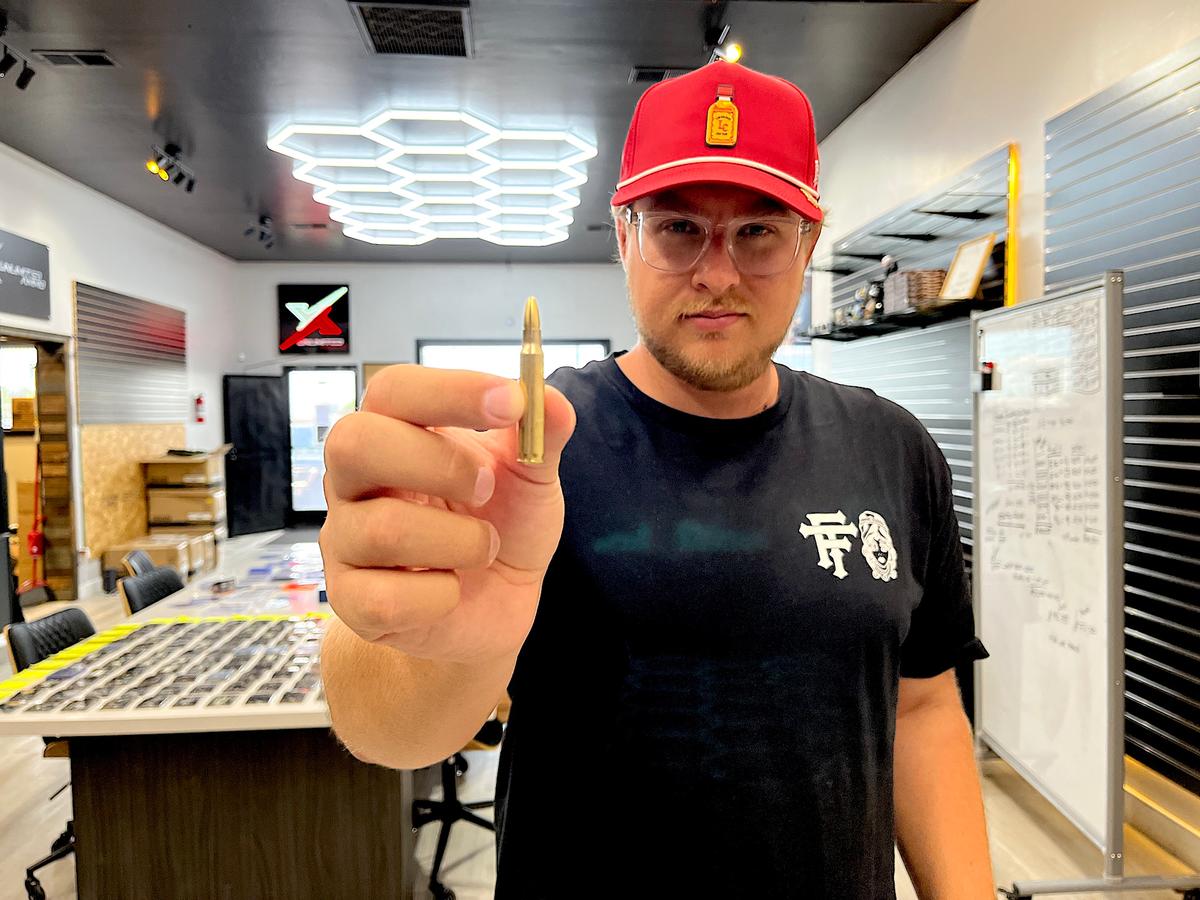 Drone Round co-founder Justin Lawrence displays a rifle round designed to neutralze military drones at a distance on June 25, 2026. Allan Stein/The Epoch Times
QUEEN CREEK, Ariz.—As drones reshape modern warfare, private companies and government agencies are racing to build systems that can detect, disrupt and destroy them.
U.S. defense contractors and munitions manufacturers are producing—or preparing to produce—new counter-drone systems to meet rising demand.
Among them is Arizona-based Drone Round, which this year began ramping up production with an Idaho munitions manufacturer on a multi-projectile rifle round designed to bring down battlefield drones.
Founded in 2025, the company works with affiliates across the United States.
“In a way, we’re a startup, but we’re very established in terms of our businesses, our holding company, and the other businesses that are associated,” said co-founder Justin Lawrence.
The company has begun mass-producing millions of counter-drone rounds in 5.56x45mm and 7.62x51mm calibers for existing military rifles, promising faster procurement than conventional defense programs.
Related Stories
 Growth Industry
Each brass cartridge contains multiple projectiles capable of intercepting and destroying battlefield drones at ranges of 50 to 100 yards or more.
The company produces two versions—one with five projectiles, the other with eight.
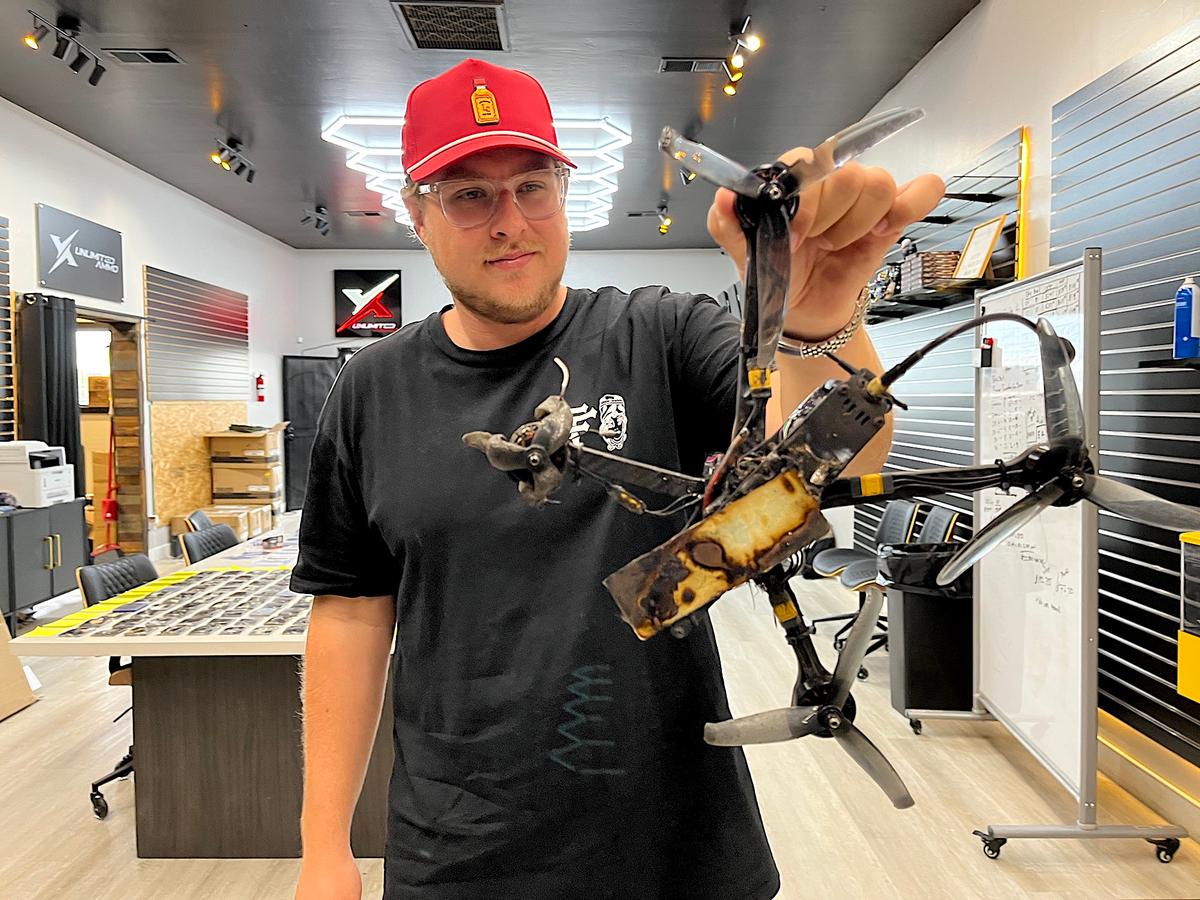 Justin Lawrence, co-founder of Drone Round in Queen Creek, Ariz., displays a small drone that was intercepted and destroyed by a multi-projectile bullet on June 25, 2026. Allan Stein/The Epoch Times
Lawrence said the rounds are designed for small aerial defense and rapid aerial engagement.
The 5.56x45mm variant, he said, delivers twice the velocity of a standard 12-gauge shotgun blast with the pattern density needed to take down unmanned aerial threats.
“What we did was we developed the round to work and function perfectly in the weapon system that’s already deployed,” Lawrence, 30, said. “So you don’t have to carry it or procure a different weapon system.”
“The learning curve is minimal by design.”
The company has been moving crazy fast—at lightning pace”with production, he said.
“We manufacture all the loading equipment in-house. We manufacture the brass [and] projectiles. We’re 100-percent vertically integrated.”
He said the unmanned aerial systems (UAS) field has been advancing “insanely” fast, driving demand for counter-drone solutions.
“It’s fighting the drone. And because there’s so much hype around it, we’ve been working on this for a period of time,” Lawrence told The Epoch Times.
“We just put the pedal to the metal over the last year. In military procurement, no matter if it’s the United States or a NATO ally, the procurement time is very long.”
 Target drones of exhibitor Swarm Defense Technologies are pictured during the Project Flytrap 4.5 exercise of counter-drone technologies at the Putlos military training center in Germany, on Nov. 21, 2025. Morris MacMatzen/Getty Images
By scaling production, Drone Round said it can manufacture supplies in months rather than years, with capacity reaching 350 million rounds annually.
“A normal defense company does their thing. They have their product. They do all these trade shows,” Lawrence said.
“We have a big backing in the ammunition [industry], social media, all that stuff. We brought that kind of modern edge.”
On its website, the company says its anti-drone ammunition is available only to U.S. military organizations, law enforcement, private security, and other authorized defense entities.
In December, the War Department began testing industry capacity to rapidly and affordably produce 300,000 drones.
The effort is part of what Secretary of War Pete Hegseth called “drone dominance.”
According to DefenseCoop, the Army is expected to mass-produce at least 10,000 small UAS each month through a “SkyFoundry” program in 2026.
On June 3, the Marine Corps said it will acquire Drone Round’s 5.56x45 “L Variant” ammunition for M4, M4A1, and M27 rifles to counter small unmanned aerial threats.
In April, soldiers with the Army’s XVIII Airborne Corps trained with the ammunition, successfully shooting down drones during test runs.
Meeting DemandOther counter-drone munitions include Northrop Grumman’s XM1211 30mm Proximity Round used in Bushmaster chain guns to intercept and neutralize UAS threats.
The company is also increasing production of its XM1225 APEX rounds for AH-64 Apache helicopters.
Texas-based Helix Defense is in full production of its STING (Small UAS Tactical Intercept Neutralize Grenade), a 40mm counter-drone round for grenade launchers.
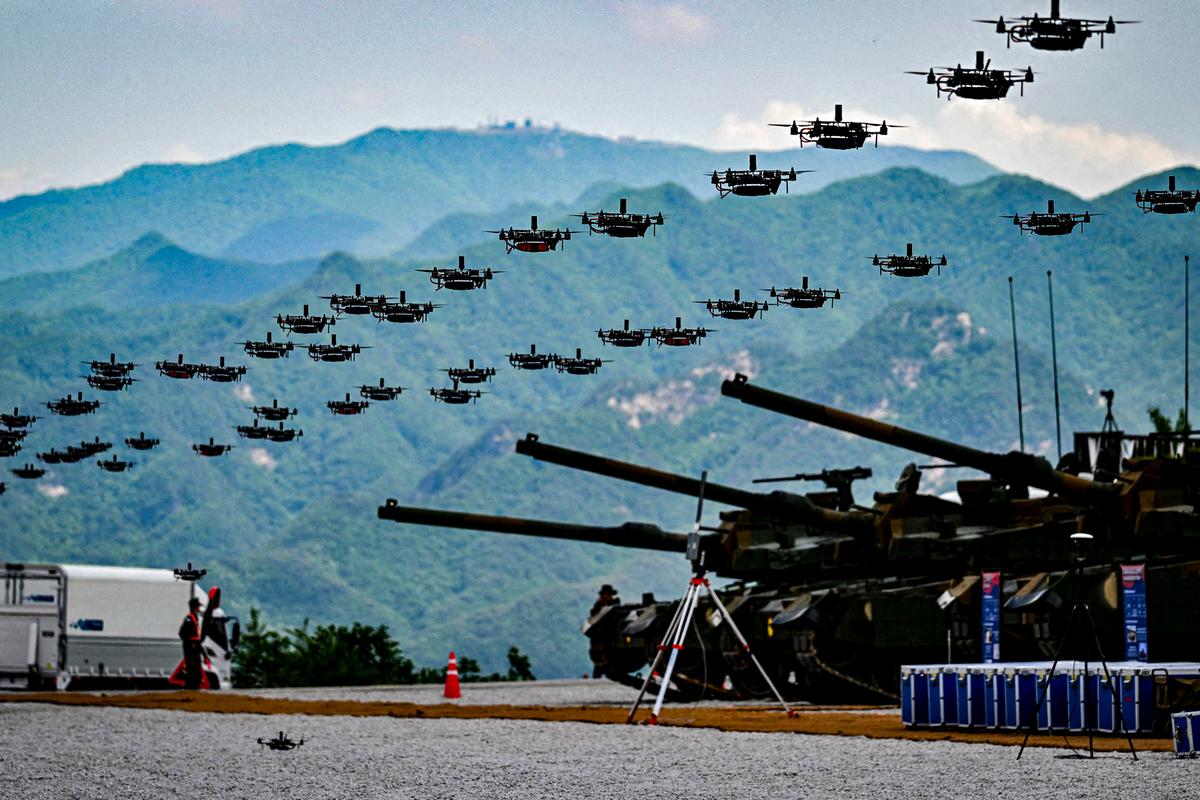 South Korea flies military drones in formation during a South Korea–U.S. joint military drill at Seungjin Fire Training Field in Pocheon on May 25, 2023. Yelim Lee/AFP via Getty Images
The Navy’s Naval Surface Warfare Center Crane Division has patented a “Drone Killer Cartridge,” a low-cost multi-projectile round it says achieves a 92 percent kill rate.
Lawrence said manufacturing remains the key constraint in scaling production, noting that even a strong product is limited without volume output.
“The key is our ability to manufacture. We’re in full-scale production right now,” he said.
Lawrence added that younger service members across the military are eager to train with emerging counter-drone technology and expect new equipment to be practical in the field.
“They’re all fresh. They want new training. They want new testing. If our current branches cannot test it, perform with it, train with ease, it’s not a viable product,” he said.
We had a problem loading this article. Please enable javascript or use a different browser. If the issue persists, please visit our help center.