US Unemployment Claims Fall Sharply to 1-Month Low
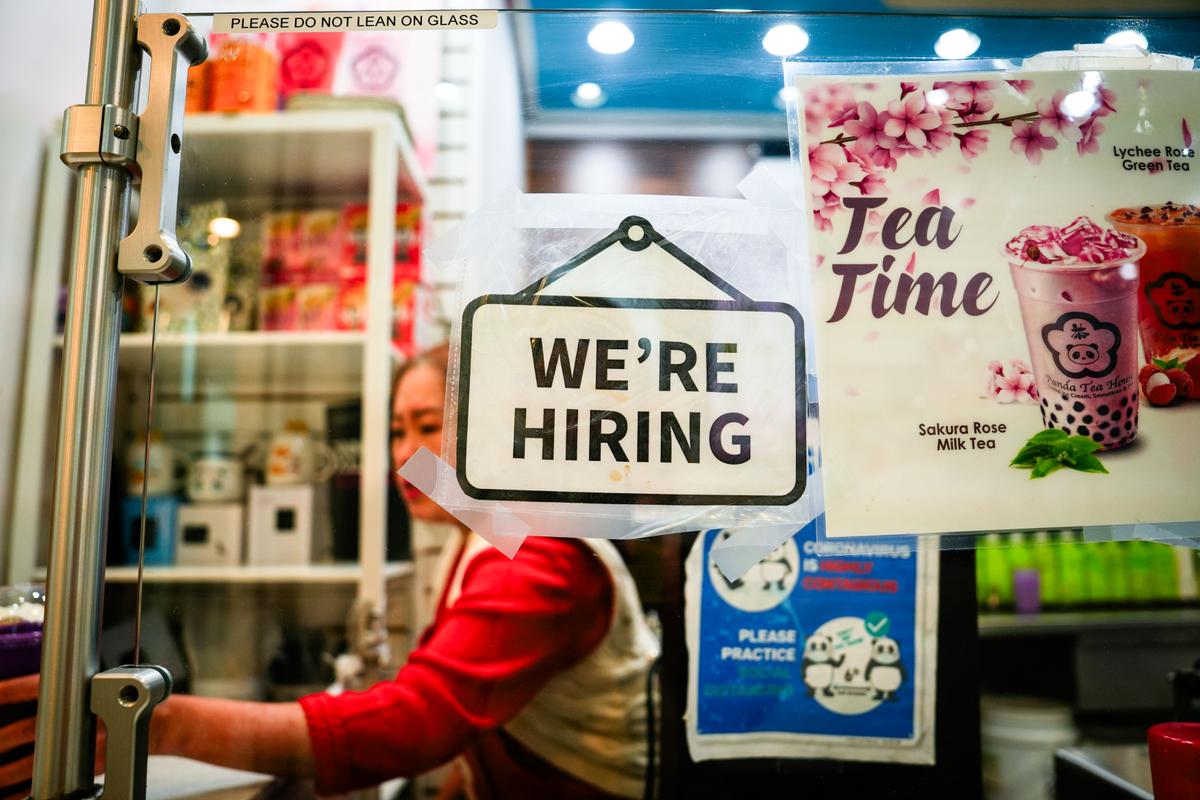 A hiring sign at the Fashion Centre at Pentagon City shopping mall in Arlington, Va., on Jan 3, 2024. Madalina Vasiliu/The Epoch Times
The number of Americans filing applications for unemployment benefits declined sharply to the lowest level in four weeks, new government data show.
Initial jobless claims declined by 12,000 to a one-month low of 215,000 for the week ending 20, according to the Department of Labor.
This came in below the economists’ forecast of 225,000.
The four-week average, which strips out week-to-week volatility, ticked up to 224,250.
Over the past five years, unemployment claims have hovered between 200,000 and 250,000. In April, claims fell to their lowest level since 1969, reaching 190,000.
Employment conditions have been improving over the last three months after a rocky start to 2026. Hiring momentum has picked up heading into the summer months, while layoffs have remained low.
Related Stories
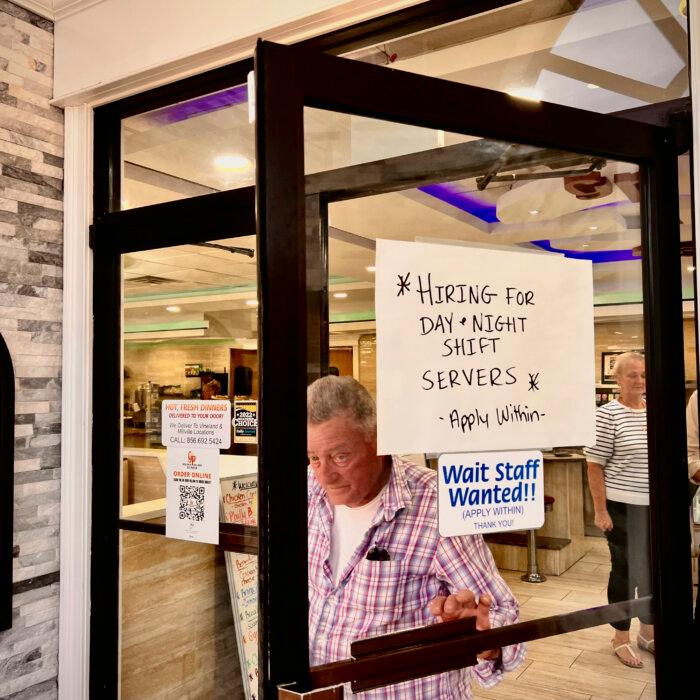
Net private-sector employment has increased by an average of 30,750 jobs per week in the four weeks ending on June 6, payroll processor ADP said in its weekly update.
Next week will offer fresh insights into the U.S. labor market, as data on job openings, layoffs, and private-sector job creation will be released.
The main event will be on July 2 when the June nonfarm payrolls report is published. Early estimates from Trading Economics suggest the economy added 90,000 new jobs and the unemployment rate edged higher to 4.5 percent.
“If the labor market holds, we expect consumers will have the ability to maintain spending patterns,” Jeffrey Roach, chief economist for LPL Financial, told The Epoch Times in an emailed note.
Recurring jobless claims—a measure of the number of out-of-work individuals currently receiving unemployment benefits—topped 1.8 million for the first time since March.
Economists use continuing weekly claims data to gauge the difficulty job seekers face in finding new employment opportunities.
It could also reflect recipients exhausting their benefits, since many states cap eligibility at 26 weeks.Fed Policy ImplicationsFor now, the Federal Reserve does not appear to be worried about the maximum employment side of its dual mandate.In his first post-meeting press conference this month, Fed Chairman Kevin Warsh spoke very little of the labor market, aside from reaffirming its strength.
“The [Federal Open Market Committee] thought that the labor markets were stable,” Warsh told reporters during the June 17 news conference. “There were some people around the committee who thought that it was trending better than that.”
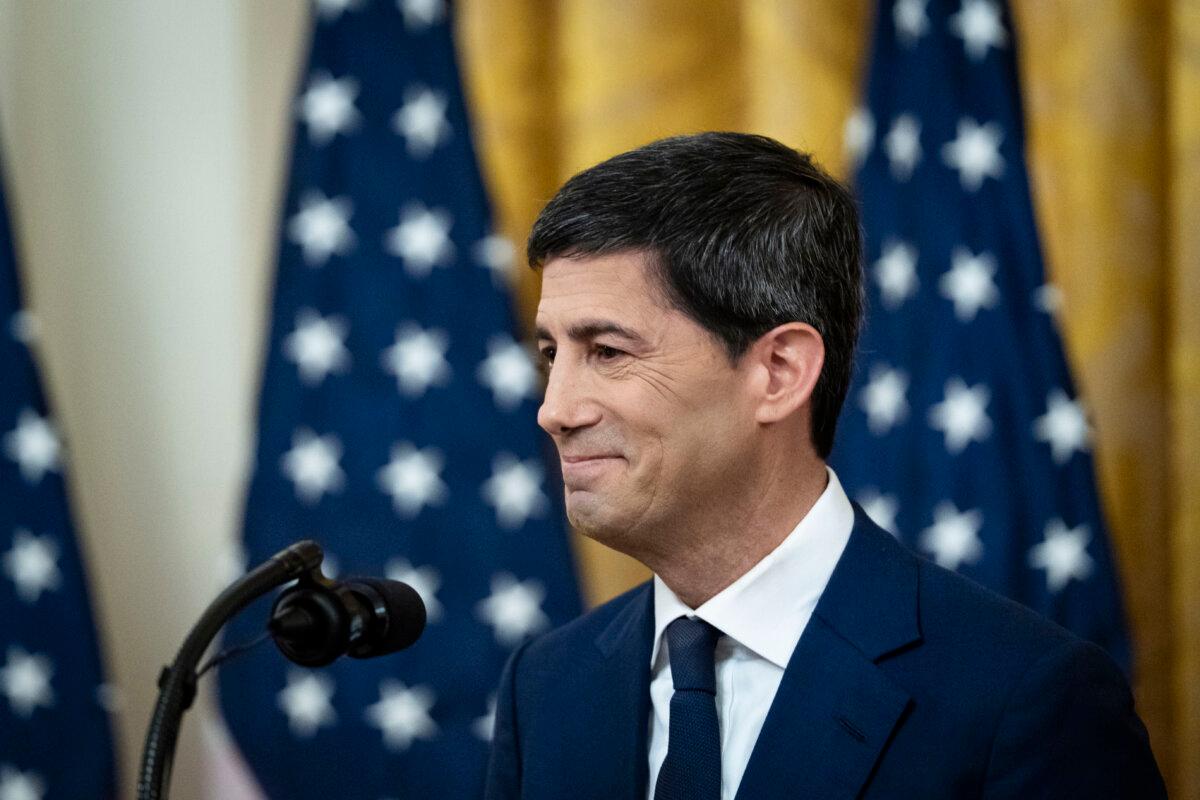 Federal Reserve Chairman Kevin Warsh speaks at the White House on May 22, 2026. Madalina Kilroy/The Epoch Times
Officials have focused on the other side of the dual mandate: price stability.
With headline inflation surging due to war-driven energy costs, policymakers and investors have priced in at least one interest rate hike this year. The futures market suggests the first rate hike in more than two years could happen as early as the September policy meeting.
The Fed’s preferred inflation gauge—the Personal Consumption Expenditures (PCE) Price Index—jumped to 4.1 percent in May, from 3.8 percent in April. Core PCE, which excludes volatile energy and food categories, ticked up to 3.4 percent from 3.3 percent.
Outlooks suggest that inflation could be decelerating amid falling energy prices.
Crude oil prices have declined to pre-war levels. The national average for a gallon of gasoline is firmly below $4 for the first time since the early days of the Iranian conflict.
“It’s our expectation that inflation will start going lower now that the Strait of Hormuz has reopened and oil prices are coming down, so that may alleviate some of the pressure on the Fed, but next month’s data needs to be lower than what we are seeing today if that is going to be the case,” Chris Zaccarelli, CIO for Northlight Asset Management, said in a note emailed to The Epoch Times.
A plethora of figures were released on June 25 to determine the economy’s health.
The final estimate for first-quarter GDP growth was 2.1 percent, from the recent reading of 1.6 percent. This is also a firm improvement over the paltry 0.5 percent expansion recorded in the final three months of 2025.
Personal income and spending also topped expectations, rising 0.7 percent.
After two strong months, durable goods orders declined 4.5 percent in May, the first drop since February.
We had a problem loading this article. Please enable javascript or use a different browser. If the issue persists, please visit our help center.