Professors experiment with using AI humanoids to teach students | The College Fix
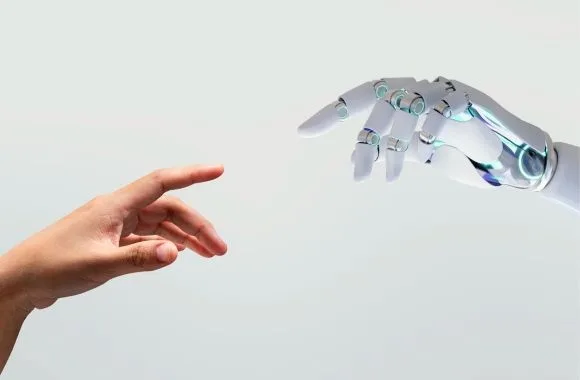
One university hosts lectures by AI avatars that ‘look and speak just like Albert Einstein,’ ‘mathematician John Nash’
Robot teachers aren’t a futuristic dream of the past anymore.
Universities in China are using them, and some American institutions are beginning to experiment with the interactive robots, or “AI avatars,” too.
New for the coming academic year, students at Embry-Riddle Aeronautical University will interact with AI avatars in Professor Robert Goehlich’s class on space tourism, according to an article this week on the institution’s website.
The “four new AI-powered avatars” each have been given human-ish names – and one the title “Dr” – and they are programmed to interact with students on various topics and skills, the article states.
The AI humanoids also have “visual bios,” “headshots and job descriptions” to “add to the immersive experience,” according to the university.
In class, the avatars will “actively ask questions and help guide the discussion,” Goehlich said.
The university news article continues:
The first new chatbot in Goehlich’s space tourism course is a human resources manager named Elena Moonwalker. It interviews the students, who must clarify and expand on their responses just as they would in a real hiring process, Goehlich said.
A different, more sophisticated chatbot simulates a project kick-off meeting, where students must pitch their space tourism projects to three stakeholders. …
Dex Demand, one of the avatars, focuses on market considerations and pricing. Another, Dr. Risk Null, examines risk management, safety and regulatory compliance. And Brand Nova addresses marketing issues, such as customer perception and experience.
Meanwhile, at George Mason University in Virginia, there already has been some student pushback about the use of AI “teachers” in the classroom.
In an article earlier this month on the university’s College of Public Health website, health technology Professor Sanja Avramovic described the feedback she received after experimenting with AI avatars in her classes.
The avatars “present[ed] course material in short, on-demand videos students could watch at their own pace. Some students balked a little, finding the digital instructors monotone and robotic. They said they preferred a human,” according to the article.
When Avramovic asked if she should get rid of the AI, her students told her not to ditch them entirely — but the students also said they preferred her teaching, she said.
Still, scholars believe the interactive AI “teachers” have their benefits, according to the George Mason news article:
Rather than prohibiting AI use, faculty developed and tested AI tutors that function more like coaches than answer generators, walking students through assignments one step at a time. In order to build them, instructors map out common mistakes and teach the systems how to respond in ways that promote deeper learning. “It interviews students,” [health administration Professor Abdul] Hafeez said. “It compels them to think critically.”
Early findings suggest this approach can help counter passive AI use, with students showing stronger performance and engagement than their peers. In one analysis, undergraduates using the tutors improved performance by nearly 9 percentage points.
Meanwhile, Chinese universities are widely embracing the technology, an article this month in Nature indicates.
For example, students at Hong Kong University of Science and Technology “can listen to lectures given by AI avatars that look and speak just like Albert Einstein or mathematician John Nash. The avatars can even answer students’ questions,” according to the article.
The country’s government is encouraging the use of AI, and in the future, Chinese scholars predicted that avatars will be used as on-demand tutors for students, teaching assistants, and more, Nature reports.
MORE: New York college accused of discriminating against men in women-only tech initiative