America's most powerful AI superchips may be in China's hands | Blaze Media
The U.S. built an entire export control system to keep its most powerful AI chips out of enemy hands, but a loophole may have made the system vulnerable to infiltration by China and other countries.
America's chip export rules target where a company is headquartered, not who ultimately owns it — meaning a Chinese tech giant could set up a subsidiary in Singapore or Malaysia and buy chips the parent company never could.
'The new Blackwell that just came out, it's 10 years ahead of every other chip. But no, we don't give that chip to other people.'
The Bureau of Industry and Security in the Commerce Department released new guidance Sunday, clarifying that a subsidiary of any company headquartered in a U.S. arms-embargoed nation — including China — still requires an export license to purchase advanced chips, regardless of where the subsidiary operates.
The requirement had technically been on the books since November 2023 — but the BIS acknowledged it had been receiving questions about whether it was still being enforced.
In May 2025, the bureau scrapped the Biden administration's strict AI Diffusion Rule export framework. The Trump administration called it "overly complex, overly bureaucratic," and warned that it would "stifle American innovation" and damage diplomatic relations with dozens of allied nations.
Pulling the Biden framework without a replacement in place, however, left the rules that govern who can buy these chips effectively unenforced. Furthermore, chips purchased during the loophole window do not have to be returned.
Former State Department official Chris McGuire, who helped build America's chip export framework under Biden, sounded the alarm on X Sunday, writing that "Chinese companies have been buying these chips, very likely at scale."
While the new guidance requires export licenses for subsidiaries of companies linked to U.S. arms-embargoed nations, it does not reinstate a separate safeguard: the requirement for offshore chip manufacturers to verify who is ultimately behind a purchase — a vulnerability that McGuire warned remains unaddressed.
Trump struck a deal on December 8, 2025, allowing China to purchase the H200 — a less powerful Nvidia data center chip and the company's second-best — with Nvidia paying 25% of those sales back to the U.S. government. Trump announced the deal on Truth Social, writing that Chinese President Xi Jinping "responded positively."
However, it appears China "chose not to" approve the purchases.
RELATED: Trump goes to China with THIS surprise guest and an entourage of business leaders
 Brendan Smialowski/AFP/Getty Images
While China was passing on the H200, a scaled-down export variant, Nvidia's Blackwell chips — which defense analysts warn could serve as the foundation for next-generation autonomous weapons systems — may have been flowing freely through the back door.
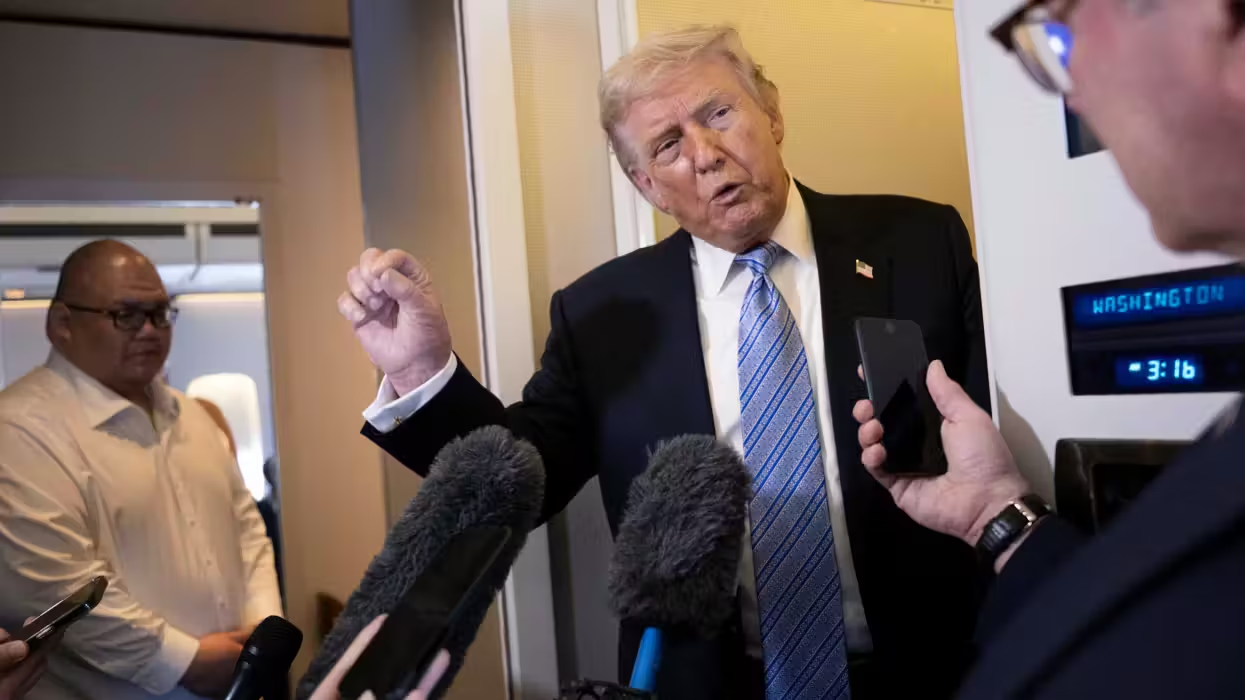
The Blackwell chip was never supposed to reach any entities linked to U.S. arms-embargoed countries. Trump made that explicit while speaking to reporters aboard Air Force One in November 2025: "The new Blackwell that just came out, it's 10 years ahead of every other chip. But no, we don't give that chip to other people."
Al Jazeera reported that Nvidia said the company had been operating according to the clarified rules, claiming its "sales and vetting process is correct." Nvidia also claimed China "has more than enough domestic chips for all of its military applications," raising questions about the Chinese military actively seeking Nvidia chips in the first place.
Nvidia did not respond to a request for comment from Blaze News.
Like Blaze News? Bypass the censors, sign up for our newsletters, and get stories like this direct to your inbox. Sign up here!