This Father's Day, let's reject the negative messaging about men | Blaze Media
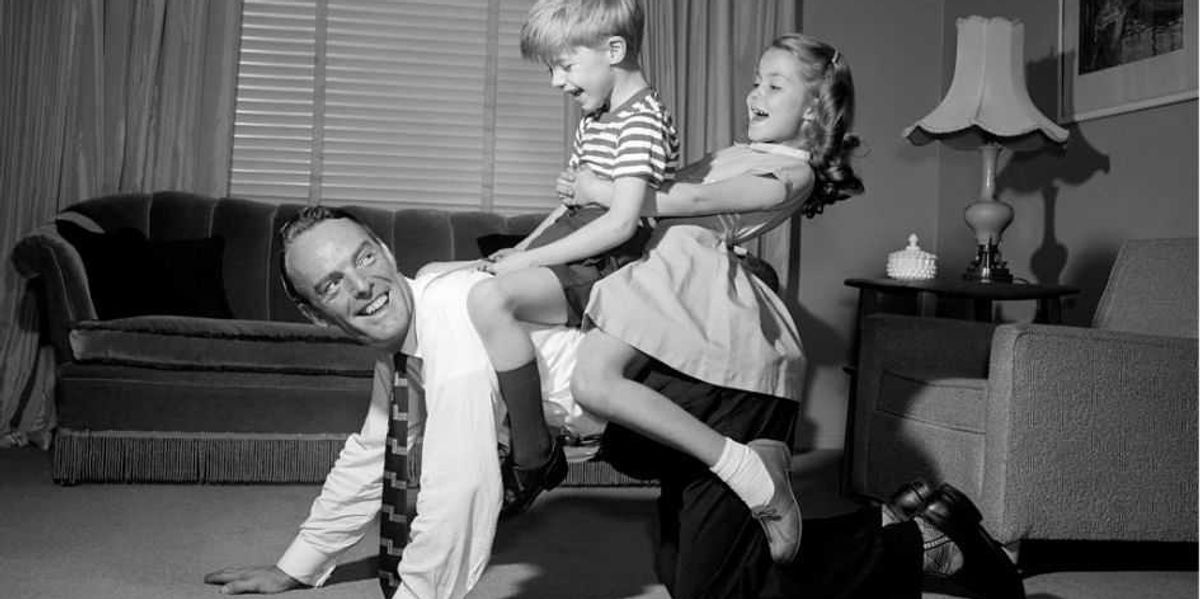
This Father’s Day, we celebrate the dads and father figures who have shaped our lives. But for me, the holiday has always carried a different meaning.
I didn’t have a close relationship with my father growing up. That distance was painful, but it taught me something I might not have learned otherwise: We rarely see what men quietly give until it is gone or not there.
There is an alternative perspective.
Father's Day reminds us of something our culture all too often overlooks: Fathers matter, as do the countless ways men contribute to the well-being of those around them.
Earlier this year, the New York Times highlighted research confirming that father-child interaction has a profound impact on a child's health and long-term well-being. Yet nearly one in four children in the United States live without a father in the home, and those children are four times more likely to grow up in poverty.
So despite this evidence, why is it that most messaging, whether in entertainment, education, or the workplace, ignores what men contribute and, even more dangerously, diminishes the risk that comes when a father's positive influence is lacking?
In our era, men are often portrayed negatively: oblivious, selfish, incompetent; it’s a never-ending list. Popular culture frequently highlights their failures and belittles their successes. On a daily basis they are depicted as naive and ignorant at best, or misogynistic and demeaning at worst.
A 2023 Politico/Ipsos poll found that 36% of Americans believe entertainment and culture make it hard to feel proud to be a traditional man. That perception is not imagined but grounded in reality. Entertainment characterizes young men as narcissistic, self-consumed, and arrogant, and when these attributes are broadly assigned, they subconsciously become the norm we envision.
What happens when we adopt this mindset? The quiet efforts men make automatically become devalued. Their help is unwanted. Their character is irrelevant. Whatever they offer or become, it will never be enough — and the cost of this attitude is real: Roughly 6.8 million prime-age men are currently neither working nor seeking employment. This is a quiet withdrawal of men from a society that continues to tell them their contributions as a man no longer matter.
I want to be clear: This does not dismiss the very real and deep pain some women have experienced from men. Those situations are valid, they matter, and they should always be addressed. But as with any group, we must be careful not to let the worst examples define the whole. Most men do not fit the mold their critics assume.
There is an alternative perspective, one that reveals men motivated not by dominance but by devotion. Men who, when given the opportunity, would willingly and quietly carry responsibilities and make sacrifices in hopes of a better life for those they love. These qualities are far more common than they are given credit for.
As a young professional, a researcher, and a woman, I have been struck by how much you can discover when you simply observe. I am amazed by how many men have silently endured, pursued growth, and served others without recognition or expecting anything in return, not even a “thank you.” Their victories are private, and their sacrifices remain largely unseen.
I have known men who have wrestled with their shortcomings and chose the harder path of becoming responsible citizens, faithful leaders, and caring mentors. Men who valued their roles as friends, husbands, and fathers. Men who, even when they failed, were humble enough to admit their mistakes and strong enough to make them right.
There is often a reluctance to acknowledge this side of men, as though doing so somehow threatens women's progress. However, the idea that either men or women must be diminished for the other to rise is not empowerment. It is an ideologically driven rivalry that prevents us from appreciating the unique strengths both bring. Only a mindset of complementarity, not competition, carries the power to set a higher mark for society as a whole.
On this Father's Day, we celebrate the fathers and father figures who have encouraged us, sacrificed for us, and helped shape the people we have become. But may this also be a day to honor and recognize what men give daily. For the single dads striving to be present for their children; for the young men who hope to be fathers someday; for the lonely men who long for companionship; for the older men who continue to model character and integrity; and for the widowers who miss their wives every day yet choose resilience — your quiet sacrifices matter, your silent gifts are seen, and they are not forgotten.
Sometimes what men provide cannot be measured on a résumé or captured in a headline. Often the greatest gifts men give are the least celebrated: their willingness to carry burdens without complaint, the duty they feel to shoulder responsibilities without recognition, and their desire to provide a steady presence that quietly strengthens the lives of those around them. They go unnoticed by nearly everyone, except the people whose lives they quietly hold together.