Polo Country | Blaze Media
“People ask, ‘How can a Jewish kid from the Bronx do preppy clothes?’ It has to do with dreams. I was always inspired by those kind of prep-school people . . . Maybe because I didn't have it, I always reached for it.” —Ralph Lauren
The Bronx in 1949 was a place of brick and iron and the smell of bread coming up from the bakery on the corner before six in the morning. The Lifshitz family lived on Mosholu Parkway with four children, the parents originally from Pinsk. The father, Frank Lifshitz, was an artist, a muralist. He painted houses when he couldn’t get a commission. His youngest boy was named Ralph.
He was small and watchful, and he liked to look at pictures. In the pictures, there were men on horses and men in soft tweed jackets standing on lawns that ran down to the sea. The boy looked at these pictures closely, learning each detail by heart: the fold of a cuff, the angle of a hat, the way a sweater could be tied around the shoulders so that it seemed not to have been tied at all. Ralph did not know yet that he was studying.
Ralph’s world was not something that you could buy your way into or even be born into; it was something you had to enter through rites of passage and passion.
The older boys at yeshiva had found the joke in his name early. Shitz. Ralph’s brother, Jerry, three years ahead of him, had grown tired of it first and one afternoon had announced at the kitchen table that he was going to be Lauren now. The cousins in California had gone with Lawrence. Lauren was nearby and unclaimed. When Ralph turned 16, Jerry told him to do the same, and he did. He was now Ralph Lauren.
American IconA pivotal chapter in Ralph Lauren’s story unfolded in 1964. Fresh out of the army, he got a job at the Brooks Brothers on Madi son Avenue. He also met the love of his life, Ricky Ann Loew-Beer, whom he married that December.
He left Brooks Brothers for a tie company called Rivetz, then another called Beau Brummell. There, when he was 28, he asked the boss if he could design his own ties—to which his boss agreed.
Ralph wanted them wider than the ties men were wearing then, the narrow black things of the Kennedy years. He also wanted them made by hand, with his own name on the label. He called the line “Polo,” after a sport he had never played. He worked out of a single drawer in a showroom in the Empire State Building and delivered the ties to the stores himself.
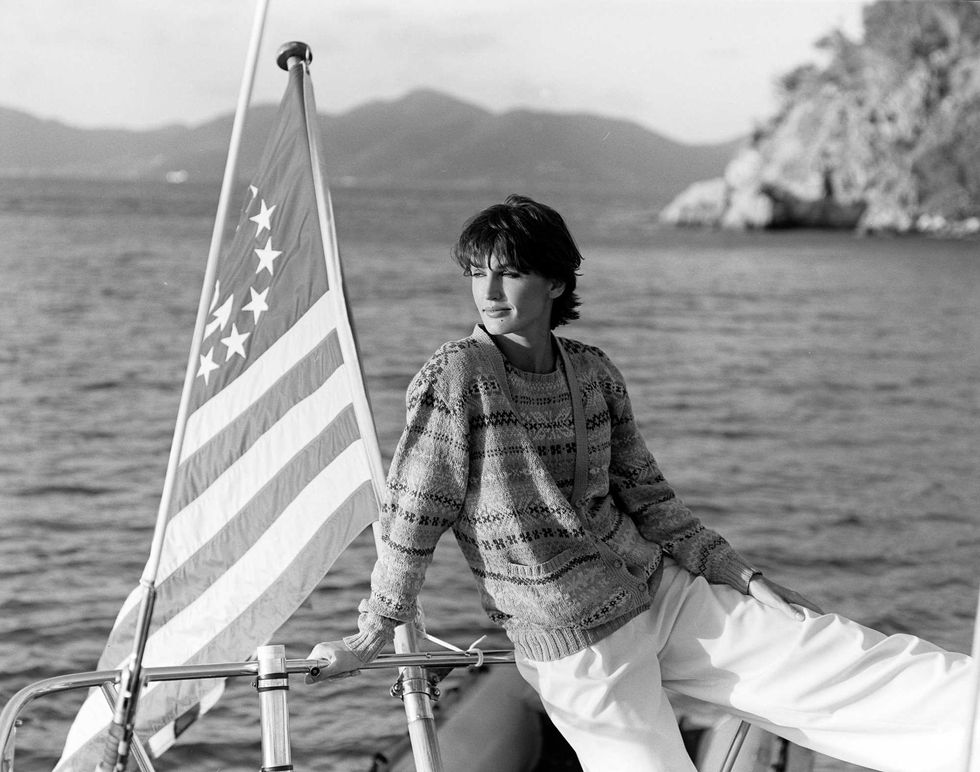 Ralph Lauren has always represented the Platonic ideal of American fashion.
In 1967, the buyer at Bloomingdale’s said she would take the ties on one condition: he had to remove his name from the label and let the store put its own name there instead. This was the way the business worked. Ricky was pregnant with their first child. There was no money in the bank to speak of. The drawer in the Empire State Building was rented by the month.
He told the buyer no, and he took the ties back.
He had drawn the clothes, and he had named the world, but he had not yet found the man who could photograph it.
Six months later, Bloomingdale’s called him and said they would take the ties with his name on them after all. He brought them back to the store where they sold, and they kept selling, and within a year, there was a shop-in-shop on the floor at Bloomingdale’s with the word “Polo” over the door.
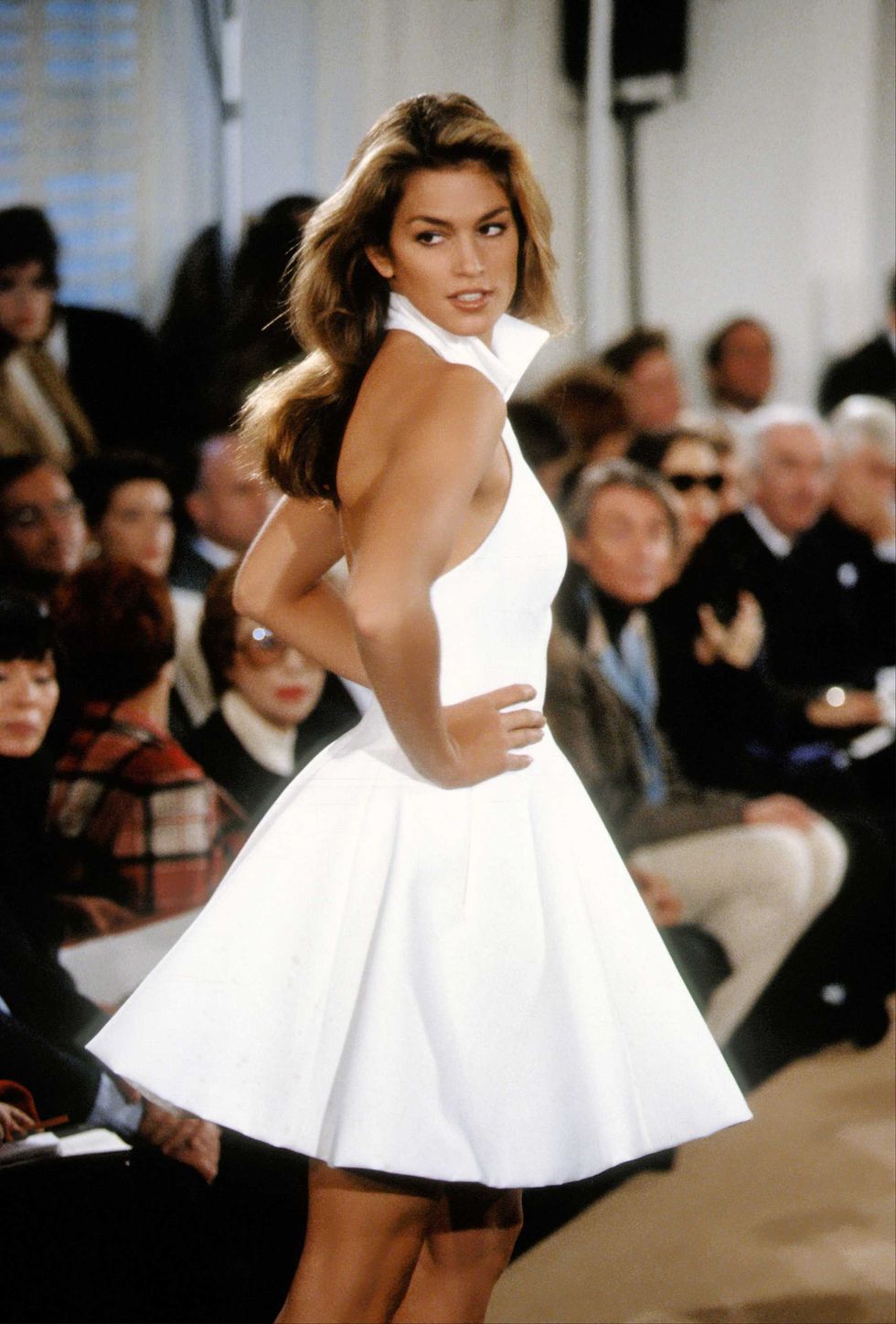 The Ralph Lauren brand showcased some of the top models in the world like Cindy Crawford.
The ties sold, then the shirts, then the suits, and by 1972, there was a small cotton mesh shirt with a man on a horse stitched at the chest, available in twenty-four colors, that could not be kept on the shelves. In 1974, he dressed Robert Redford for The Great Gatsby in a pink suit, and in 1977, he dressed Diane Keaton for Annie Hall in men’s tweeds and a bowler hat. By the end of the decade, Ralph had stores and licenses and money and an idea of a world, but the idea was still mostly inside him. He had drawn the clothes, and he had named the world, but he had not yet found the man who could photograph it.
In 1978, he found him.
Fashion LensBruce Weber had grown up in Greensburg, Pennsylvania—a small city in the western part of the state where the hills begin to fold up toward the Alleghenies. His father owned a furniture store. As a young boy, he was sensitive and watchful in his own way. Like Ralph, he had spent his childhood looking at pictures of a life he did not have. He went to college in Ohio to study theater and then to New York to study film at NYU. Somewhere along the way, he stopped wanting to be in front of the camera and started wanting to be behind it. He was introduced to Diane Arbus, who sent him to study with Lisette Model at the New School. Model was an Austrian who had photographed the rich on the Promenade des Anglais and the poor on the Lower East Side, and what she taught her students was a single proposition that contained an entire worldview: It is the surface I am interested in, because the surface is the inside.
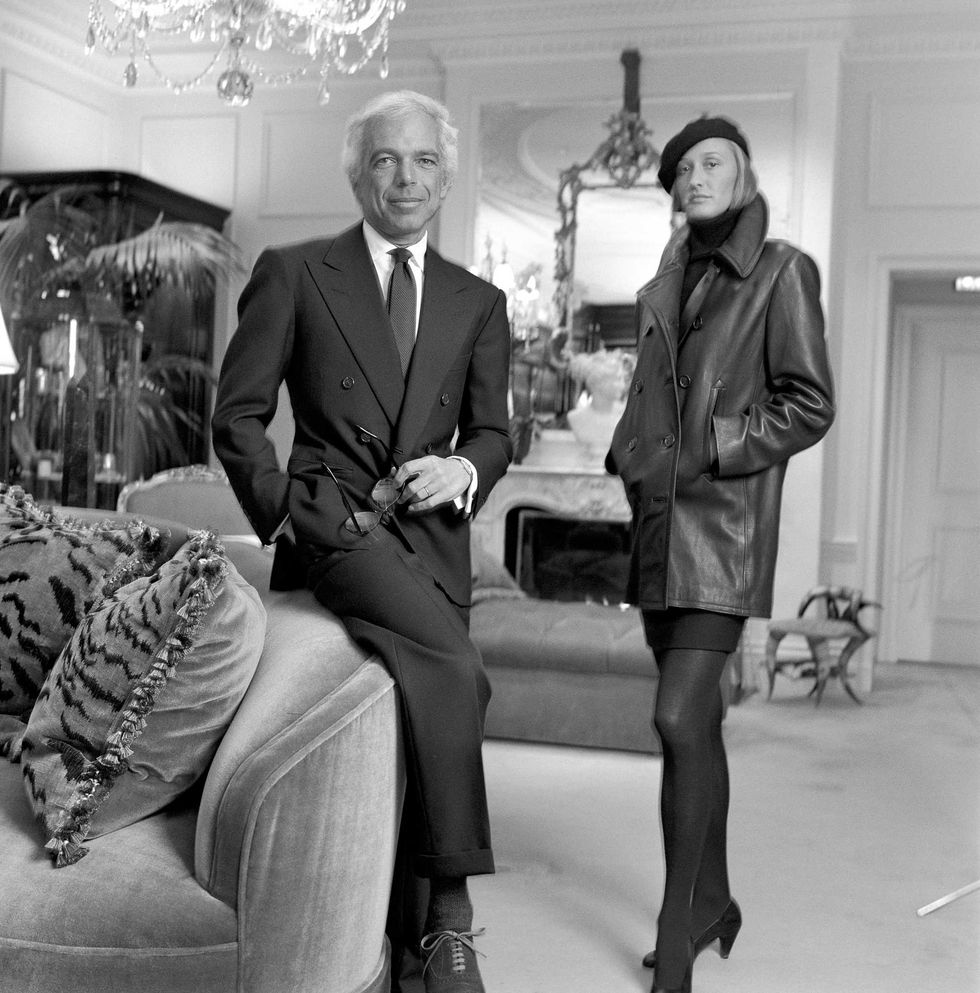 Ralph at zenith.
Weber left Model’s classroom and found work at GQ, where his photographs began appearing in the mid-1970s. The lifestyle shots had something of Slim Aarons in them, but the resemblance was deceiving. Aarons photographed scenes. The people in his pictures were decorative, prop-like set pieces within a larger scape—Palm Springs by the pool, Capri at noon, the rich at their leisure. Weber photographed faces. The clothes, beach, rugby pitch, or surfboard were objects arranged in service of the model. Even when the overall scene in a Weber shoot is dazzling, the eye is always drawn to the model’s face. And Weber, as he has explained, had an eye for capturing special moments and idiosyncrasies that is difficult to teach:
I would walk down the street and see somebody and think, ‘I like this moment in their life. I want to record it.’ It’s not like I’m so in love with everyone I photograph. To make a good picture, I have to discover something about them that I admire or relate to, or that makes them unique. It could be their hands, or that their feet are too big. It could be a girl who’s maybe a little bit heavy but has a sweetness about her that’s irresistible.
In 1978, Ralph Lauren saw the photographs and called him.
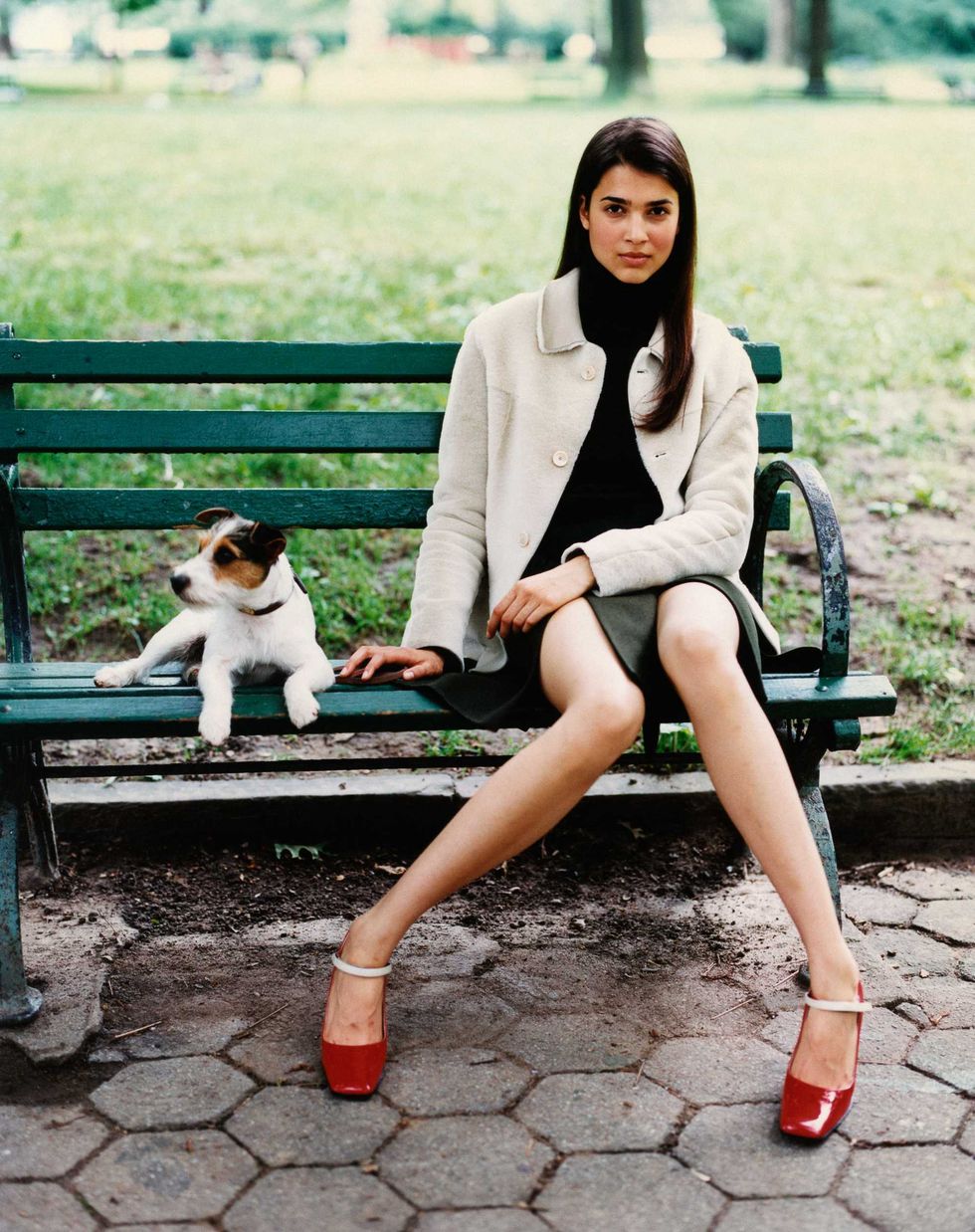 Effortlessly chic.
What Ralph built over the next 40 years was much more than a clothing line—it was an ideal. A world of visually striking people, places, and lifestyles. A concept of luxury that revolved not around money or status but around the blessing of being truly American. Not a creedal American or even someone with a Mayflower pedigree, but a God-honest American who loves fast hors es, violent sports, beautiful women, and danger. Ralph’s world was not something that you could buy your way into or even be born into; it was something you had to enter through rites of passage and passion.
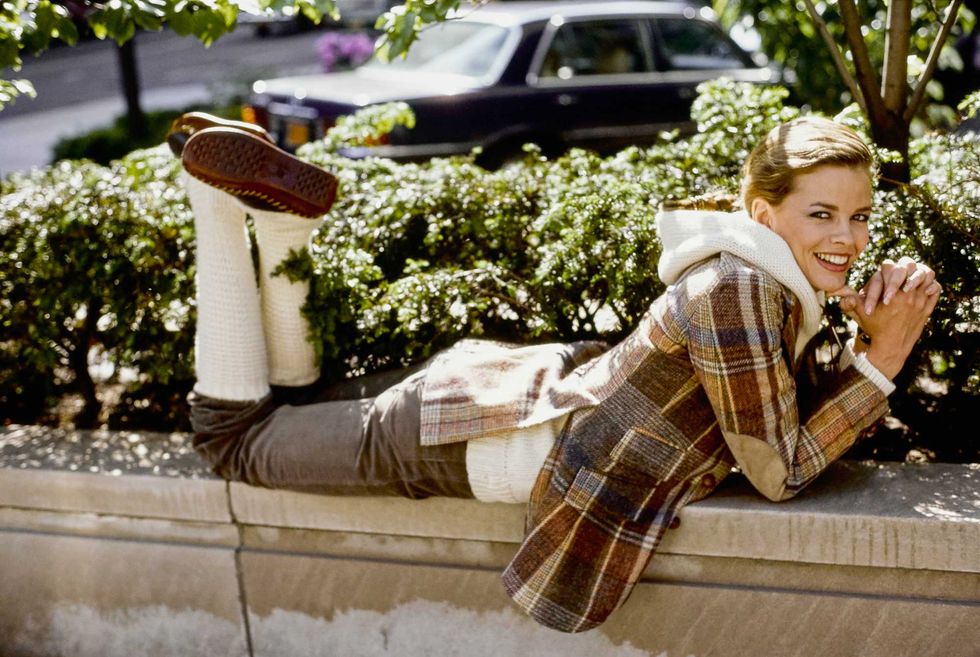 The clothes would dominate the era and define fashion for a generation.
Familiarity breeds contempt. Sometimes it takes an outsider to love a thing uncritically. Those who live on the periphery of an empire are often the last to abandon it. The most beautiful film about French cuisine, The Taste of Things, was made by Trân Anh Hùng, a Vietnamese refugee. Sergio Leone transformed the Western genre, and he did it as an Italian who had never been further west than Almería. Alexis de Tocqueville wrote the book on American democracy as a French aristocrat who had spent nine months on American soil. The patriciate of the United States got Ralph Lauren and Bruce Weber, two boys who had spent their childhoods loving them from a distance and who spent the rest of their lives showing the country what they had seen.
In 2018, at 78, Ralph Lauren sat for a tele vision interview to mark the 50th anniversary of his company. He was wearing a torn cotton shirt. The interviewer assumed he was wearing his own label, and he stopped her. This shirt I bought at Kmart, he said. This is living proof of what I believe in. I love the aging of it. I love the rips. I love it all. And I like the way I look in it. It’s the one that I have memories of.
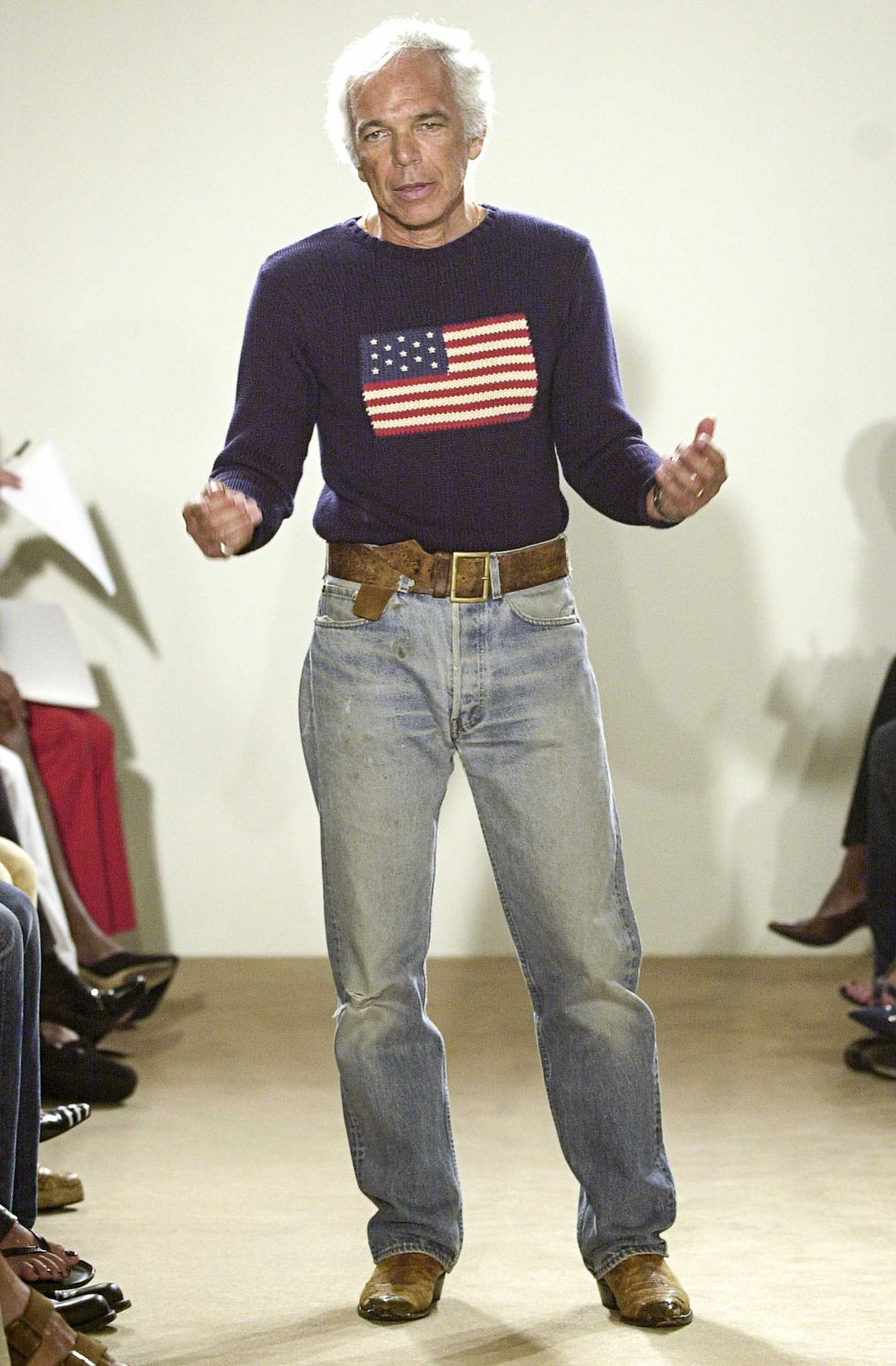 The icon posing in one of his most iconic designs: a simple American flag.
The boy who had spent his childhood looking at pictures of a life he did not have had ended up, at 78, in a shirt he had loved long enough to wear through. The label on the collar did not say “Polo,” but that did not matter. The shirt was his because he had worn it.