The Supreme Court finally confirmed what I knew all along | Blaze Media
Nobody asked us. Not me, not my teammates, not the 18-year-olds who had just arrived at the University of Pennsylvania and found themselves sharing a locker room with Lia Thomas.
Nobody held a vote, nobody sent an email, nobody knocked on the door and said, "Hey, is this OK with you?" They simply instructed us that a man would be joining the women’s swim team and waited for us to get used to it. We never did.
Somewhere along the way, it became the job of a bunch of college kids to fix something the adults in the room had broken.
Plenty of lawyers and pundits will spend the next several weeks dissecting the Supreme Court's 6-3 ruling in West Virginia v. B.P.J. They will argue about precedent and jurisdiction, but here is what most of them are missing: They were not in that locker room. I was.
Eighteen times a week for an entire season, I changed and showered alongside a male athlete. Eighteen times a week, my teammates and I were expected to act like this was normal.
Voicing concerns was dubbed hateful, and the policy that created this situation in the first place was not. We had earned our spots on the team, but not one person in a position of authority at Penn, the NCAA, or USA Swimming ever pulled us aside and asked how we were handling the situation.
The administration and governing bodies were not interested. The message was quiet but very clear: Your discomfort is not the problem we are trying to solve.
When we tried to raise our concerns, the athletic department told us Thomas’ place on the team was nonnegotiable. Staff members offered us psychological services in an attempt to re-educate us into being comfortable undressing in front of a man. Their solution was not to protect us but to “fix” us.
Somewhere along the way, it became the job of a bunch of college kids to fix something the adults in the room had broken.
That is what I want people to understand when they hear about this ruling: It is not abstract to me. It is not a hypothetical or a talking point. I lived inside the policy the court just ruled states have the right to prohibit.
I can tell you from experience that the "compassionate" framing the other side always reaches for has never once held up to reality.
RELATED: SCOTUS sides with common sense after boys try to play sports with girls
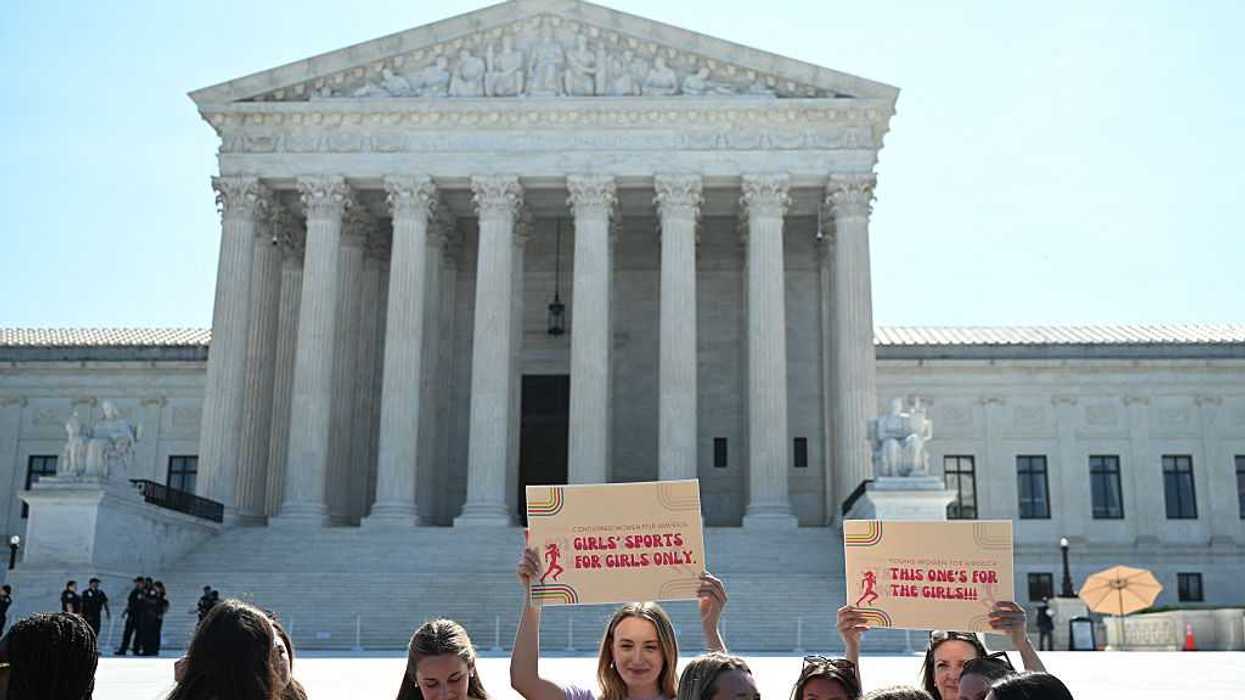 Alex WROBLEWSKI/AFP/Getty Images
Compassion for whom? Not for the female athletes who trained their entire lives and finished one place lower than they should have. Not for the teenager in California who lost a state track title she had earned. Not for my teammates and me who were expected to smile and say nothing while the people making decisions were only concerned about the feelings of one male athlete.
This ruling matters, but it does not automatically fix the issue of the governing bodies and professional organizations that spent the last several years dismantling women's protections one policy at a time.
The NCAA still allows athletes to compete on an amended birth certificate in some cases, a solution you’d come up with if you were never really trying to solve the problem and never had to share a locker room with a fully grown man.
And worse still, 23 states have no law protecting girls at all.
The Protection of Women and Girls in Sports Act has been sitting on Capitol Hill for years. Every member of Congress who let it die in committee now has a Supreme Court majority telling them they had the authority to act and chose not to. It is time to finish the job.
I have been waiting for that moment since I was 19.
The court got it right. I just wish it had not taken this long for the people in charge to catch up to what I knew firsthand in my locker room.