Do blue-light glasses actually work? | Blaze Media
It's impossible to imagine that anyone reading this on their computer, tablet, or smartphone has made it to 2025 without hearing about the dangers of blue light.
What's more, for every warning about those blue-light hazards comes the equally ubiquitous solution: blue-light glasses.
Blue-light glasses are built with lenses that shield the eye from shorter, higher energy wavelengths of light.
Since screens are ubiquitous now and there's unfortunately very little chance that they will be going anywhere, the next best solution is to learn to live with them to the best of our ability. But that leaves an important question to be answered when it comes to dealing with blue light: Do those blue-light glasses actually work, or are they a gimmick?
RELATED: Hello, darkness, my old friend: How to get your body's circadian rhythms back on the beat
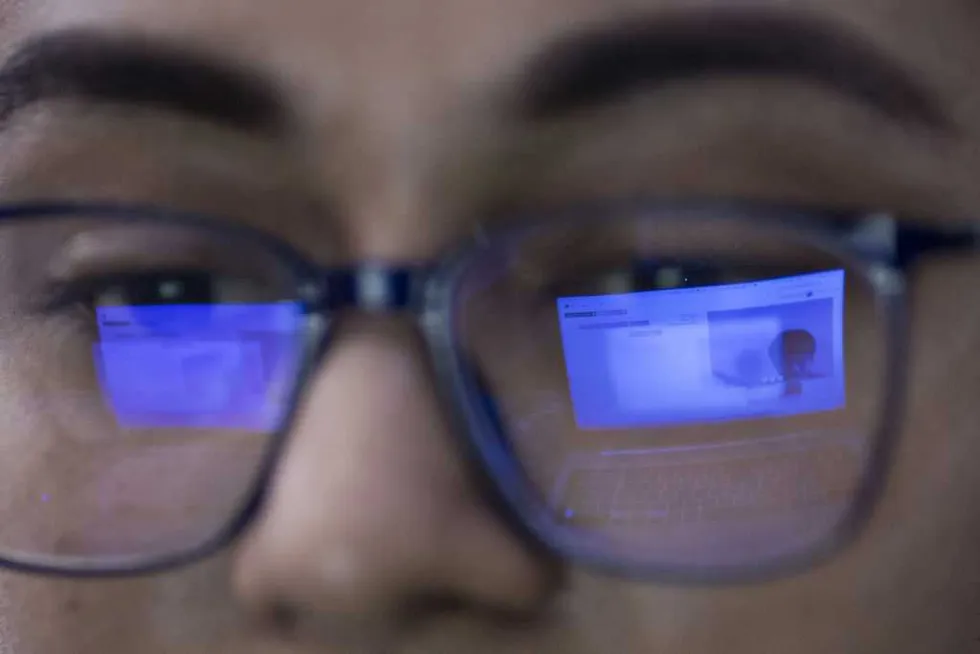 Photographer: Anindito Mukherjee/Bloomberg via Getty Images
Most people have seen the studies: Blue light, which is emitted by screens and indoor LED lightbulbs, may cause quite a few health problems, including the disruption of your circadian rhythm, leading to poorer quality sleep. Some believe that this is because blue light signals to the body that it is time to be alert and awake, which is obviously problematic when phones are used at night.
Blue light may also increase stress and lower cognitive output, but one might be surprised to learn that other studies have found the opposite to be true.
It's also important to note that blue light is natural and is emitted from the sun at a higher frequency than from screens or LED bulbs. However, many have turned to blue-light glasses as a solution to eye fatigue and other issues as well.
People whose job involves staring at a screen for long periods of time have often reported eyestrain, which is sometimes called computer vision syndrome.
Blue-light glasses are built with lenses that shield the eye from shorter, higher energy wavelengths of light, notably blue light.
Science ambivalentHowever, the science is still quite ambivalent on the question of blue-light glasses and their effectiveness, with most sources leaning toward saying you do not need them.
In a 2023 study that examined 17 different blue-light-filtering lens trials, it was discovered that the blue-light glasses had little to no effect on any of the relevant symptoms, including sleep quality and eye strain.
So while you may not need to go get any blue-light glasses according to these studies, the question stands: Can anything be done to reduce the negative effects of blue light?
20-20-20 visionThe answer is yes, but it's not nearly as fancy as a pair of new spectacles. Eye doctors recommend avoiding screens at night or turning on the "night" filter on your phone to reduce the blue-light display, effectively negating any need for lenses in the first place.
“There is reason to think blue-light exposure may signal our brains that we should stay awake, so reducing blue light in the evening may be beneficial and glasses may help,” Dr. Craig See, an ophthalmologist and cornea specialist, told US News. “However, devices can automatically reduce blue light in the screens.
Others recommend following the 20-20-20 rule: Every 20 minutes, look at something 20 feet away for 20 seconds or more. This will hopefully reduce any eye discomfort without adding any unnecessary accessories.