In President Keiko, Peru has a Chance for Stability
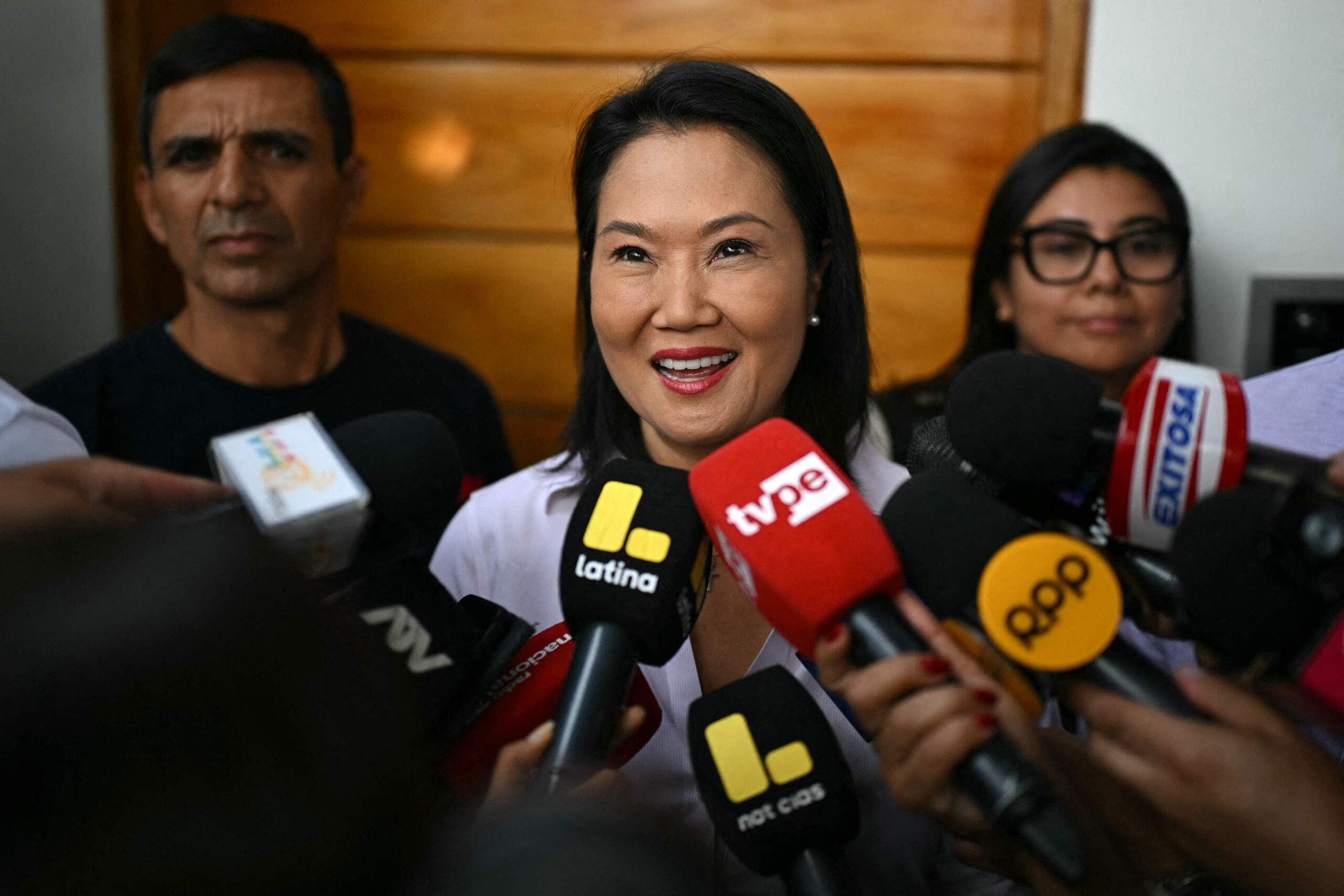
Peru appears to have kicked a habit that many suspected was ingrained: It has almost certainly elected Keiko Fujimori as the next president by a narrow margin. Although the counting up of the final votes and the recounts will go on for some time, by all appearances Keiko has secured a knife-edge victory—her margin of victory will probably be less than half a percent.
The victory marks a welcome reversal for Peru’s highest profile politician: Keiko herself has lost the past three presidential elections, the most recent two by less than half a percent. The trend had many speculating that Fujimori had a hard ceiling on her support in Peru that she would never be able to overcome to win the presidency. She is a deeply polarizing figure. The daughter of president-cum-dictator Alberto Fujimori and the leader of the party he founded, Fuerza Popular, she represents one of the most dynamic and successful periods of Peruvian history, but also her father’s brand of corrupt authoritarianism.
Alberto Fujimori crushed the Marxist Shining Path rebels, a brutal Maoist insurgency that had plagued the country for years, and his economic reforms pulled Peru out of a decade of economic stagnation, accomplishments that made him highly popular but which came with a high cost. The countryside has never forgotten the brutal reprisals the military and popular self-defense forces committed against civilians in areas with a Shining Path presence, and the ex-president spent the final years of his life incarcerated in a Peruvian penitentiary for crimes against humanity.
But Alberto Fujimori’s accomplishments are looking ever more appealing, and worth the potential risks, in modern Peru. In the past five years, crime has skyrocketed—since 2021, homicide rates have nearly tripled, while extortion is now commonplace. Drug cartels, gangs, and other criminal organizations have taken advantage of the country’s political instability to grab ever-larger portions of the economy at the expense of everyday workers, shaking down taxi drivers and slaughtering miners with impunity. The economy, meanwhile, has remained anemic, far from the heady days of the late ’90s and early 2000s.
The dire state of the country played right into Keiko’s hands during the campaign. Her campaign platform drew the parallels explicitly:
At the beginning of the 1990s, Peru faced its greatest challenges in recent history: the advance of terrorism, which threatened national integrity; inflation exceeding 7,000%; and more than half of the population living in poverty. In the face of that scenario, the country had firm political resolve and clear leadership, headed by President Alberto Fujimori, which made it possible to adopt exceptional measures to regain control of the territory, restore order, and defeat terrorism. Through order, firmness, and the unity of the Peruvian people, the country managed to reverse that crisis, defeat terrorism, stabilize the economy, and lay the foundations for growth. Fuerza Popular, together with the citizenry, was a fundamental part of that process of national transformation. Today, Peru can do so again: overcome insecurity and economic stagnation with discipline, promote investment, and ensure the essential conditions for the well-being and development of all citizens.
Keiko campaigned on a three-pronged plan of public order, economic reform, and social security (in that order), many of which call back directly to some of her father’s policies—creating a system of rural command centers to enable rapid military and law-enforcement response to organized crime, for example. It’s unclear how well the approach will carry over; although many kinds of criminal organizations are not unlike the Marxist guerillas of the Shining Path, others operate on a completely different scale and business model. And, given the history of Fujimorista counterinsurgency tactics, there is significant risk of civilians being caught in the crossfire.
Subscribe Today Get daily emails in your inbox
But the reality of the situation is that having any plan at all is likely to be a major improvement for the country, which has been languishing in complete confusion since 2018. Since the election of Pedro Pablo Kuczynski in 2016, Peru has had eight presidents; none have served out a full term. Peruvian presidents have rarely had the support of the country’s legislative branch, which has accumulated significant power at the expense of the executive branch and has successfully impeached or otherwise removed from office four presidents in the past decade, not counting those who resigned while impeachment efforts were ongoing or the farcical attempt at a self-coup mounted by Pedro Castillo in 2022.
In President Keiko, Peru may finally have a chance at a durable political situation. While she won the presidency by a thin margin, she has the signal advantage of controlling the largest and most institutionally cohesive party in Peru’s Congress, along with a relatively friendly judicial branch. That trifecta, if wielded with even a small portion of the political instinct of her father, could work wonders for the country.
On the whole, it is rather unlikely that Keiko will be able to fulfill her campaign promises of recreating a Peru with high growth and low crime. Though not an untalented politician, she has never demonstrated the vision or capacity possessed by her late father. But her victory will probably allow Peru to begin the steps necessary towards rebuilding its state capacity and administrative integrity, resources which have been seriously depleted during the past decade of national instability.