Europe Lashes Out Against Prospect of Talking to Russia
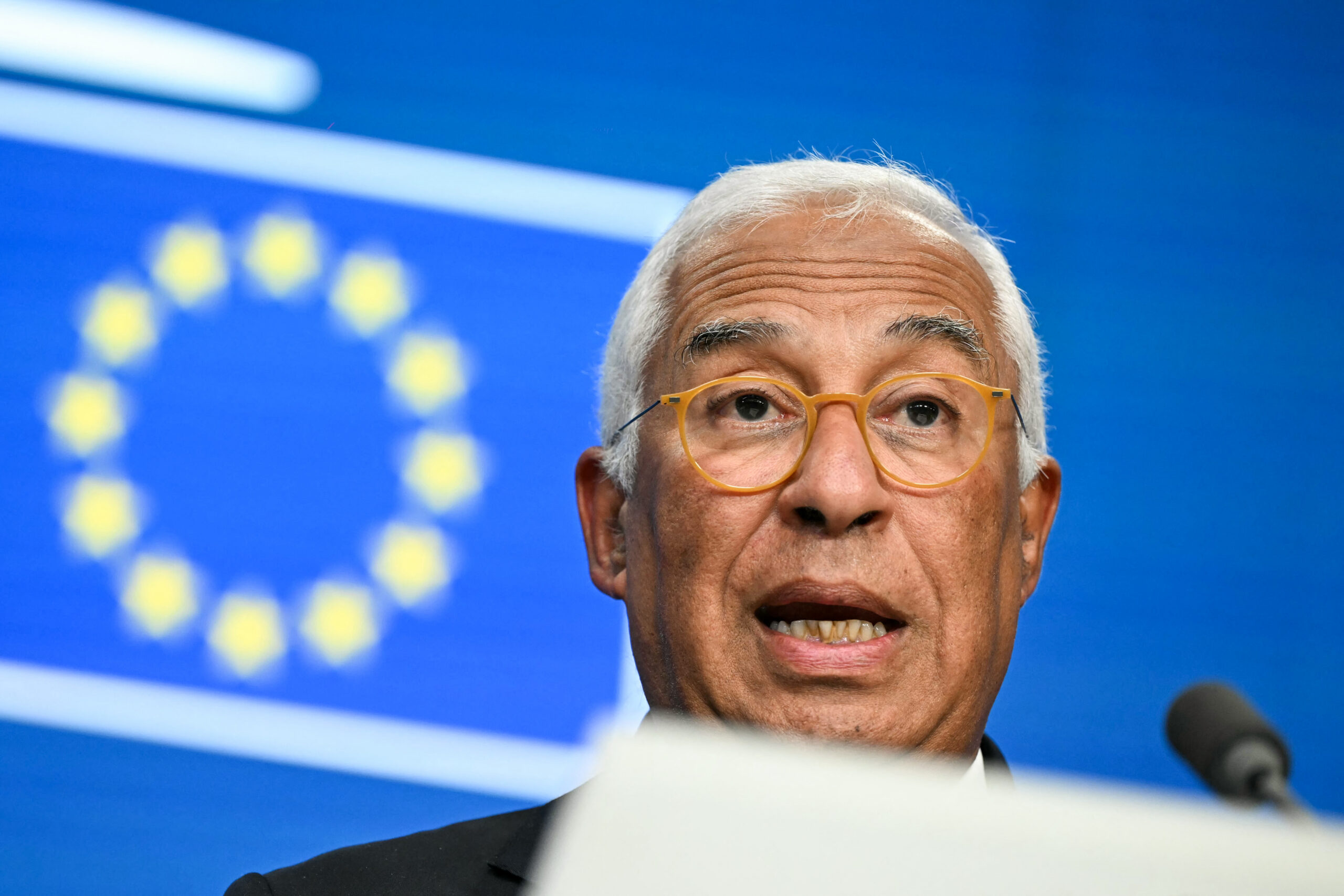
The European Union is suffering through yet another crisis. No, Russia has not conquered Brussels. Nor has the Euro collapsed. Rather, European Council President António Costa used his chief of staff to initiate informal contact with Moscow. Reported POLITICO: “the former Portuguese prime minister suddenly finds himself in the line of fire, with the heads of the bloc’s two most powerful countries among those most aggrieved.”
Imagine. The official tasked with promoting cooperation among the EU’s 27 members is vilified for addressing a neighbor believed to pose an acute security threat to the continent. What was he thinking!? “I don’t think right now is the right time to start negotiations with Putin,” complained Lithuania’s President Gitanas Nausėda.
Which leads to the obvious question: If not now, when? The conflict in Ukraine has raged for 52 months, longer than World War I, and shows no sign of abating. The fight continues to wreak ever more death and destruction. For Europe, at least, nothing is more important than ending the war.
However, Nausėda is a moderate compared to other European leaders. “The European Union cannot assume the role of mediator in these negotiations,” insisted Estonia’s Prime Minister Kristen Michal, since doing so would limit “its own ability to take the very actions required to support Ukraine and increase pressure on Russia.” Even more significant, POLITICO reports, France’s President Emmanuel Macron and Germany’s Chancellor Friedrich Merz “scorned efforts by European Council President António Costa.” (Apparently, they believe they should take the lead whenever any talks get going—if such talks ever happen.) Even Costa’s defenders downplayed his efforts. An unnamed EU official told POLITICO: “The contacts made at this point had the mere objective of establishing a channel of communication in order to, when the moment comes, have a diplomatic channel with Russia to defend EU’s interests.”
What are Costa’s critics doing to end the presumed threat from the east? In fact, the likelihood of Moscow attacking any EU country continues to fall. For Putin to double down after making such a colossal misjudgment about Ukraine’s resilience—an error that was widely shared in Washington and most European capitals—would test his hold on power. The likelihood that his crack legions could roll to the Atlantic is infinitesimal. Also bizarre is the theory that Moscow would attack the Baltic states, small nations of little strategic consequence, simply to test or erode NATO’s willingness to fight. Putin’s decision to invade Ukraine proved to be reckless, but at least reflected a coherent rationale. Invading the Baltics would be sheer madness.
However, the Ukraine War could still spread, given the Western allies’ deadly involvement in it. The conflict is a proxy war in which European governments as well as Washington have enabled Kiev to battle Russia’s army to a crawl and strike ever deeper behind the conflict lines. And Moscow fully understands that NATO members are doing their best to kill Russians. Biden administration officials even claimed credit for killing Russian generals and sinking a Russian ship. If Moscow similarly aided, say, Mexican forces battling America, the war cry in Washington would be cacophonous. And if Kiev uses Western aid to eventually transgress a red line, whether expressed or implied, Russia might retaliate against the NATO member responsible. Then all bets would be off.
This reflects practical reality, not moral judgment. Moscow’s deadly invasion was wrong—murderous and destructive without any compelling practical necessity. Allied policy was foolish, even reckless, but did not justify Putin’s decision to launch an aggressive war. The consequences have been horrendous for Russia as well as Ukraine. If the war has any positive result, it should be to remind every person affected and government entangled that technology is making armed conflict an ever more costly, even disastrous business.
Without negotiations, the war seems most likely become another frozen conflict and eventually peter out, though it also might escalate catastrophically. Kiev lacks the resources to defeat Russia, which, in extremis, could use nuclear weapons. Ukraine’s manpower dearth makes it more likely to continue slowly losing territory until Russia chooses to stop attacking. Kiev’s aerial attacks have embarrassed Putin and sapped support for the war, but they aren’t likely to force a peace. Nevertheless, despite Moscow’s advantages, the price of a decisive victory appears to be too high. Even Putin recently acknowledged that “we see the problems, we are aware of them and are responding to them.” Russia’s economic situation is likely to engender increasing popular dissatisfaction.
Perhaps the best of the mostly bad likely outcomes would be for Moscow to simply stop if it wins the rest of the eastern Donbas region. Neither country would then gain much from continuing missile and drone attacks. However, permanent armed hostility would risk renewed military action and discourage economic and social recovery. Europe would remain on edge, worried about Moscow’s future aspirations, especially if Putin is followed by a regime dominated by more radical, hardline nationalists.
Thus, negotiation is needed to reach a genuine, stable peace. Both Ukraine and Russia should be lodged within a larger security structure in which they are comfortable. That will happen only if European capitals help construct continental institutions to encourage economic growth and minimize military threats. These must include Moscow as well as Kiev.
Of course, participants in the next EU summit meeting are more likely to turn into an unruly mob shouting “Death to Putin” than to advocate that Europe recognize and respect Russia’s interests and fears. But there will be no stable peace without Moscow’s agreement. Ignoring persistent warnings of Russia’s (not just Putin’s) opposition to NATO expansion led to Moscow’s invasion of Ukraine. To repeat, explanation is not justification. Nevertheless, had the transatlantic alliance not moved steadily eastward, ostensibly aiming to include Ukraine and Georgia as well, there is no reason to believe that Russia would have invaded its neighbor.
The various participants must place a peace settlement between Kiev and Moscow in the larger continental context. The allies, Europeans particularly, must understand Moscow’s red lines and express their requirements to Russia. Putin is no friend of democracy, but he was not hostile to Europe or America when he took office. To the contrary, as he explained to Germany’s Bundestag in 2001:
Subscribe Today Get daily emails in your inbox
As for European integration, we not just support these processes, but we are looking to them with hope. … It is my firm conviction that in today’s rapidly changing world, in a world witnessing truly dramatic demographic changes and an exceptionally high economic growth in some regions, Europe also has an immediate interest in promoting relations with Russia. No one calls in question the great value of Europe’s relations with the United States. I am just of the opinion that Europe will reinforce its reputation of a strong and truly independent center of world politics soundly and for a long time if it succeeds in bringing together its own potential and that of Russia, including its human, territorial and natural resources, and its economic, cultural, and defense potential.
Recovering that moment is highly unlikely, but reminding both sides of what is possible could leaven the relationship, tempering the antagonisms and hostilities that have metastasized over the last quarter century. To the good, European governments are already spending more on the military, though divisions among them remain significant. Now they should work to reduce the geopolitical chasm that has opened between Russia and the rest of the continent.
Europe and America both would benefit if António Costa and others established a dialogue with Moscow. Tragically, the Russia–Ukraine war remains far from its conclusion unless Europe focuses on ending the conflict. That requires more than supporting Ukraine, important though that remains. After more than four years of war, Europe should actively push for peace.