Colombia at the Crossroads
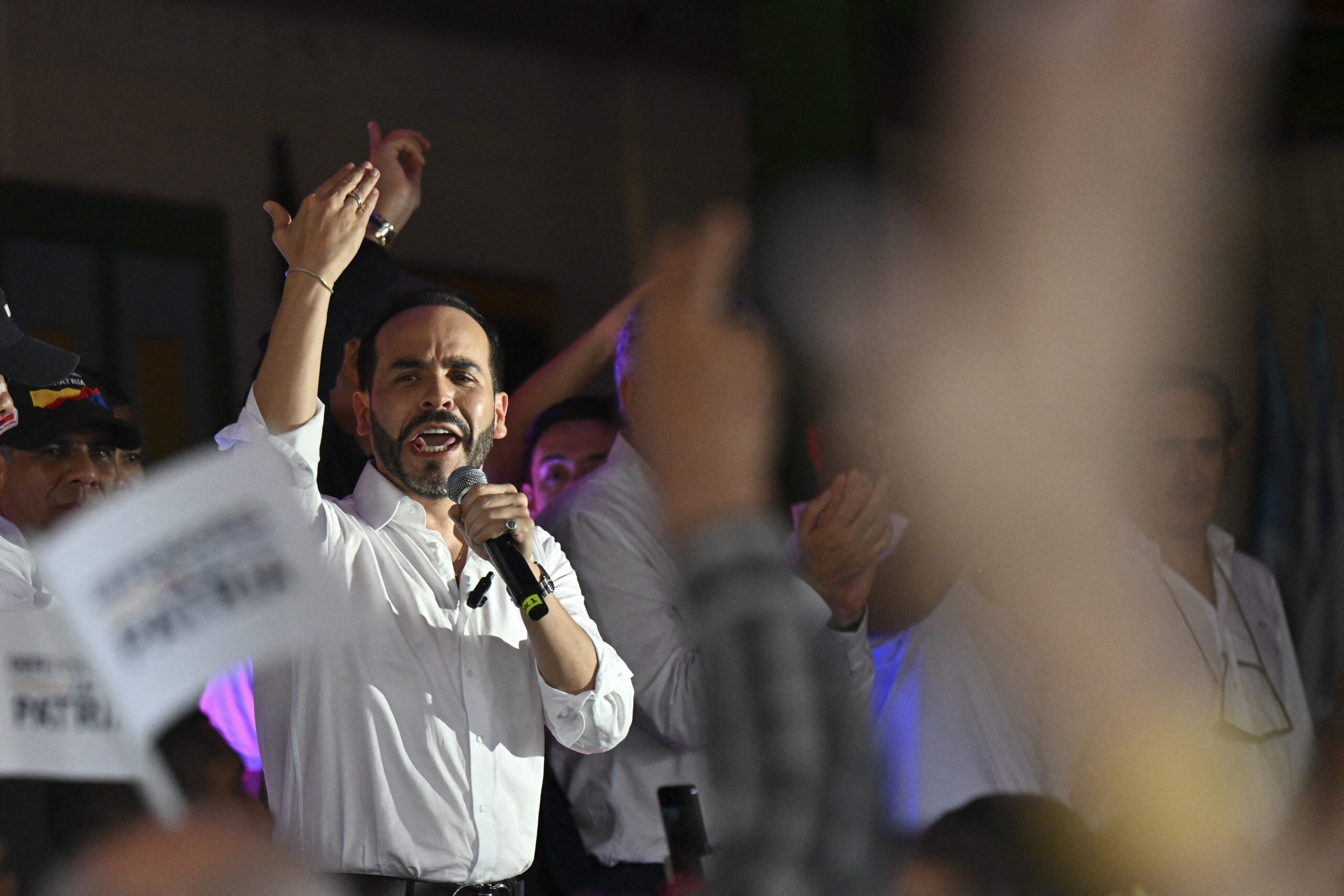
President Gustavo Petro is scrambling to keep Colombia in the hold of the country’s left after voters on Sunday, in the first round of the national elections, sent a sharp message that they are ready to take the country in a new direction. Right-wing populist candidate Abelardo de la Espriella took first place with 43 percent of the vote, a result which Petro declared Sunday “has no binding force.”
Petro argued that “hundreds of thousands of votes were added” to the rolls to swing the election, sparking fears among opposition politicians and international observers that the president might attempt to annul the elections. He elaborated on his accusation that the election was fraudulent Tuesday, announcing that he had acquired data proving that thousands of polling stations across the country were engaged in a ballot-stuffing operation to pad the vote in favor of de la Espriella.
Petro alleges that the software used to register voters was tampered with to add nearly a million additional voters, allowing a surge of fraudulent ballots to be cast for de la Espriella. As evidence, Petro provided a list of some 5,300 polling stations that had recorded more than 300 votes on Sunday, a number which the president argued is the most votes any polling station could have recorded during voting hours. Some polling stations recorded as many as 700 votes.
“The examination of the 5,300 atypical polling stations can’t be done by counting the votes,” Petro wrote in his statement on X. “The scrutiny must examine whether the voters are on the official census that was closed two months before the elections. If they are not, it is because they are not real voters.”
The discrepancies between the census and many of the supposedly anomalous polling stations Petro pointed to as evidence of fraud are simply from the president’s failure to account for Colombian voters abroad, according to the Misión de Observación Electoral, a Colombian election monitoring organization. Thousands of Colombians cast votes from nearly 700 polling stations in embassies and consulates overseas. These voters are naturally not accounted for in the regular census, and most consulates and embassies collect significantly more votes than standard polling stations.
So far, Petro has received little support in his attempt to discredit the presidential election. Left-wing candidate Iván Cepeda, who will go to a runoff election against de la Espriella later this month, initially supported Petro’s allegations, but executed a rapid about-face the next day. “There are no irregularities of sufficient dimension to speak of fraud,” Cepeda said Monday.
Petro’s decision to cast doubt on the results of the election has fueled further polarization and paranoia in an already acrimonious campaign season. His coalition, Pacto Histórico, rode to success in 2022 on the promise of welfare reform and paz total (“Total Peace”), a program of negotiations with the guerillas and cartels that have plagued Colombia for decades. Petro is himself a former guerillero, and he was convinced that the country could do away with terrorism and organized crime through rational discussion and the reintegration of narcoterrorists and drug traffickers into civil society.
Predictably, that approach to the problem has not succeeded. Indeed, despite declaring itself open for negotiations with any terrorist, revolutionary, or organized crime group, Petro’s government has yet to make any material progress. The pitiful results—a few minor truces between warring factions, often quickly broken—have not made up for the increased boldness of the Colombian narcos, who do not fear the government or its vacillating president.
During Petro’s presidency, conflicts between various guerilla groups have exploded, reaching their highest level in a decade last year, up a staggering 34 percent from 2024. The number of active narcos has more than doubled since he took office; nearly 30,000 guerrillas are currently engaged in narcoconflicts, compared to just 13,000 in 2022.
The growing wave of violence has left Colombians frustrated with Petro’s administration and eager for a new approach to governance, placing the Colombian right at a material advantage in the ongoing elections. Traditionally, this niche was filled by uribismo, the strain of Colombian conservatism headed up by popular former president Álvaro Uribe, who led the country from 2002 to 2010. During his two terms, Uribe oversaw Colombia’s most successful guerilla pacification program, and for many years his movement dominated the Colombian right.
But by 2025, uribismo had become staid and institutionalized enough for candidates from the populist right to mount a meaningful challenge. It found its candidate in de la Espriella, a flamboyant lawyer whose promises to crush the narcos with the mano dura (“iron fist”), slash the bureaucracy, and root out the corrupt political establishment resonated with Colombians frustrated by the limp-wristed security policy and perpetual scandals of the Petro administration.
Colombia’s traditional right was not helped by the loss of one of its most promising candidates: In June of 2025, the prominent senator Miguel Uribe Turbay (no relation to Álvaro Uribe) was gunned down in cold blood during the middle of a campaign event in Bogotá by assassins from the narcoterrorist group Segunda Marquetalia.
Subscribe Today Get daily emails in your inbox
The open-air assassination ignited a firestorm in Colombian politics and seemed to many to demonstrate the need for drastic measures of the kind advocated for by de la Espriella. Paloma Valencia, the eventual standardbearer for the mainstream right, proved to be completely outmatched: Despite her extensive credentials, long experience in Colombian politics, and the support of Álvaro Uribe, she won a measly 7 percent of the vote in the first round and has since endorsed de la Espriella in the runoff against Cepeda.
The next few weeks may constitute a pivotal point in Colombia’s history. De la Espriella is in a promising position: Colombians are sick of Petro and the failed policies of Colombia’s left, and he has united the Colombian right behind his populist platform. He has even secured the endorsement of President Donald Trump.
But Petro’s willingness to discredit election results in the first round is evidence that he will pull every lever available to stop what he sees as the destructive and morally bankrupt right wing from taking control of Colombia. He may well choose to escalate the situation in the days leading up to the runoff election on June 21. If he does, de la Espriella may find himself at the center of a political crisis before ever reaching the Casa de Nariño.