Burnham Starts Premiership Short on Cash, Ideas
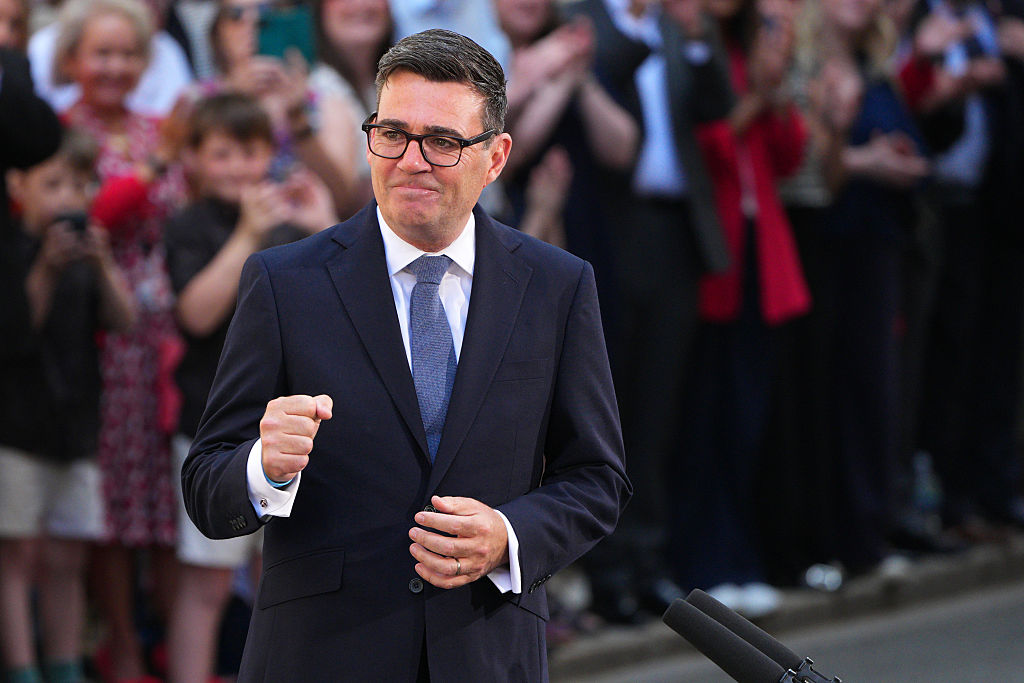
Britain’s latest prime minister, the seventh in 10 years, registered his first policy failure even before he took office. Andy Burnham’s only concrete pledge on the doorstep of Number 10 this morning was to end rough sleeping in Britain. It didn’t take long for journalists to discover that he had failed in a similar promise when he became mayor of Greater Manchester. Indeed, rough sleeping roughly doubled during his last five years in office from its low point.
Homelessness has become an intractable problem in the UK, as anyone who visits British inner cities can testify. This is largely because of local increases in divorce, substance abuse, and a lack of affordable accommodation for rent. The situation has been aggravated by large numbers of asylum-seekers crowding out temporary housing in cities such as Glasgow.
Burnham said nothing about immigration or Britain’s drug problem. In fact, he said very little in his notes-free speech beyond the platitudes to which we have become accustomed. Let us “bring back hope,” he said, as if he were announcing a new footballer to the England squad. He promised “a new political model and a new economic model” and a “10-year plan” to deliver it, without giving any idea of what it might involve. His predecessor, Sir Keir Starmer, who left Number 10 this morning, also had a 10-year plan. It lasted two years.
Burnham blamed Britain’s economic misfortune on “wrong turns” taken in the 1980s, when “political power was centralized, economic power privatized, large parts of the country deindustrialized.”Actually, the Thatcherite market and trade union reforms of the 1980s were so successful that they were mostly retained by the Labour Prime Minister Tony Blair in the 1990s.
Andy Burnham, wearing a tie for a change, promised to “put life’s essentials back under stronger public control to make them affordable to you again.” He means the public utilities: water, energy and transport. Presumably he intends measures such as capping the cost of bus fares, as he did in Manchester. But, since he will lack the cash to actually nationalize the means of utility production, he will still rely on private capital expenditure to finance it, presumably guided by more regulation.
Britain already has a lot of that, such as the environmental regulation that required £100 million to be spent on a bat tunnel for Britain’s stalled high-speed rail link. But perhaps the new prime minister means a new kind of regulation.
His promise to build a mass of new council houses for rent will certainly require a bonfire of planning restrictions, which blight construction projects in the UK. Basically, British people like the idea of new homes, but they don’t want any new homes built anywhere near them.
More opaque still is his pledge today to “take power out of here [Westminster] and carry it into every postcode in the land.” Apart from setting up an office of Number 10 in Manchester, we have no idea what this means. Is it more metropolitan mayors as in Greater Manchester? Is he planning more regional legislative devolution to parts of the UK that don’t have it?
It does not appear to mean more powers for the Scottish and Welsh parliaments, since he has said that Scottish cities like Dundee feel as remote from the Scottish Parliament in Edinburgh as northern English cities like Newcastle feel from London.
But behind the verbiage, what is clear is that Burnham’s Britain will be even more highly taxed than it is now and that borrowing—already ruinously high—will increase. Everything talked about today involves government spending one way or another, yet he barely mentioned economic growth.
Britain already spends nearly twice as much on debt interest as it does on defence. More is spent on welfare than is raised by income tax. The tax burden, especially on the better-off, is higher than at any time since the Second World War. Clearly taxes are going nowhere but up, despite all the pledges in the last Labour manifesto under Keir Starmer.
Subscribe Today Get daily emails in your inbox
Unlike Starmer, Britain’s new prime minister has not won a general election—or even a Labour Party leadership election, since no one stood against him. He has been “coronated,” to use the word of the moment, with no mandate from the people.
Cynics say Britain is beginning to resemble a Venezuela-style country with dysfunctional politics, a bloated public sector, capital flight and a debt pile of nearly £3 trillion. But, unlike the Latin American state, Britain has decided to forgo the hydrocarbon wealth off its shores. Reports last week that Burnham might announce a resumption of drilling in the North Sea were apparently premature.
All this will now be the responsibility of the surprise new Chancellor of the Exchequer John Healey, the former defence secretary who resigned from Keir Starmer’s government last month over his failure to deliver on promises to find £28 billion for the Defence Investment Plan. If Andy Burnham doesn’t want to risk losing his chancellor, he will likely have to find a lot more money for Britain’s much depleted military.