After Ankara, Deep State and Euro Hawks Celebrate Wins
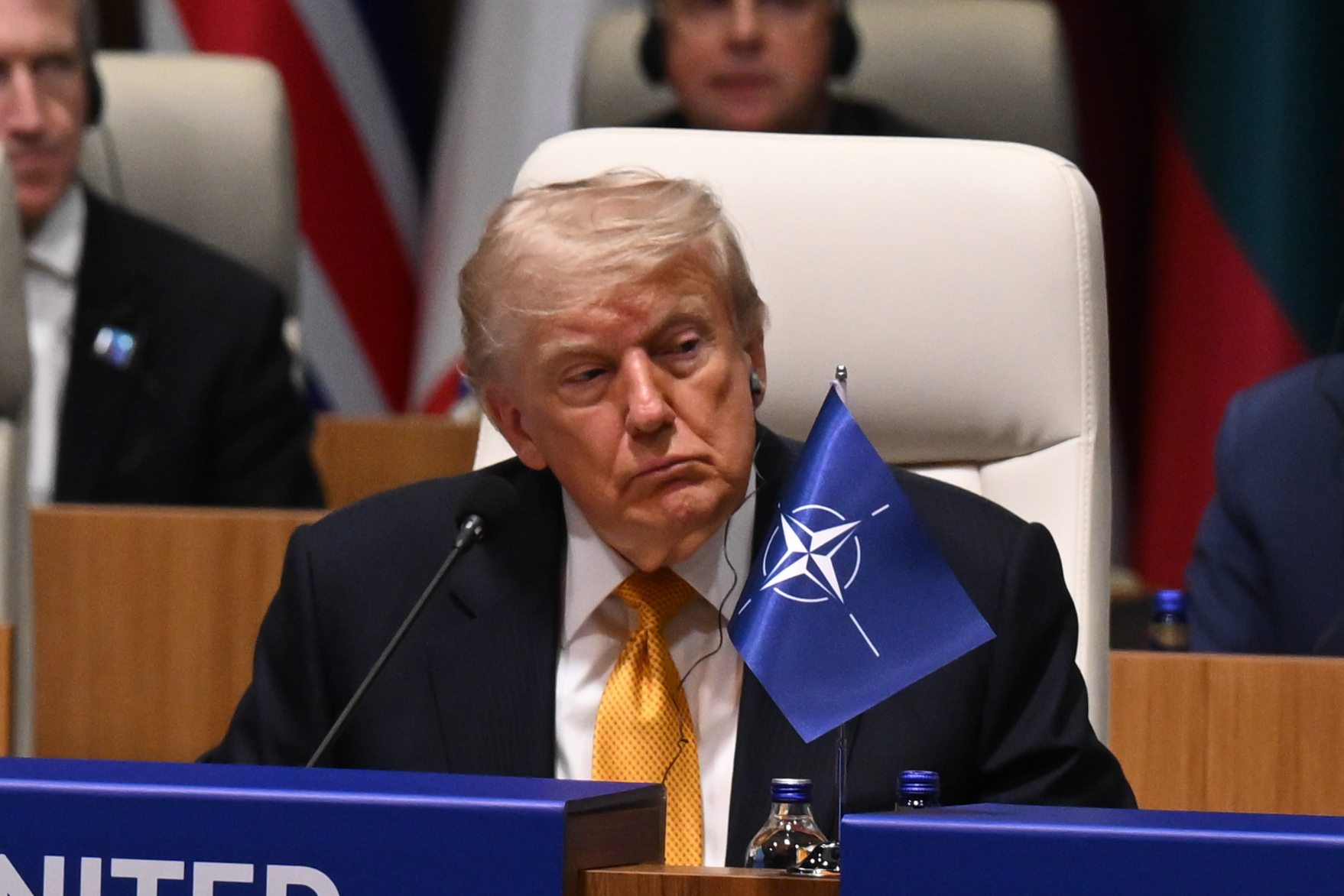
As a candidate, Donald Trump famously promised to end the war in Ukraine “within 24 hours” of taking office.
This past week, he acknowledged that Ukraine’s strikes on Russia’s energy infrastructure represent an “escalation” in the conflict and offered new support for Kiev’s war effort.
“It’s an escalation,” Trump said, “but it’s also an escalation that can help lead to an end of the war.”
“We're going to give a license to you to make Patriot missiles,” Trump told reporters ahead of a meeting with Ukraine’s President Volodymyr Zelensky, who Trump said has “done an amazing job.” As the Washington Post approvingly noted, the President appeared to be “embracing a view that Ukraine and many Europeans have long held.”
That view—which sees Ukraine’s war as winnable, if only the West will send enough money and weapons—has been the consensus among foreign policy elites since this thing kicked off. Now, aided by Western news outlets, hawks in Europe and our own national security bureaucracy are successfully selling this narrative to a gullible president who had previously resisted their blandishments.
Nor are they shy about their methods. As the New York Times documented late last year, “beleaguered U.S. military officers met with their CIA counterparts to help craft a more concerted Ukrainian campaign.” This campaign, which focused on oil refineries, was pitched by the Agency at the highest levels: CIA Director John Ratcliffe made the case to his boss personally, on the golf course.
At “a frequent Sunday tee time,” the Times reports, Ratcliffe sold the plan to a receptive Trump, who “praised America’s surreptitious role in these blows to Russia’s energy industry” even as Putin, in the President’s colorful telling, “continued to jerk him off.”
This sell by the deep state continues apace. Last week, the Wall Street Journal reported that the President “is being shown U.S. intelligence reports about Ukraine’s new strike capabilities and has been impressed by them,” and that “those assessments explain why Trump is talking more positively about Ukraine compared with last year.”
According to John Mearsheimer, Glenn Diesen, and other close observers of the conflict, the latest CIA-backed strikes on Russian infrastructure won’t change the fundamentals of the conflict—but could well lead to destabilizing responses by Moscow.
Mearsheimer has long recognized that the fundamental dynamics of this war favor Russia. As he told the EU Parliament last fall, “Russia is clearly winning this war, and it’s likely to prevail,” because “in a war of attrition, each side tries to bleed the other side white, which means that the side that has more soldiers and more firepower is likely to emerge victorious. Russia has a significant advantage on both dimensions.”
Since then, little has changed. New Western aid commitments “will have hardly any effect on what happens on the battlefield,” Mearsheimer told The American Conservative. What they might do instead, Mearsheimer warns, is encourage the Kremlin to give more weight to hardliners like Sergey Karaganov, who claim the West has lost its fear of Russia and that only drastic measures—the use of a tactical nuke, for example—can restore deterrence.
In a similar vein, Glenn Diesen argues that NATO’s goal of “bringing the war to Russia” will not force Putin to fold, since “from Russia's perspective, a ceasefire is not peace as NATO countries would then send in their troops and military hardware.”
“The only possible response now for Russia,” Diesen argues, “is escalation that may take us to nuclear war.”
Western leaders believe they can manage the escalation ladder and avoid such a catastrophic outcome. The bet would be more credible if the same hubris—the certainty that the West could provoke Russia without consequence—hadn't produced the proxy war itself.
“My view of what’s happening here,” Mearsheimer observed last month, “is that Ukraine is actually losing on the battlefield, and that people in the know, on the inside, recognize that. And the last thing they want to do is say that out loud. Instead, what they are doing is conducting this massive propaganda campaign that basically says that Ukraine has 1) turned the tide on the battlefield… 2) the drone attacks deep into Russia are beginning to have a significant economic and political set of consequences on Putin and on Russia more generally… and then of course the story is that Putin is weak and he’s vulnerable and… [he’ll be] forced to concede to us.”
And that, Mearsheimer says, is “a delusional set of arguments.”
Subscribe Today Get daily emails in your inbox
Increasingly, the enthusiasm of Western elites for intensifying the war appears at odds with the views of some Ukrainians themselves. Last week, the Ukrainian city of Lviv saw riots protesting Zelensky’s sweeping conscription regime. Such “clashes between citizens and army conscription police,” Euronews reports, have “seen a steady increase… with authorities reporting over 100 such incidents this year alone.”
This is perhaps unsurprising, given the country’s structural issues with manpower. Ukraine is in a “demographic death spiral,” as Mearsheimer explains, “and we’re encouraging them to throw bodies into the meat grinder when they’re going to lose anyway.”
But the concerns of ordinary Ukrainians were not top of mind at last week’s NATO summit. The policymakers gathered in Ankara were interested in total victory, not peace. “Europeans,” as Glenn Diesen observed, “got what they wanted. Diplomacy is dead & this is now Trump’s war.”