The US-Iran Deal Draws Skepticism But Requires Open Eyes | Opinion
I read the 14 points of the U.S.-Iran memorandum of understanding (MOU) the way I used to read drafts in the White House and, before that, for two decades at The Trump Organization: pen in hand, marking up every clause. Old habits do not disappear just because the job does. My honest reaction, reading it that way, is that I have serious questions about its structure and its terms. The blockade lifts, oil starts moving again and sanctions relief sits on a path that can be read by both sides differently. To say nothing of what the memorandum may or may not say about Lebanon and what Israel may or may not be able to do to defend itself from Hezbollah, missile production, drones and proxies.
I also have questions about the Strait of Hormuz and whether any final agreement will guarantee its full and permanent freedom of navigation.
And yet I know how incomplete my reaction is, coming from someone standing outside the room. I spent three years watching the gap between what the public saw and what was actually happening behind closed doors, and I learned that the view from outside the room almost always misses things the people inside knew or were reaching for. Fairness requires I hold myself to the same standard now.
Opinion
Yet the calls and messages have not stopped since the MOU became public. Friends, diplomats, reporters, all asking the same question: What do you think? My answer is owed, not a dodge, so here it is.
My skepticism of the Iranian regime has not moved an inch. This is a government whose stated project includes the destruction of Israel, active hostility toward what the Gulf states have built and continue to build, and open hostility to American interests across the region and to the United States itself. More than 110 days of war revealed that posture, again, in case anyone needed reminding. I take seriously what President Donald Trump and Vice President JD Vance have argued; that there may be a more pragmatic faction inside the regime, one that has not abandoned the ideology but has concluded the current path leads nowhere useful. That argument deserves a hearing. Yet even if such a faction exists and is sincere, that faction does not control every lever inside Iran. Hard-liners and factions of Iran's Revolutionary Guard (IRGC) who would rather burn the whole arrangement down than concede a millimeter are very much alive and present, and they may yet have the louder voice and bigger sticks when it matters.
Israel and the Gulf paid dearly for their seat at this table. Israel took missile fire for months, including from Hezbollah in the north. The Gulf states absorbed real damage too, and the United Arab Emirates in particular took some of the heaviest direct hits of the entire conflict. That exposure stands in stark contrast to 2015, when neither Israel nor the Gulf states were given a serious voice in the negotiations that produced the Joint Comprehensive Plan of Action (JCPOA). This time, Israel had meaningful input at various points along the way, even if apparently little to none on the MOU itself, and Israel will need to navigate the coming process carefully. The Gulf Cooperation Council (GCC) states appear to have had a voice as well, though that voice is not uniform across the Gulf and will not always align with Israel’s.
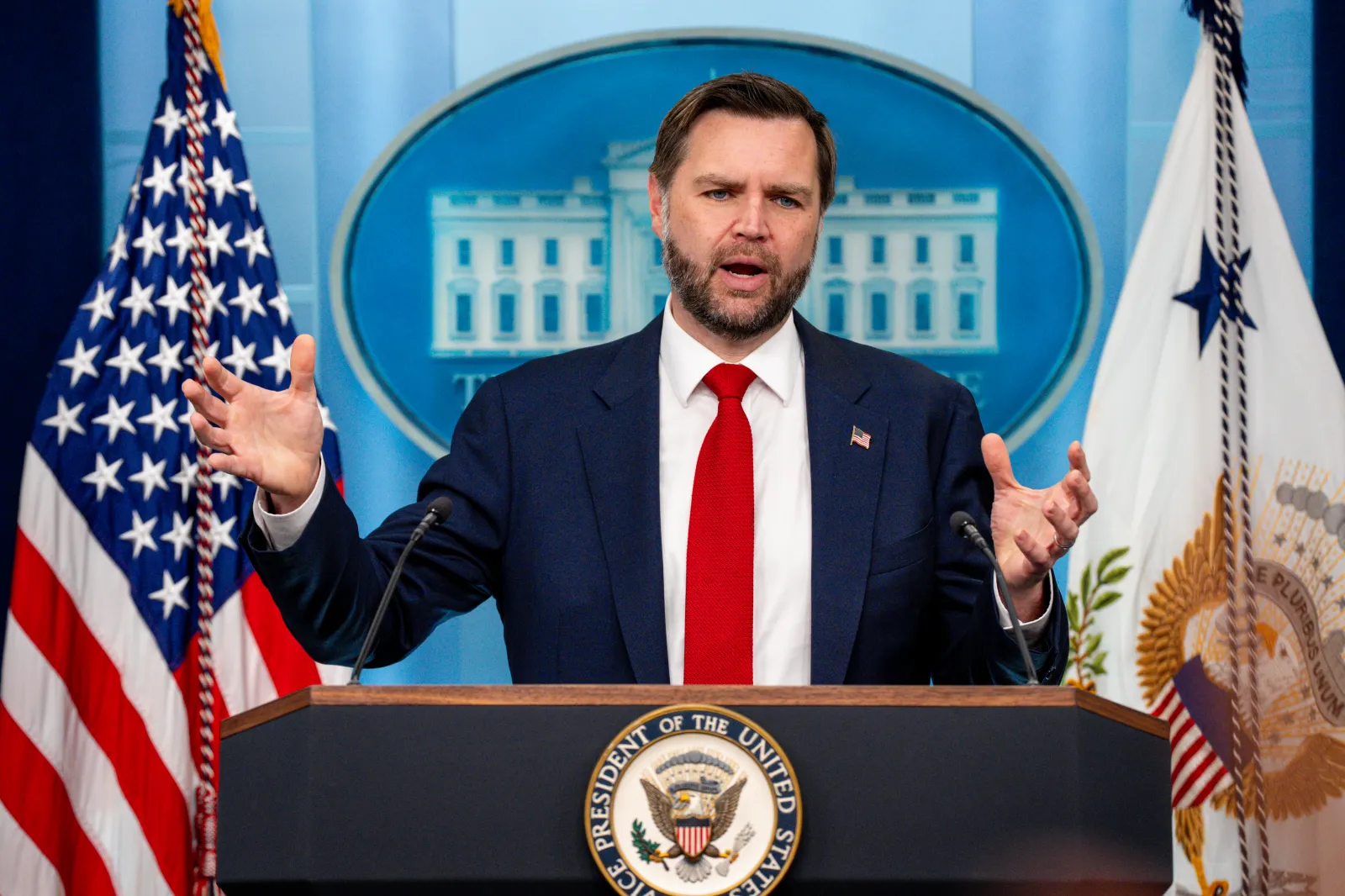
Vance has become the public face of these negotiations. Since I do not know him personally, I can only judge the arguments he has made in recent interviews and at his press conference on June 18. As uncomfortable as I am with where things stand, after hearing him I think some of what he said deserves serious thought rather than reflexive dismissal. Vance argued that those who believe Iran will never change its behavior may be right, but that the answer to that question can only be found by trying. I count myself among those who believe the regime will not change. But that conviction does not automatically win the argument against making the attempt. He is making that case under real pressure from members of his own party and from Israeli officials who are openly furious: nothing flows to Iran automatically. Vance argues there will be no sanctions relief, no reconstruction money, none of it, unless Iran’s behavior actually changes first.
I cannot talk myself out of how this MOU sits with me. It sits heavily. But on my other shoulder sits something I cannot dismiss either. Trump has done more on the Iran file than any of his predecessors, delivered more for Israel’s security across two terms and more to build the Gulf relationship into something durable and strategically serious. He created this moment, having severely weakened Iran economically and militarily. Trump made clear, and Vance reiterates, that they will not allow Iran to rebuild that position without evidence of real change. He has broken through walls that the foreign policy establishment insisted could not be moved. That record does not come close to dissolving my unease, but Trump’s actions over years have built something that deserves to be watched with open eyes, rather than written off before the facts are in. And those facts will not be found in the text of this MOU. They will be found in what Iran actually does in the weeks and months ahead, and in how Trump responds to that.
Iran may be enjoying its moment. Tehran’s own statements suggest it believes it got everything it wanted. It ought to be very careful. If it does not walk the fine line toward a real agreement that will make sense to Trump, it risks blowing everything up again. Trump has surprised the world more than once on this file, building leverage nobody expected him to build and forcing openings nobody thought were there. If Iran misreads this moment and miscalculates what comes next, both Iran and the world may find themselves surprised again, and not pleasantly.
I have no more visibility into what was weighed to get to this MOU than anyone not directly involved. The right posture is clear: open eyes, skeptical but not reactive, clear-eyed but not naive. Fair criticism is warranted. Premature conclusions are not. I will judge by what actually unfolds. If Trump reaches a real agreement—one that resolves the nuclear question properly and, ideally, much else besides—the war and this MOU will have been the right call. If Iran's intransigence makes that impossible, Trump still has every option on the table, before the midterms or after. My instincts say this will not lead anywhere good. But Trump has delivered many outcomes I did not think possible before. I genuinely hope this becomes another one.
Jason D. Greenblatt was the White House Middle East envoy in the first Trump administration. He is the author of In the Path of Abraham: How Donald Trump Made Peace in the Middle East—and How to Stop Joe Biden From Unmaking It, founder of Abraham Venture LLC and publishes the Substack “How to Watch a War” and “How to Watch Trump.” Follow him on X @GreenblattJD.
The views expressed in this article are the writer's own.