How Donald Trump won the World Cup
On Sunday evening, President Donald Trump was at New York New Jersey Stadium (MetLife Stadium) for the final of the FIFA World Cup to witness the final game between Spain and Argentina, which Spain won 1-0 in extra time on a goal from Ferran Torres after Argentina played the final stretch a man down.
It was Trump's first and only game of the tournament. He watched from the box alongside Mexican President Claudia Sheinbaum, Canadian Prime Minister Mark Carney, and Spain's King Felipe VI and Prime Minister Pedro Sánchez. While loud booing was heard when the cameras pointed at him, the President looked unamused, decided to close a World Cup that happened largely under his watch.
Six weeks ago, that ending looked far from certain. Critics warned the first 48-team World Cup would become a case study in how politics could overshadow sport. Yet the catastrophe many expected never materialized. The tournament broke attendance records, produced the largest television audiences in American soccer history and, by the time it reached Sunday's final between Spain and Argentina, had been hailed by many observers as one of the strongest World Cups in recent memory.
Politics
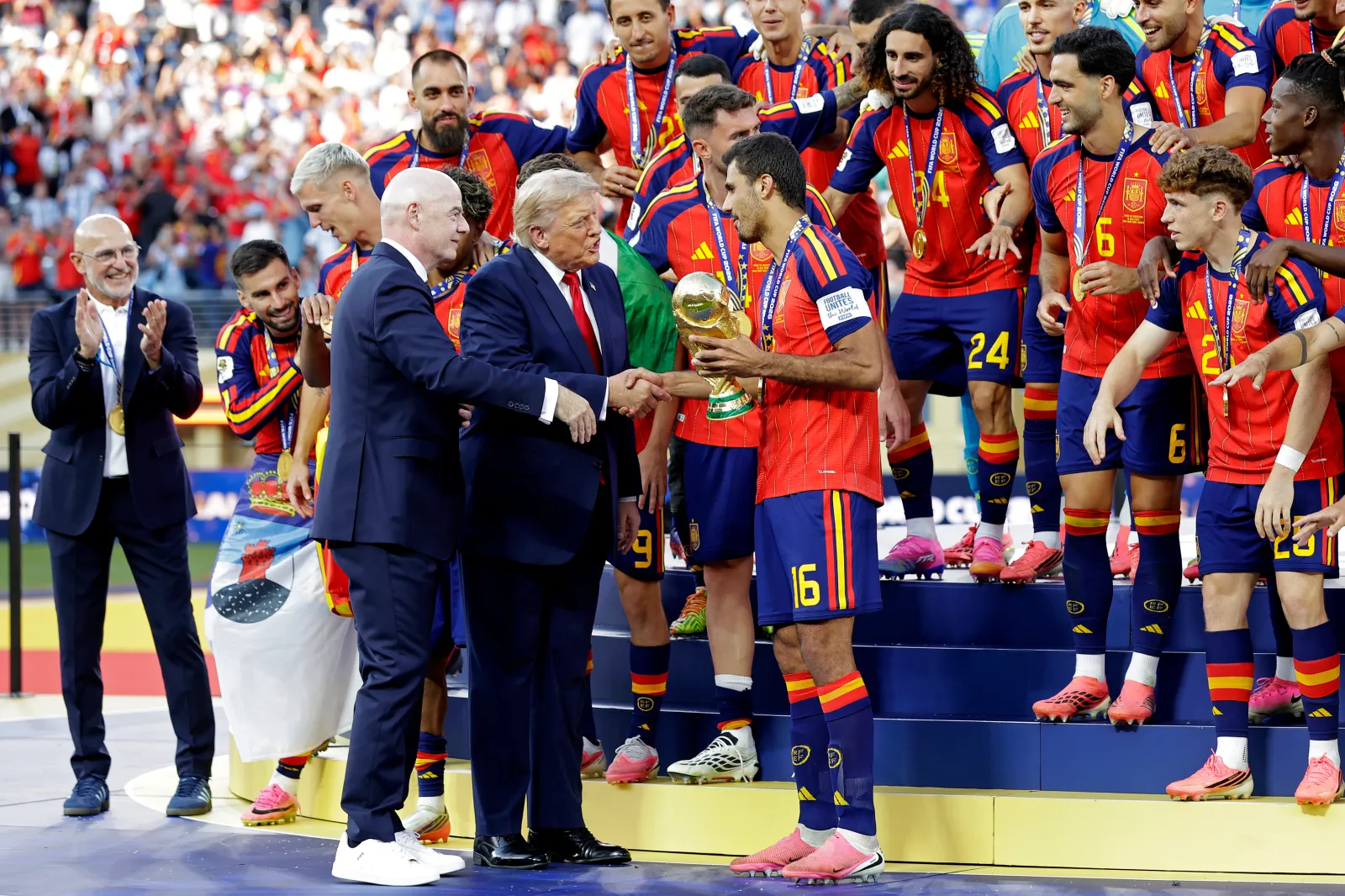
Trump stood at the center of the tournament's defining image, presenting the FIFA World Cup trophy to Spain captain Rodri during the title celebrations. It was the ending FIFA had envisioned for years: a packed stadium, billions watching around the world, and the president of the host nation sharing the spotlight on soccer's biggest stage.
Like every World Cup before it, the tournament ended with a single photograph that will likely outlive the games themselves.
The doubts were real. Fan groups accused FIFA of pricing out supporters, and hotels in several host cities reported bookings below expectations. Civil rights organizations feared immigration enforcement around venues. Hotels in several host cities reported bookings below expectations, while polls suggested much of the American public simply wasn't interested.
Newsweek was among the outlets that questioned whether the tournament had become, in the words of one pre-tournament analysis, "one giant money-grabbing exercise that had alienated fans before the first ball had even been kicked," while other outlets, including MS NOW and The New York Times, ran headlines suggesting Trump had made the World Cup "less fun."
Instead, immigration crackdowns around stadiums never materialized, empty seats never became an issue, and the boycott movement failed to gain momentum.
The Tournament Nobody Believed InFor a few days, the skepticism lingered. Former FIFA president Sepp Blatter urged fans to stay home entirely, backing Swiss anti-corruption lawyer Mark Pieth's advice that supporters were better off watching from their couches amid growing security concerns.
Some of those concerns proved well-founded. Iran and Haiti, both qualified for the tournament, were barred under the administration's travel restrictions. Visa delays kept relatives of players, coaches and officials from reaching the U.S. FIFA's increasingly close relationship with Trump drew sharp criticism in Europe, culminating in ethics complaints against President Gianni Infantino.
Then the crowds arrived.
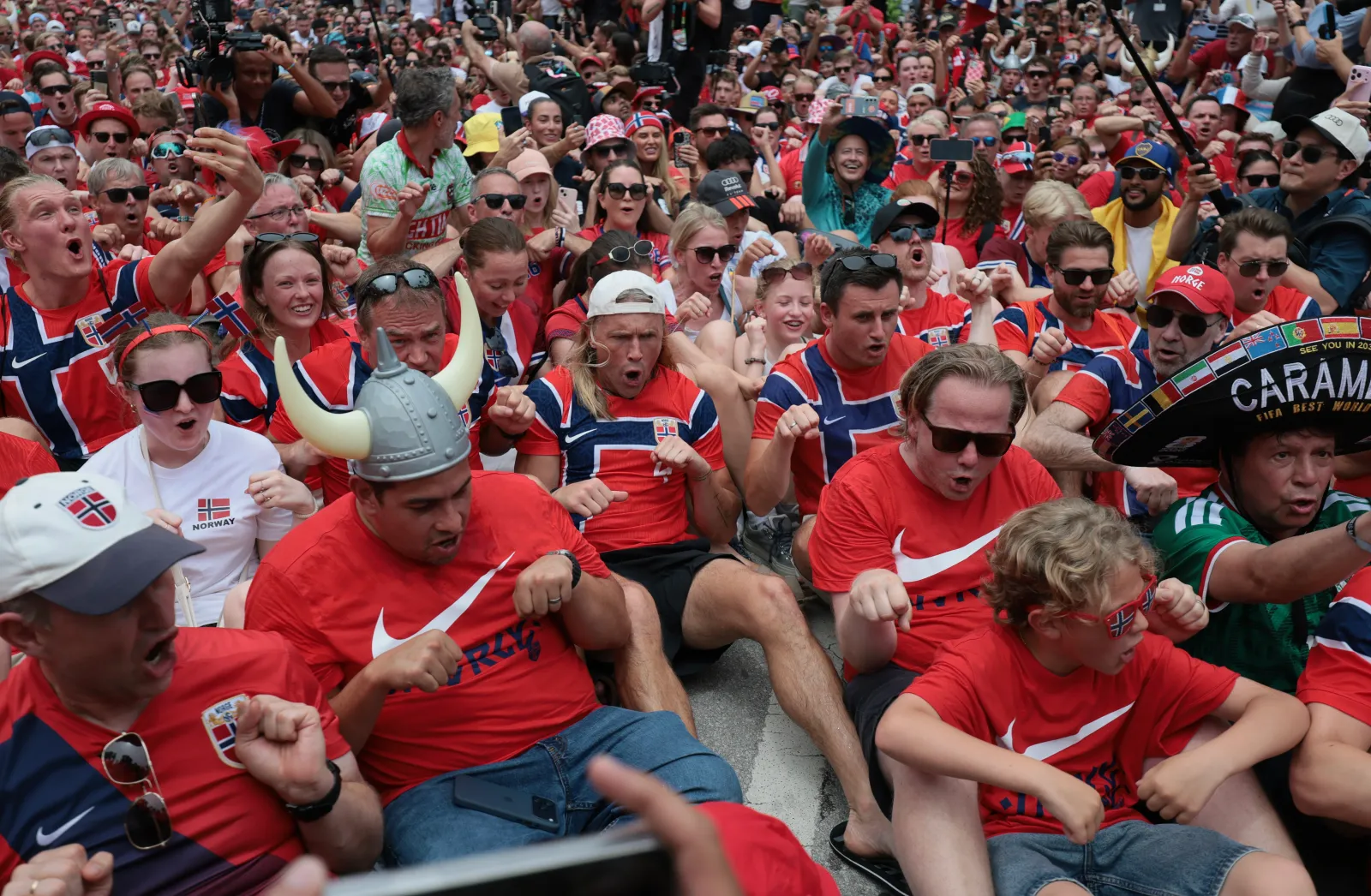
The tournament finished with a record 6,810,966 spectators across 104 matches, according to FIFA, surpassing the combined attendance of the 2018 and 2022 World Cups. Stadiums were filled to 99.7 percent of available seats, while the attendance record set by the 1994 World Cup fell before the group stage was even complete. One day in June alone drew more than 426,000 fans across tournament venues, setting another World Cup record.
The television audience followed the same trajectory.
Fox's English-language broadcasts delivered the highest group-stage audience in U.S. history, averaging more than 5 million viewers across Fox, FS1 and Tubi, while Telemundo averaged 4.6 million viewers, a 122 percent increase over the 2022 tournament. The U.S. opener against Paraguay drew roughly 18 million viewers on Fox platforms and another 9.5 million on Telemundo, setting records in English and Spanish. By the semifinals, Argentina's victory over England averaged more than 15 million viewers on Fox alone, the largest World Cup semifinal audience in English-language U.S. television history.
For FIFA, that math mattered more than any empty seat ever could have.
"The FIFA Men's World Cup is absolutely FIFA's cash cow. It's the organization's main source of income over a four-year cycle," Simon Chadwick, a professor at Emlyon Business School and author of The Business of the FIFA World Cup, told Newsweek. The tournament's revenue, he said, funds everything else FIFA runs, from the Women's World Cup to the Club World Cup.
The quality of the football helped carry those numbers. The tournament produced 2.94 goals per game through the quarterfinals, the highest scoring rate since Mexico 1970's 2.97 average, according to FIFA figures, and comebacks became a defining feature. The 2026 field authored 11 comeback victories, breaking the previous record of 10 set at the 2014 World Cup in Brazil, and Argentina was far from the only team pulling them off.
The storylines kept casual fans watching as much as the football did. Lionel Messi, Kylian Mbappé and Erling Haaland were scoring goals for fun, turning the Golden Boot race into one of the tournament's defining subplots. It marked the first time in World Cup history that three players scored at least seven goals in the same edition.
But the underdogs often stole the spotlight. Fears that expanding the tournament would dilute its quality proved unfounded. Cape Verde's 40-year-old goalkeeper, Josimar "Vozinha" Évora Dias, became a folk hero after holding Spain scoreless in the group stage and nearly eliminating Argentina in the round of 32. Norway emerged as the tournament's surprise package, knocking out five-time champions Brazil and turning Haaland and its Viking-inspired goal celebrations into a social media sensation. Scotland, meanwhile, won over fans off the pitch as tens of thousands of supporters transformed Boston into a sea of tartan, helping drive local beer sales up by more than 50 percent.
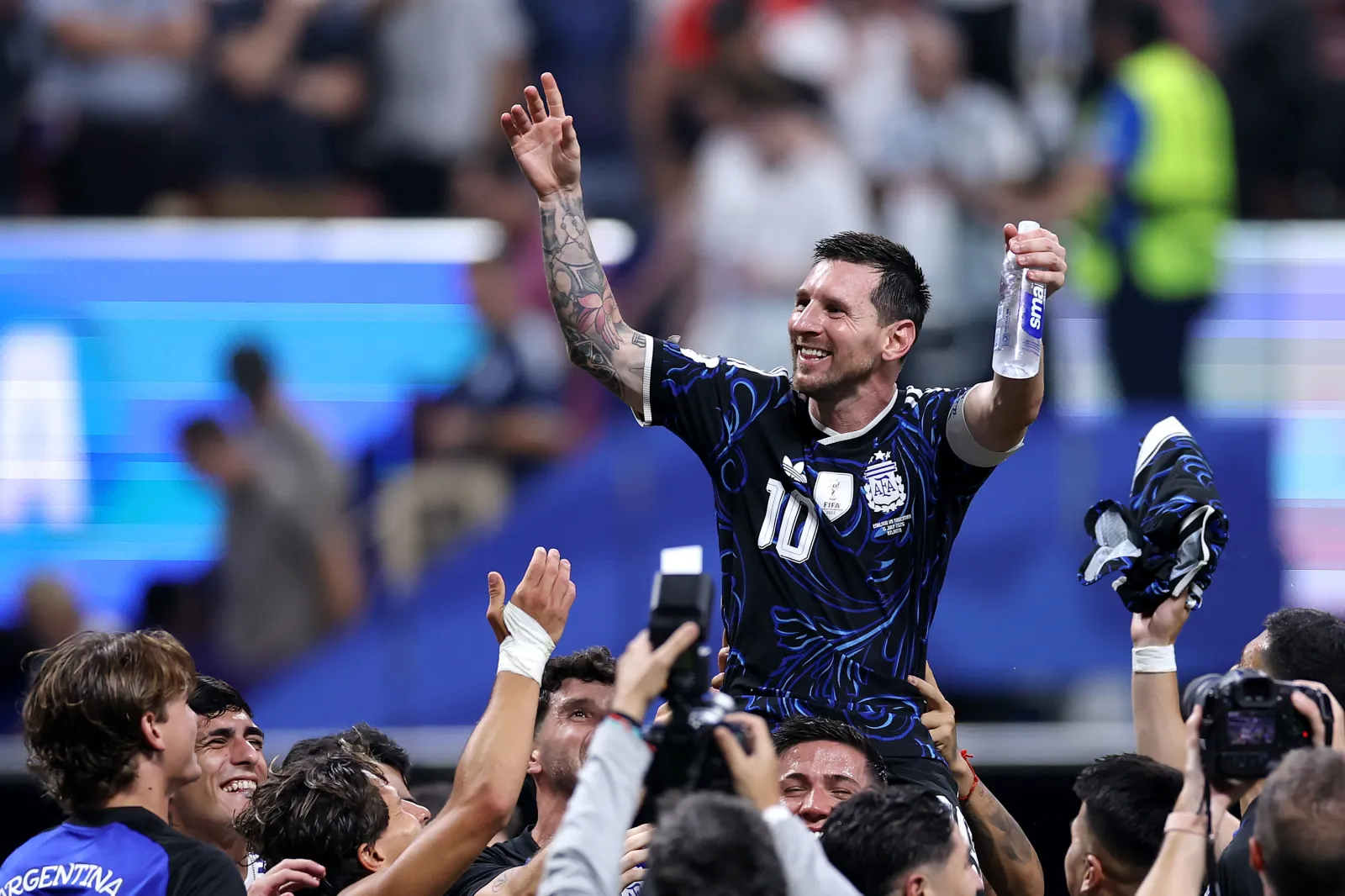
The atmosphere inside the stadiums helped change perceptions outside them. Matches routinely sold out, underdog nations filled city centers with supporters, and the tournament produced the kind of drama FIFA had envisioned when it expanded the field to 48 teams. By the final weekend, commentators who had questioned whether the U.S. could successfully host the world's biggest sporting event were instead debating whether it had staged one of the best World Cups in decades.
The President Who Was Everywhere, and NowhereTrump had spent years positioning himself as the political face of the 2026 World Cup.
He hosted the tournament draw at the Kennedy Center in December. Infantino used the occasion to present him with the organization's newly created Peace Prize. Trump's administration created a White House task force to oversee preparations. His immigration policies became one of the defining controversies surrounding the tournament before it began.
But when the games actually started, Trump disappeared. For a president known for seeking the spotlight, his absence was striking. He did not attend the group stage.
That absence may have helped him.
The tournament that critics warned could become a political disaster moved forward with little disruption. There were no immigration raids inside stadiums. No major security incidents. No diplomatic confrontation with host cities run by Democratic officials. The images coming out of the tournament were not of protests or chaos. They were of packed stadiums and international fans celebrating across American cities.
Even some of Trump's critics acknowledged the tournament's smooth execution.
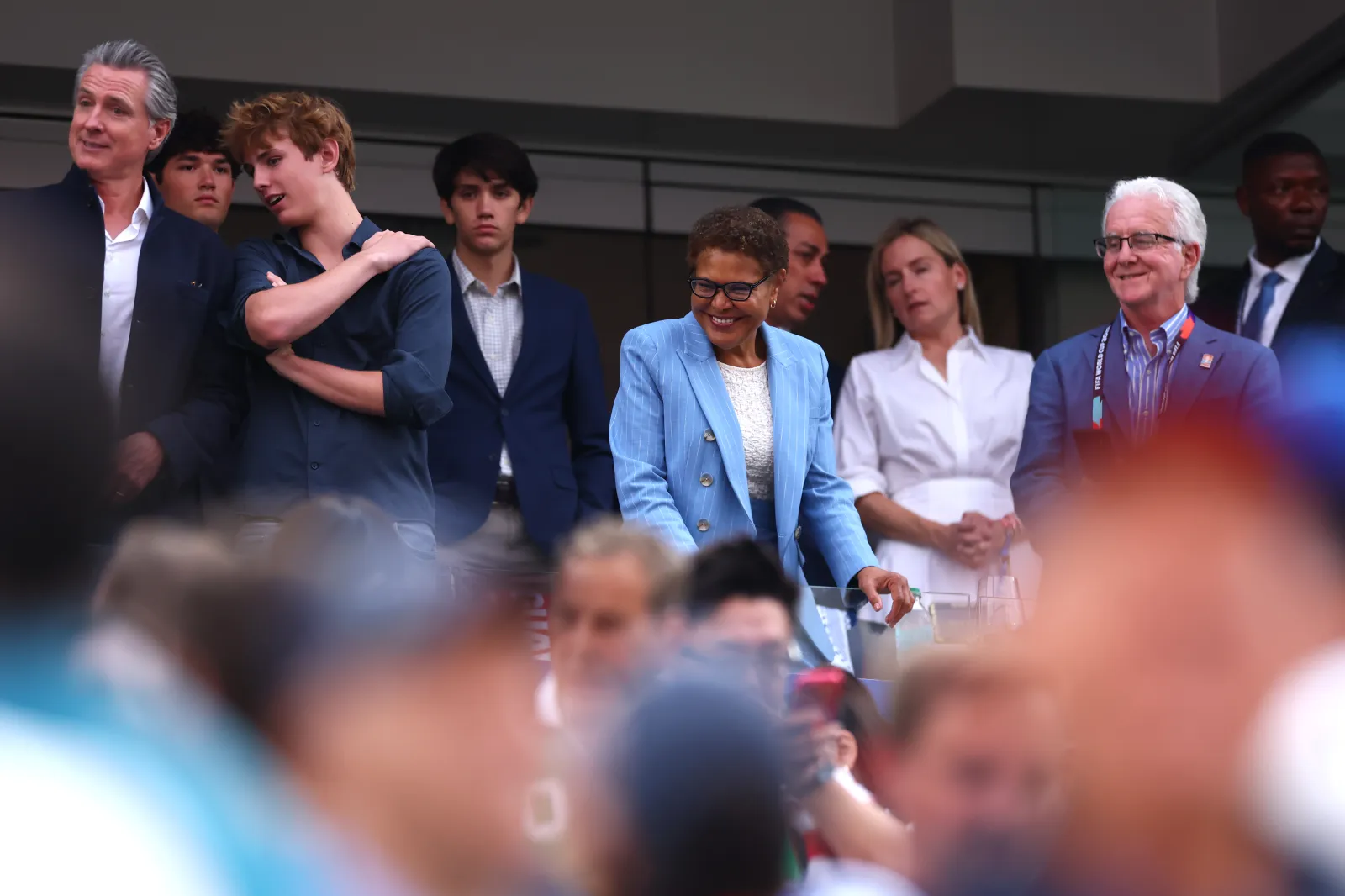
Democratic officials who had raised concerns about ticket prices, public spending and the administration's treatment of foreign visitors still embraced the tournament itself. California Governor Gavin Newsom, Pennsylvania Governor Josh Shapiro, New York City Mayor Zohran Mamdani and New Jersey Governor Mikie Sherrill all attended matches.
 The Infantino Problem
If Trump emerged from the tournament largely untouched by controversy, the same cannot be said for Infantino.
Infantino's decision to award Trump FIFA's newly created Peace Prize during the tournament draw drew immediate criticism from European politicians and human rights groups, who said soccer's governing body had blurred the line between sport and political loyalty. FIFA's decision to open offices inside Trump Tower deepened those concerns.
Then came the Folarin Balogun case.
On July 1, the American forward was shown a red card during the U.S.'s match against Bosnia and Herzegovina, an automatic suspension that threatened to keep him out of a knockout match. Trump personally contacted Infantino to ask FIFA to review the decision. Four days later, FIFA overturned the red card, the first time a World Cup sending-off had been reversed since 1962.
Trump celebrated the decision as the correction of "a great injustice."
The reaction abroad was swift. Belgium coach Rudi Garcia compared the reversal to an April Fool's joke. Belgium Foreign Minister Maxime Prévot said the decision "raises many questions." European Commissioner for Sport Glenn Micallef called it "the wrong decision," writing that sporting decisions "belong to sporting bodies, not politicians." The Royal Belgian Football Association said the lack of clarity left it no choice but to challenge Balogun's eligibility.
The episode carried an added layer of irony. Balogun, born in Brooklyn, owed his spot on the American team to the same birthright citizenship protections Trump's administration had tried to restrict.
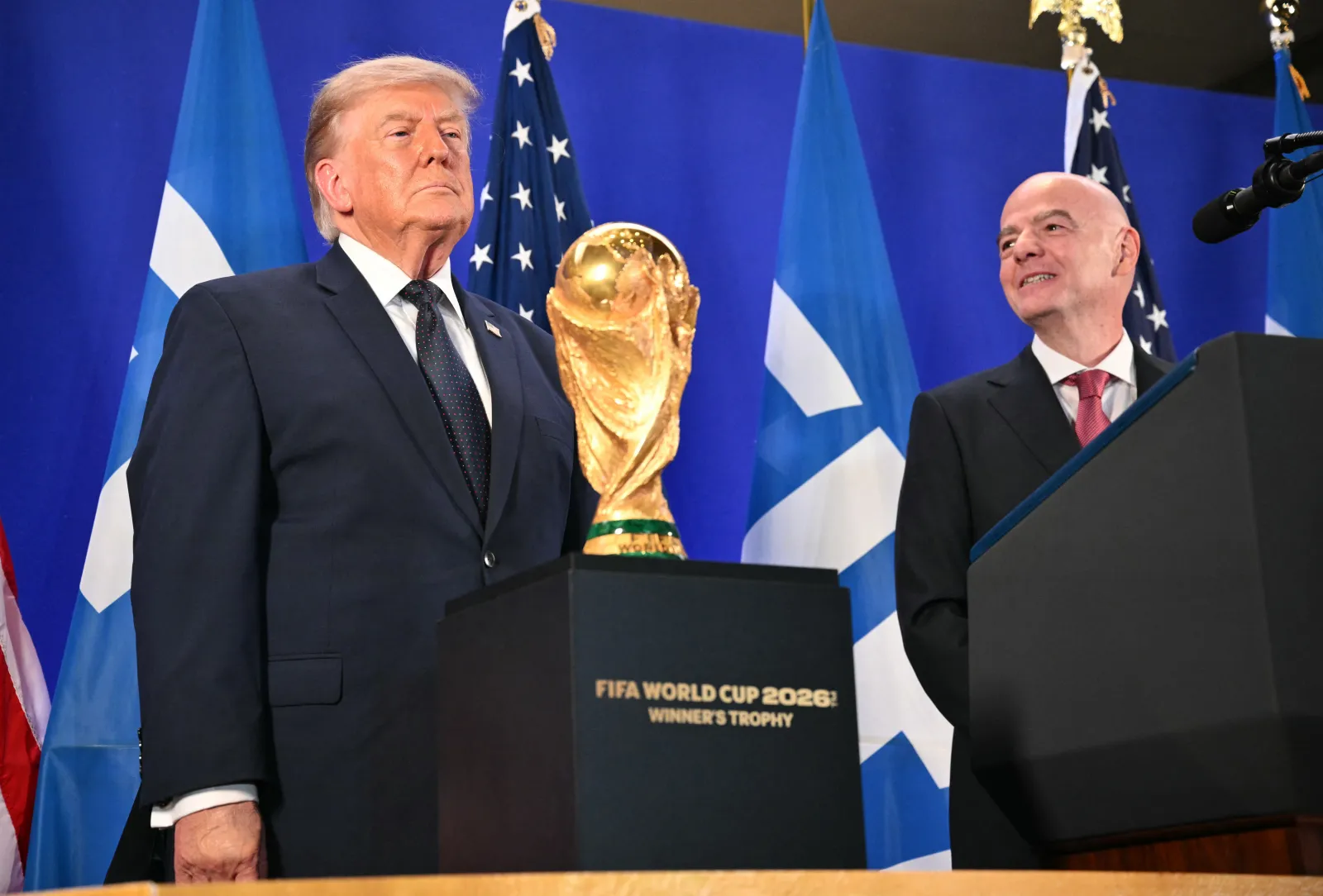
The scrutiny has begun to touch Infantino's own position. Germany's football federation declined to sign a letter circulated by FIFA's European director backing his reelection at the FIFA Congress next March, a signal of unease from one of the sport's most influential federations. No rival candidate has yet emerged, and FIFA's voting structure, in which Europe and South America together hold only 65 of 211 votes, still favors him. But the snub marked one of the clearest breaks yet from a FIFA president who has been reelected unopposed twice before.
Chadwick said that dynamic explains why Infantino's position remains secure despite the European backlash.
"A lot of people may dislike the way Infantino has run the game, but confederations and national federations are happier than ever because FIFA is bringing in unprecedented amounts of money under his leadership," he told Newsweek.
On Trump's WatchBy the time the tournament reached its final whistle on Sunday, it would be Infantino fielding questions about the Balogun case, the prize, the offices in Trump Tower and how much of himself he had handed over to get there. Trump would not be fielding anything. He would be walking onto the field in New Jersey with the controversy already behind him and the credit still very much ahead.
When Trump handed the trophy to Spain's Rodri, he closed the books on one of the most successful World Cups in the tournament's history. The empty seats never came. The boycotts never came. The raids never came. What came instead were record crowds, record ratings, and a president standing at the center of the frame.
The excluded fans, the barred nations, the families still waiting on visas that never arrived, those will fade into the footnotes. What will not fade is simpler, and it is the only line that matters to the man holding the trophy: it happened on his watch.
Contact Newsweek editors for this story: Jason Lemon and Anthony Murray.