DARPA’s pre-COVID blueprint: Building a system to predict, manufacture and deploy future pandemics – NaturalNews.com
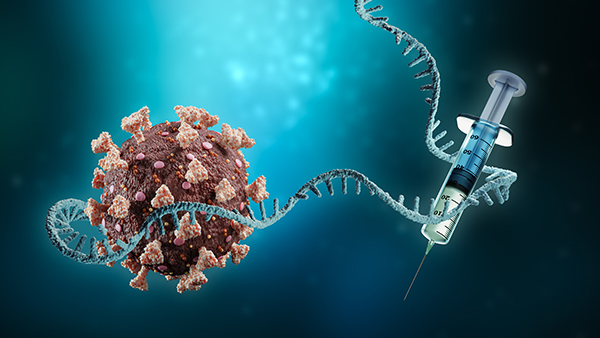
DARPA’s pre-COVID blueprint: Building a system to predict, manufacture and deploy future pandemics
Beginning in 2010, the Defense Advanced Research Projects Agency launched an ambitious program to accomplish what had never been done before: predict the future characteristics of viruses before they emerged in nature, then use those predictions to develop vaccines and drugs in advance of any outbreak. The program, called PROPHECY, operated under Broad Agency Announcement DARPA-BAA-10-93 and was managed by DARPA's Defense Sciences Office. Its stated goal was unambiguous: "explore the evolution of viruses in the hopes of predicting viral mutations and ultimately developing drugs and vaccines in advance of need."
The predictive architecture: Building the blueprint before the pathogenDARPA openly acknowledged that existing vaccine development operated backward, describing the pharmaceutical model as "observational and reactive." PROPHECY aimed to replace that model with one that was "predictive and preemptive."
The program sought systems capable of determining future mutations, reassortments, genetic events and the order in which mutations would emerge. DARPA required participants to "reproducibly predict the genomic, proteomic and/or functional attributes of the final viral population." Researchers were instructed to perform "real world" tests of predictive algorithms and validation systems.
The effort brought together machine learning researchers, statisticians, computational biologists, laboratory scientists, national laboratories and universities into a single framework designed to determine the characteristics of future pathogen populations before they appeared.
The pandemic stack: Five programs, one operating systemPROPHECY was the first of five DARPA programs that together formed what analysts now describe as a complete pandemic operating system.
ADEPT, launched in 2011, invested in gene-encoded medical countermeasures including DNA- and RNA-based technologies. DARPA credited ADEPT with helping establish the technological foundation for nucleic-acid vaccines and identified Moderna as one of its contracted performers.
The Pandemic Prevention Platform, known as P3, emerged in 2017 and aimed to identify an outbreak and deploy protective countermeasures within 60 days. DARPA stated P3 was meant to operate even when "only electronic viral sequence information may be available."
PREEMPT began in January 2018 and sought to identify viruses in animal reservoirs before spillover into humans. The program required field sampling, metagenomics, ecological surveillance and machine learning to model evolutionary trajectories.
DEFUSE was submitted under PREEMPT as a proposal involving EcoHealth Alliance, the Wuhan Institute of Virology and the University of North Carolina. It proposed bat sampling, spike sequencing, receptor-binding experiments and chimeric coronavirus construction.
From sequence to product: How the system worksUnder the standard pandemic model, the sequence begins with identification of a physical virus. Under the architecture DARPA built, the sequence itself powers the entire infrastructure.
Once a genomic reference is accepted, PCR targets can be selected, surveillance databases organized, computational variants identified and pharmaceutical products designed. Operation Warp Speed, launched in May 2020, demonstrated how this architecture could be activated at industrial scale after DARPA spent years developing the foundational capabilities.
The Department of Health and Human Services and Department of Defense spent approximately $13 billion on vaccine development, manufacturing and distribution by the end of 2020. The program achieved production of hundreds of millions of doses on a compressed timeline.
A reusable infrastructure for future emergenciesThe five DARPA programs examined together appear to form successive layers of a vertically integrated system: predict the sequence, build the product platform, compress deployment time, construct the animal-origin framework and deploy the countermeasure at population scale. COVID-19 may represent one operation conducted through this system rather than its final objective.
The central question extends beyond the origins of SARS-CoV-2. The same infrastructure could theoretically be reused: a new genomic reference published, PCR targets distributed, cases accumulating, surveillance systems identifying computational variants, and governments deploying countermeasures through preexisting emergency authorities. The organism named in the next emergency could change, but the operating system would remain largely the same.
Sources for this article include: