Beef Prices Near Record Highs as Shrinking Cattle Herd Drives Up Costs, Yet Consumer Demand Remains Strong – NaturalNews.com
Beef Prices Near Record Highs as Shrinking Cattle Herd Drives Up Costs, Yet Consumer Demand Remains Strong
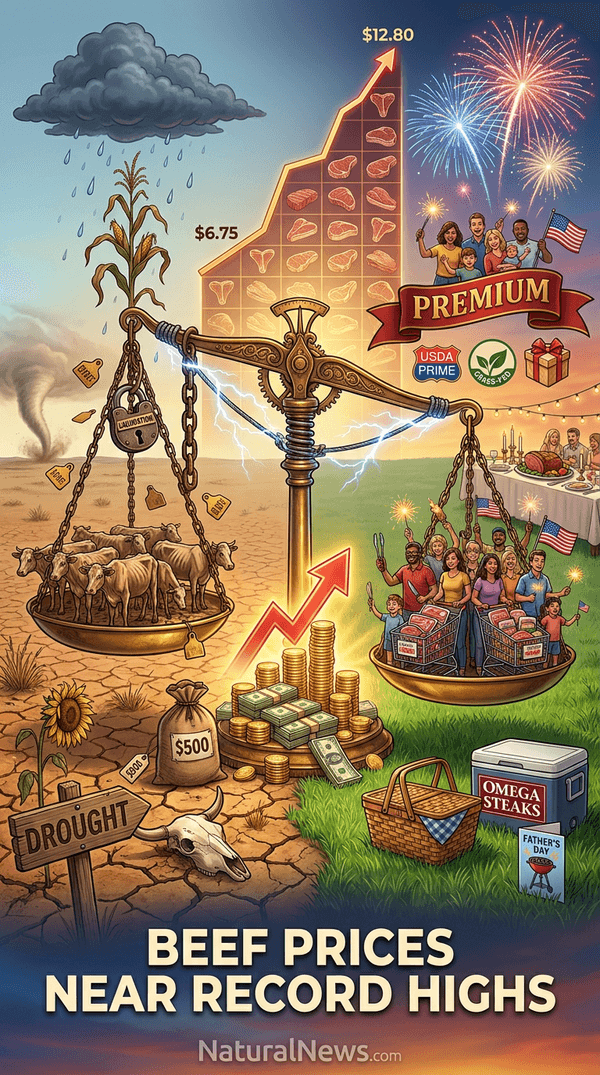
Beef prices remain near record highs as the U.S. cattle herd sits at its smallest size in decades, pushing costs higher for consumers who continue to buy beef despite the increase. According to data from the U.S. Bureau of Labor Statistics, the average price of ground beef reached $6.75 per pound in May, up nearly 13% from a year earlier. Beef steak prices averaged $12.80 per pound, a 16% increase year-over-year.Reports from the U.S. Department of Agriculture show total cattle inventory has declined sharply. The mid-year count for 2025 fell to 94.2 million head, the lowest since 1973, according to USDA data cited by NaturalNews.com [3]. The shrinking herd is the result of years of drought, elevated feed costs, and widespread herd liquidation. Despite the price surge, consumer demand for beef has not weakened. Fourth of July beef sales rose approximately $352 million compared to the prior year, according to NielsenIQ.
Supply Constraints Drive Price IncreasesDrought conditions and high feed costs have led ranchers to reduce herds, shrinking supply and pushing cattle prices higher. The 2012 Midwest drought, for example, reduced grain and oilseed yields, pushing up feed prices for livestock producers, according to the book "Hard Living in America's Heartland: Rural Poverty in the 21st Century Midwest" [6]. More recently, severe droughts in Texas and other cattle-producing states have forced ranchers to sell off breeding stock, further reducing herd sizes. The USDA livestock analyst Shayle Shagam noted a significant number of female stock have been placed in feedlots, a sign that producers are liquidating the very animals needed to rebuild herds [2].
The resulting supply crunch has driven retail beef prices to near-record levels. The U.S. cattle herd has shrunk to 86.7 million head, the smallest since 1951, according to a report from NaturalNews.com [4]. That report cited droughts, inflation, and policy shifts as squeezing ranchers, who warn of a "national security threat" to food sovereignty. Officials said rebuilding the cattle herd will take years without imported supply, prolonging tight supplies. The Trump administration has moved to temporarily cut beef import tariffs to ease domestic prices, according to a May 2026 report [1], though ranchers warned of limited relief.
Consumer Demand Shows Resilience Despite High PricesA Kroger spokesperson told CNBC that customer demand for steaks remains high, with a shift toward more premium and organic options. According to the same report, beef has generated the largest dollar growth of any food category ahead of Independence Day, with sales rising roughly $352 million compared to the prior year, based on data from NielsenIQ.
NielsenIQ reported that consumers are making more grocery trips but with clear intent behind each one. Consumers view steak as an "affordable luxury" where they are willing to pay more for quality and the experience while finding savings elsewhere. This dynamic has held even as prices have climbed. The resilience offers another clue into consumer behavior at a time when investors are closely watching for signs of where high prices are causing shoppers to pull back. Agriculture Secretary Earl Butz, quoted in the book "Amber Waves of Grain," noted decades ago that rising meat prices were driven by consumer affluence and demand [5].
Shoppers Prioritize Quality and Premium CutsNielsenIQ data cited by CNBC indicate that when purchasing meat, shoppers reported increasing favor toward quality claims such as USDA Prime (42%), no added hormones (40%), grass-fed (37%), and no antibiotics ever (36%). "Shoppers are looking past the label and into the story behind the meat," the research firm said. These preferences have held even as overall beef prices remain elevated.
Omaha Steaks President and CEO Nate Rempe told CNBC that customers continue to prioritize gifting steaks even as they cut back elsewhere. "Customers are still celebrating dad with premium proteins, but they're also being thoughtful about value and versatility," Rempe said. The company reported continued growth in its USDA certified tender top sirloin filet, with sales up 25% in the weeks heading into Father's Day 2026 compared to 2025. LongHorn Steakhouse parent Darden Restaurants also reported a rise in diners seeking steaks. CEO Rick Cardenas said, "The guests know they're getting high quality steaks when they come to LongHorn... They get a great value. And it doesn't hurt that there's a high beef inflation in the market. And so the relative value looks a little bit better."
Outlook for Beef Prices and DemandThe key question for investors is how long the dynamic of high prices and sustained demand can last. Rebuilding the U.S. cattle herd could eventually increase beef supplies and ease prices, but that process takes years without the aid of imported supply, officials said. The Trump administration's temporary suspension of tariff-rate quotas on beef imports, announced in May 2026, is one attempt to bring relief [1]. However, ranchers have expressed concern that such moves may not address the underlying supply shortage.
Recovery of cattle herds depends on several consecutive years of favorable weather, according to analysis from Brighteon Broadcast News [8]. Tight domestic conditions are expected to persist in the near term. While consumers have shown willingness to pay higher prices for premium cuts, the sustained strength of demand may be tested if prices continue to climb. The current situation mirrors historical patterns described in the book "A Century in the Saddle," where drought forced ranchers to choose between hoping for rain or shipping herds to slaughter [7].
References