Three Cups of Tea Daily Linked to Lower Heart Attack Risk in Coronary Heart Disease Patients, Study Finds – NaturalNews.com
Three Cups of Tea Daily Linked to Lower Heart Attack Risk in Coronary Heart Disease Patients, Study Finds
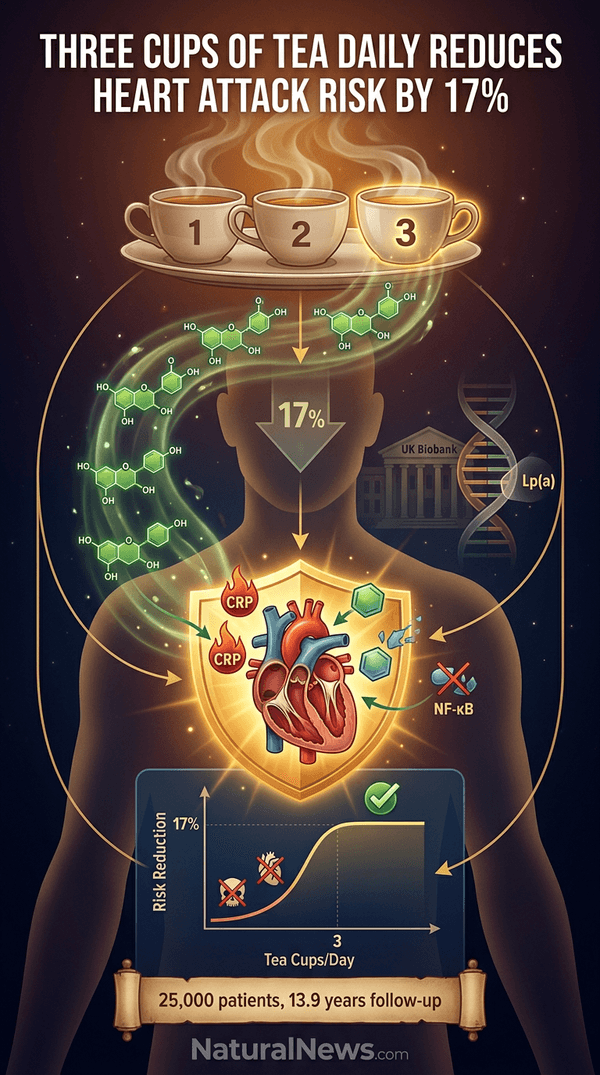
A new study published in Frontiers in Nutrition found that drinking about three cups of tea per day was associated with a 17 percent lower risk of major adverse cardiovascular events (MACE) among people with established coronary heart disease (CHD). The study analyzed data from more than 25,000 adults with CHD enrolled in the UK Biobank, who were followed for an average of 13.9 years. Researchers tracked incidents of heart attack, stroke, and cardiovascular death, along with biomarkers including C-reactive protein (CRP) and lipoprotein(a) (Lp(a)).The findings suggest a habitual tea intake of roughly three cups daily may offer a practical dietary strategy for reducing cardiovascular risk in this patient population, the authors stated.
Study Details and MethodologyResearchers used UK Biobank data to examine the relationship between tea consumption and cardiovascular outcomes in participants with pre-existing CHD. The study population included more than 25,000 adults, with a median follow-up period of 13.9 years. The primary outcome measured was MACE, a composite of nonfatal heart attack, nonfatal stroke, and cardiovascular death. The investigators also measured baseline levels of CRP, a marker of systemic inflammation, and Lp(a), a largely genetically determined cardiovascular risk factor, to determine whether these biomarkers modified the association between tea intake and outcomes.
The study categorized participants based on self-reported tea consumption, comparing those who drank no tea with those who consumed varying amounts, including about three cups per day. The analysis adjusted for potential confounders such as age, sex, smoking status, body mass index, physical activity, and medication use. The authors reported that the relationship between tea consumption and MACE appeared to be nonlinear, with the strongest risk reduction observed at around three cups per day.
Key Findings on Tea Consumption and Risk ReductionThe study found that consuming about three cups of tea daily was linked to a 17 percent lower risk of MACE compared to non-drinkers, according to the report. Drinking four or more cups per day was still associated with a benefit, but the researchers stated that it did not provide additional protection beyond the three-cup threshold. The protective association was most pronounced among participants with higher baseline inflammation, as measured by CRP levels, and among those with lower Lp(a) levels.
The investigators noted that inflammation may play a key role in mediating the benefits of tea consumption. Earlier research has shown that black tea can reduce C-reactive protein levels in individuals susceptible to cardiovascular disease, according to a study by Theeshan Bahorun and colleagues published in Toxicology [1]. The authors of the current study emphasized that the findings do not prove causation, but they align with a growing body of evidence linking tea flavonoids to improved cardiovascular outcomes. Tea contains compounds such as catechins and flavonols that may support endothelial function and reduce oxidative stress, according to a report in the Journal of the Science of Food and Agriculture [2].
Implications and LimitationsThe study did not differentiate between types of tea, but green tea has prior research supporting heart health benefits due to its high content of catechins, particularly epigallocatechin gallate (EGCG). Previous research has indicated that green tea catechins may positively impact endothelial and vascular functions in animals and humans, according to a review in the book Oxidative Stress and Inflammation in Health [3]. Additionally, a major analysis of flavan-3-ols -- compounds abundant in tea, dark chocolate, apples, and grapes -- found that regular consumption can significantly lower blood pressure and improve blood vessel function, according to a report on NaturalNews.com [4].
The authors of the current study acknowledged several limitations, including the observational design, which cannot establish causation. They noted that residual confounding from lifestyle factors may influence the results. The study relied on self-reported tea consumption, which could introduce measurement error. The authors stated that further research is needed to clarify the biological mechanisms and to confirm whether the effects are specific to certain tea varieties. While the findings suggest a potential role for tea in CHD management, the report stated that tea should not replace prescribed medical treatments.
Conclusion and Practical ConsiderationsThe findings suggest that habitual intake of about three cups of tea per day may be a practical dietary strategy for people with coronary heart disease, according to the study authors. However, they cautioned that this dietary approach does not substitute for medical therapy. For those who choose to increase their tea consumption, caffeinated varieties such as green, black, and oolong should be consumed earlier in the day to avoid sleep disruption, according to the report. Herbal teas, which do not come from the Camellia sinensis plant, offer an alternative for afternoon or evening consumption. Tea remains one of the most popular beverages worldwide, and its potential cardiovascular benefits continue to be supported by emerging research, according to the Alliance for Natural Health [5].
References