Study: Ultra-Processed Foods Linked to Poorer Attention, Slower Mental Processing Even in Healthy Diets – NaturalNews.com
Study: Ultra-Processed Foods Linked to Poorer Attention, Slower Mental Processing Even in Healthy Diets
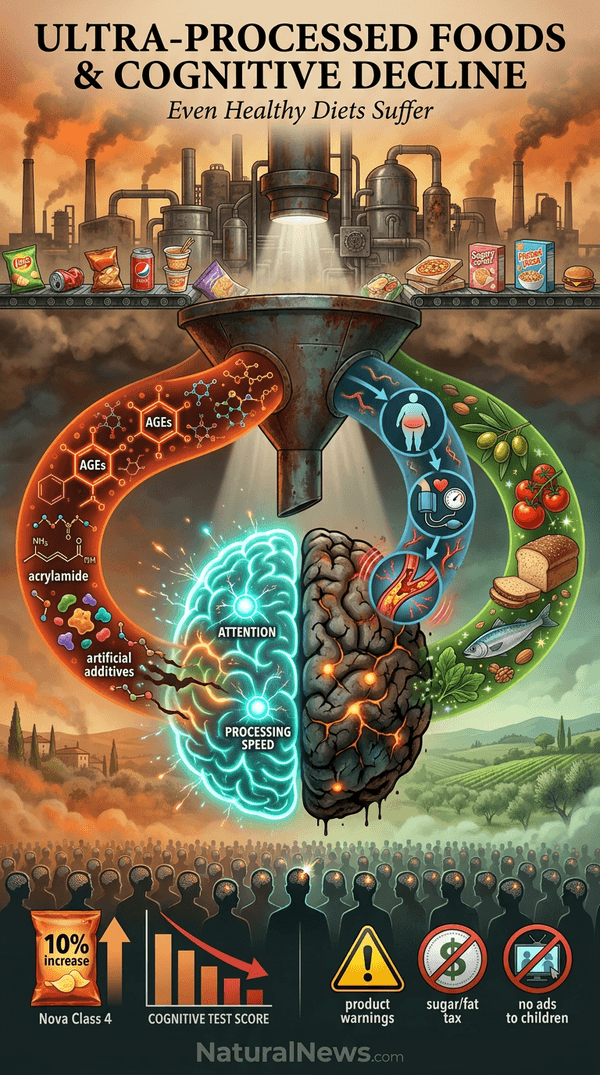
A new study from Monash University found that higher consumption of ultra-processed foods (UPFs) is associated with lower scores on tests of visual attention and mental processing speed, even among adults who otherwise follow healthy diets.The findings, published in Alzheimer's & Dementia: Diagnosis, Assessment & Disease Monitoring, add to growing evidence linking industrially processed products to cognitive decline. Researchers analyzed dietary and cognitive data from more than 2,100 middle-aged and older Australian adults without dementia.
According to the study, for every 10% increase in the share of daily calories from UPFs, attention scores dropped by a small but measurable amount. Lead author Dr. Barbara Cardoso, from Monash University's Department of Nutrition, Dietetics and Food, said the results point to a hidden cognitive cost of heavily processed foods.
Key Findings on Attention"To put our findings in perspective, a 10% increase in UPFs is roughly equivalent to adding a standard packet of chips to your daily diet," Dr. Cardoso said. "For every 10% increase in ultra-processed food a person consumed, we saw a distinct and measurable drop in a person's ability to focus." She added that this translated to consistently lower scores on standardized cognitive tests measuring visual attention and processing speed. [1]
Participants in the study obtained about 41% of their daily calories from ultra-processed foods, nearly matching the Australian national average of 42%. [2] The study's findings align with broader concerns about the prevalence of ultra-processed foods in modern diets. According to a Mercola.com report, nearly 60% of the food eaten in America consists of ultra-processed convenience foods. [3]
Role of Food ProcessingOne of the study's most notable findings was that the negative effects on attention appeared regardless of a person's overall diet quality. Even participants who generally followed a healthy Mediterranean-style diet showed the same relationship between greater UPF intake and poorer focus. This suggests that the level of processing itself may play an important role, according to the researchers.
"Food ultra-processing often destroys the natural structure of food and introduces potentially harmful substances like artificial additives or processing chemicals," Cardoso said. "These additives suggest the link between diet and cognitive function extends beyond just missing out on foods known as healthy, pointing to mechanisms linked to the degree of food processing itself."
The Nova classification system, developed around 2009 by researchers at the University of São Paulo, categorizes foods by the extent and purpose of industrial processing, with UPFs including soft drinks, packaged salty snacks, and ready-made meals. [4] Author Tim Steele, in his book "The Diet Hack," notes that over 75% of the modern diet, on a calorie basis, is made up of industrially formulated food that is low in nutrients and fiber. [5]
Connection to Dementia RiskThe researchers also found that higher consumption of ultra-processed foods was associated with an increase in known dementia risk factors, including obesity and high blood pressure. Dr. Mark Hyman, in his book "Food Fix," emphasizes that mental health issues lead to more years of disability and lost productivity than heart disease, and that population studies link more fruits and vegetables with lower prevalence of mental illness, while fast food and sugar have the opposite effect. [6]
Although the current study did not identify a direct link between UPFs and memory loss, the researchers note that attention is a fundamental cognitive function critical for learning, problem-solving, and other mental tasks. Declines in focus may represent an important early warning sign of broader cognitive changes.
A broader consensus statement from the European Society of Cardiology, published in the European Heart Journal, linked high consumption of UPFs to increased risks of heart disease, atrial fibrillation, obesity, diabetes and cardiovascular death. [7] The consistency of these findings across multiple health outcomes reinforces concerns about the impact of industrial processing on overall health.
Conclusions and ContextThe research used data from the Healthy Brain Project, supported by the National Health and Medical Research Council, the Alzheimer's Association and other organizations. The study is cross-sectional, meaning it cannot establish causality, and the researchers call for further investigation into the mechanisms linking food processing to cognitive function.
As UPFs continue to dominate supermarket shelves, the findings add to a growing body of evidence that what we eat – and how it is processed – may affect cognitive health in ways previously underappreciated. The results underscore the importance of considering not just nutrient content but the degree of processing when evaluating dietary impacts on brain health.
References