World Cup Fever Not Expected to Be Growth Driver
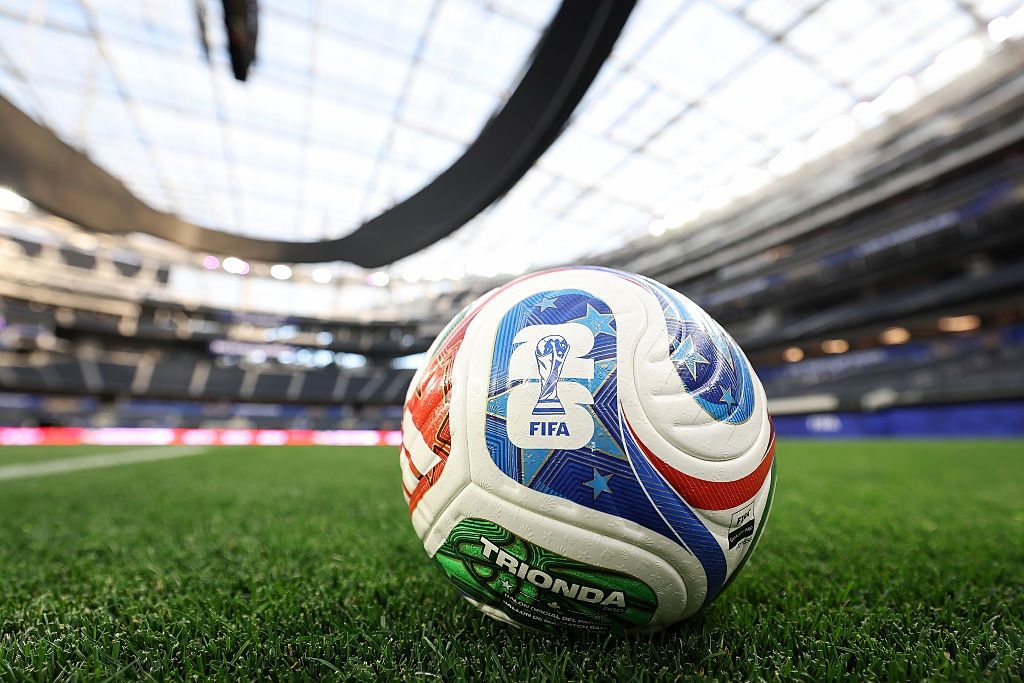
It’s that time again. Millions of Americans and Canadians — and a fair number of Mexicans — will briefly pretend to care about a sport they ignore for the other 47 months of the cycle. For almost six weeks, North America will host the World Cup, a global soccer (or football) tournament that may create more headaches than benefits. As Saxo Bank put it bluntly: “The 2026 World Cup is not a meaningful growth driver for the United States.” Ouch!
World Cup FeverThe 2026 World Cup will run from June 11 to July 19 and will be the first tournament hosted by three countries, with matches spread across 16 cities in the United States (11), Mexico (three), and Canada (two). The field expands to a record 48 teams, up from 32 in 2022, producing 104 matches. Teams will play a three‑match Group Stage to determine the 32 qualifiers for the Knockout rounds, where four straight wins are required to reach the final.
While this is pertinent information for diehard fans, non-soccer folks are probably wondering whether this will generate economic prosperity for any of the three nations. Economists have long been skeptical that the World Cup or any major sporting event leads to long-term growth for hosts.
Economic literature is quite clear on this: These spectacles provide short-term gains. For example, in the May jobs report, the leisure and hospitality sector added 70,000 new jobs, with experts attributing the jump to the soccer tournament. It is safe to say that it would give a minor boost to the second- and third-quarter gross domestic product (GDP) figures, with BMO estimates as much as 0.3 percentage points.
Estimates vary, but economists project that the US economy could see up to $75 billion in benefits from hosting the games. Skepticism is warranted because mega events generally underperform the gains predicted by organizers. Additionally, it will be a case of wealth redistribution as consumers shift their consumption habits. Sports bars and hotels in the Tri-State Area and California might benefit, while other industries may see less business.
The data show that the last several dozen international sporting events, from the Olympics to the World Cup, did not reverse the economic trajectory of host nations. In other words, if the economy was slowing prior to the games, it continued to decline after the athletes, glitz, and glamour departed. France was the outlier in 1998: Before hosting the World Cup, GDP per capita increased by 3%, but then fell by 1.2% after the event.
Saxo Bank wrote in a May 26 research note:
“Beyond the narrative, the real impact is generally time-limited, highly localized, and partially offset by substitution and crowding-out effects. Overall macroeconomic benefits therefore remain limited, particularly for economies the size of the United States.
“In this context, the 2026 World Cup should be understood less as a driver of structural economic transformation and more as a temporary reallocation of activity, whose real economic scope is often more modest than the narrative suggests.”
The good news for North America is that, unlike Qatar (2022) or Brazil (2014), the three countries generally have the required infrastructure in place to host these games. So, while taxpayers might not be on the hook as much as others have been in places across the globe, the World Cup remains a vanity project.
Yay, Local Sports Team!The Chicago Bears, a legendary NFL franchise, will wave goodbye to Soldier Field and set up camp in a new taxpayer-funded stadium in Indiana. State lawmakers approved legislation to allocate at least $1 billion to build a football field in Hammond, IN. Proponents say this project will fund itself through job creation, tourism, and the general spillover effects. Chicagoans, meanwhile, are worried that no Bears will mean no more economic activity.
However, like hosting the Olympics, the overwhelming consensus is that these government bailouts of billionaire owners do not produce substantial economic growth. It might seem counterintuitive, but sports teams generally have little impact on local economies. There are a few reasons.
First, by using finite resources from taxpayers on extravagant private-sector projects, localities risk hurting a city’s growth by redirecting money away from vital projects, according to a paper by the St. Louis Federal Reserve.
Second, it is simply a substitution effect. Sports are entertainment, and households will allocate a fixed amount from their budgets to attend a game, purchase merchandise, or visit a nearby restaurant after a win or a loss. Instead of using 3% of their monthly budget to remodel the bathroom or finance a new autumn wardrobe, consumers are spending it on sports.
Finally, research by the Mercatus Center concluded that major-league sports teams contribute just 0.2%, or $50, of local workers' annual wages.
Sports Are GreatYes, sports are great. What is better than a summer’s night at the ballpark watching pitchers throw a 94 mph slider or a first baseman hit a home run to tie the game in the bottom of the seventh? Or how about a Game 6 in playoff hockey? Or watching a generational talent flop his way to an NBA championship? These are all terrific, but are they creating significant long-term economic growth? The data say no.