Pyongyang's state media silent on birthday of N. Korea's Kim
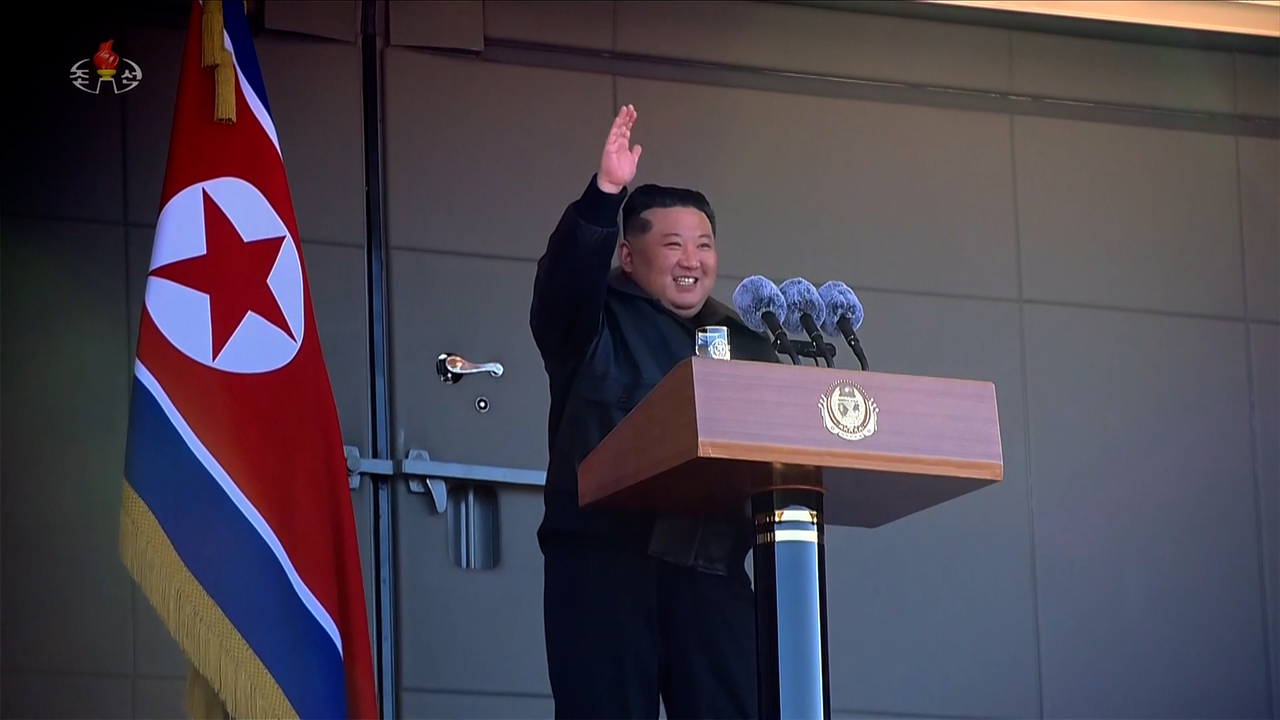 North Korea's leader Kim Jong-un (Yonhap)
 North Korea's state media has remained silent on the birthday of leader Kim Jong-un, believed to fall on Thursday, instead focusing on reporting the nation's preparations for the upcoming key party congress.
North Korea has not officially announced Kim's birthday, known to be Jan. 8, for special celebrations, though the birthdays of late state founder Kim Il-sung and former leader Kim Jong-il have been marked as national holidays.
On the front page of the Thursday edition, the Rodong Sinmun, the North's main newspaper for the domestic audience, called for senior officials to thoroughly prepare for the ninth party congress set for early this year but did not carry any report on Kim's birthday.
The Korean Central News Agency, the North's state-run news agency for external readers, also did not make any mention of it.
Kim's birthday was first revealed in 2014, when the North's state media reported former American professional basketball player Dennis Rodman had visited North Korea on the occasion of Kim Jong-un's birthday.
Attention has been drawn to the possibility that North Korea may formalize Kim's birthday as he has been accelerating efforts to bolster his status as a stand-alone leader while reducing his reliance on the predecessor for authority.
Since 2024, North Korea has rarely used the term the Day of the Sun to refer to the birthday of Kim Il-sung, which falls on April 15. The North has also begun using a pin exclusively featuring Kim Jong-un's portrait.
In January 2024, North Korea is believed to have ordered its people to take an oath of allegiance on Kim Jong-un's birthday, not on the first day of the new year or his predecessors' birthdays.
Some observers said North Korea's reluctance to make public Kim's birthday may be related to the background of his mother, Ko Yong-hui, who gave birth to him without officially marrying Kim Jong-il. She was also a Korean resident in Japan, which North Korea views as having a low societal status in the North. (Yonhap)