Donald Trump’s ambition has met its match in Keir Starmer, diplomatic bollard
Say what you like about Keir Starmer, but he’s a fine exponent of the British art of understatement.
The prime minister spoke up on behalf of a country that is unusually united – even Nigel Farage is just about on side – in being shocked and appalled by Donald Trump’s threat to invade Greenland, destroy Nato, and lay waste what remains of British industry through punitive tariffs.
For his emergency press conference, the prime minister put on his most serious face (and that is very stern indeed) and declared that the president’s actions had been “badly received”. Which is one way of putting it. Rather like, you might say, the way that the former Prince Andrew’s attempt to “clear the air” in his infamous interview on Newsnight was “badly received”.
Still, it is not difficult to break the code. The British, a few mavericks on social media apart, hate Trump. Starmer’s restrained words were his way of transmitting that sentiment to the White House. Beneath all of Starmer’s diplo-speak and legalese, the talk about the need for “pragmatism” and “partnership”, there was a clear message to Trump that he is “wrong” – a simple, clear word – about tariffs, and about taking Greenland against the wishes of the Greenlanders, and, for what it’s worth, against international law.
There was equally a clear message to the British people, and to our European allies. It was that the Americans are far too important to Britain’s national interest for us to allow the alliance – and the “special relationship”, damaged as it is to the point of parody – to end. We rely on the US for our defence, for intelligence-sharing (not least about terrorism), for trade and, above all, for our nuclear deterrent.
When push comes to shove, Starmer was not-quite-saying, these things matter more than Greenland. In any case, the prime minister said, “I don’t actually think he’s genuinely considering military action.” He didn’t deploy the term “taco” (Trump Always Chickens Out), but it immediately came to mind.
Starmer is the self-declared exponent of “steady diplomacy”, and he’s well suited to it. His flamboyant predecessor Boris Johnson branded him a “pointless human bollard”, but, to be fair to bollards as well as to the prime minister, they have their uses when there are dangerous drivers on the roads – a crucial traffic-calming measure.
As far as can be judged from what he said about his most recent phone call to the irascible US president, Starmer spent most of his time trying to calm Trump down about the deployment of a scratch European force, comprising French, German, Swedish and other troops. It has upset the president to an unreasonable degree, and it was up to Starmer, in his informal role of “Trump whisperer”, to persuade him that it wasn’t meant to be a challenge to American hegemony (Trump’s insecurity being projected, absurdly, onto the superpower he leads).
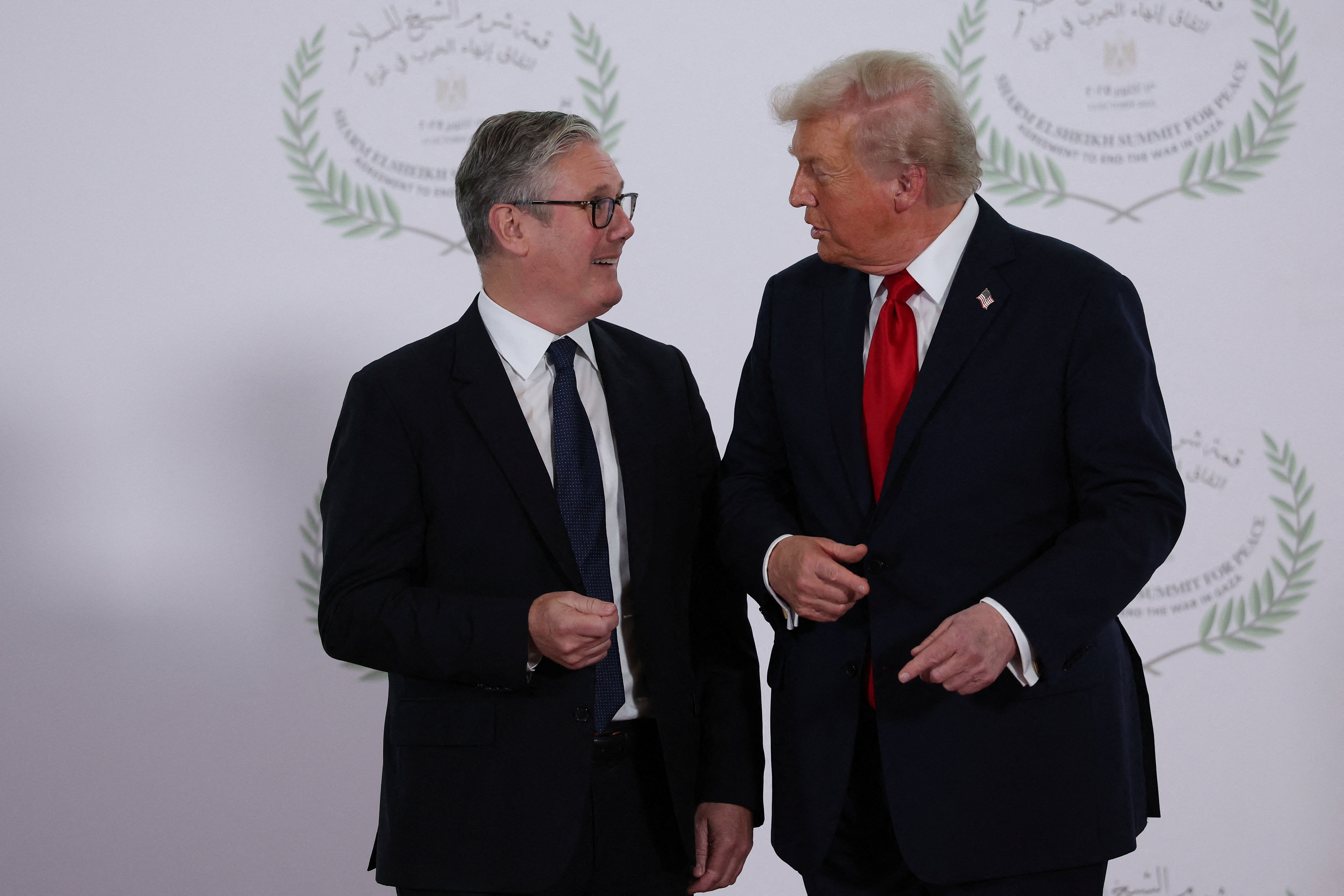 Donald Trump can try to push Starmer all he likes, but the PM will do anything except get out of the way (PA Wire)
Starmer took about 40 minutes this morning to convey the impression that he didn’t want to “do” anything about Trump’s threats and aggressive tone, and that’s because he doesn’t want to do anything about our unpredictable partner across the Atlantic – plus any action we did take, such as imposing retaliatory tariffs or making noises about quitting Nato, would be entirely counterproductive.
Starmer said as much, remarking that “grandstanding” by politicians (he hardly needed to mention Davey, Polanski and Corbyn) might make them “feel good”, but doesn’t amount to anything practical. The “performative” stuff would not be in the “national interest”, he said – something that the bollard guards with the utmost, quiet vigilance. He was grateful for the support of Kemi Badenoch and didn’t mind saying so.
In foreign policy, then, Starmer is more like a French or a US president, transcending politics. So he’s not interested in (and a bit annoyed at) the idea of cancelling the King and Queen’s forthcoming visit to America to celebrate 250 years of independence. Nor is he up for launching a trade war with the world’s biggest economy, which would hit British workers and British consumers, and would do nothing to solve the cost-of-living crisis.
As with Brexit, so it is with Trump’s America. The prime minister is there to make the best of a bad situation: “Our job is to find a way forward.” He wants to do things in a “pragmatic, sensible way”.
To sum up – as frustrating as it may be for those itching for him to “do something” – Starmer is smarter than that.
He is what you might call Bollardian: the immoveable traffic bollard of geopolitics, who believes in “words not actions” and will never choose between the US and Europe. You can push him all you like, but he’ll do anything – even if that means precisely nothing – rather than get out of the way.
And on balance, his remarks should be not badly received by all.