Understanding the Debate Over Online Child Safety
The House of Representatives recently passed a bipartisan online child safety package. But the debate isn’t about child safety alone. It’s about preemption.
The legislation is part of an ongoing national conversation over Big Tech’s outsized influence on children’s mental health, the rapid development of artificial intelligence, and the role parents should play as these technologies become part of everyday life.
Frankly, parents feel overwhelmed as children adopt AI services almost as quickly as the technology evolves. Families are seeing many of the same addictive behaviors that emerged during the social media era, now with potentially even greater consequences. State attorneys general have responded by filing lawsuits against some of the largest AI companies, while lawmakers introduced hundreds of online child safety bills across 27 states during the first half of 2026.
Against this backdrop, it is no surprise that Congress wants to move quickly.
But Congress faces a difficult balancing act. Protecting children is a priority, but so is winning the AI race with China. Many lawmakers worry that an increasingly complex patchwork of state AI laws could slow domestic innovation and undermine America’s competitive position.
That concern explains why the House passed a 10-year moratorium preempting state laws affecting AI development. Although the Senate ultimately rejected that proposal, the debate revealed the real issue: preemption.
TRENDING ARTICLESThe question is not whether Congress should preempt state law, but to what extent it should do so. The answer depends on the strength of the federal protections Congress is willing to enact.
Preemption is a bargain. If Congress wants states to step back, it must be prepared to step up. Simply put, broader preemption demands broader federal protections.
There are three ways to strike that bargain between national uniformity and meaningful child protections.
The first is a federal floor. This is the narrowest approach because it establishes minimum national standards while allowing states to adopt stronger protections. Federal minimum wage laws and many environmental laws operate this way.
The House largely adopted this approach. Its package establishes baseline protections for certain online services, creates additional privacy protections for teens, imposes some restrictions on social media, and requires age-gating only for sexually explicit content.
The tradeoff is straightforward: States remain free to adopt stronger protections, but the federal legislation does little to resolve the state-by-state patchwork that threatens to slow AI development.
The second option is conflict preemption, and it offers the most promising path forward. Rather than broadly displacing state authority, conflict preemption preempts only those state laws that directly interfere with federal law, leaving states free to address issues Congress has not yet resolved.
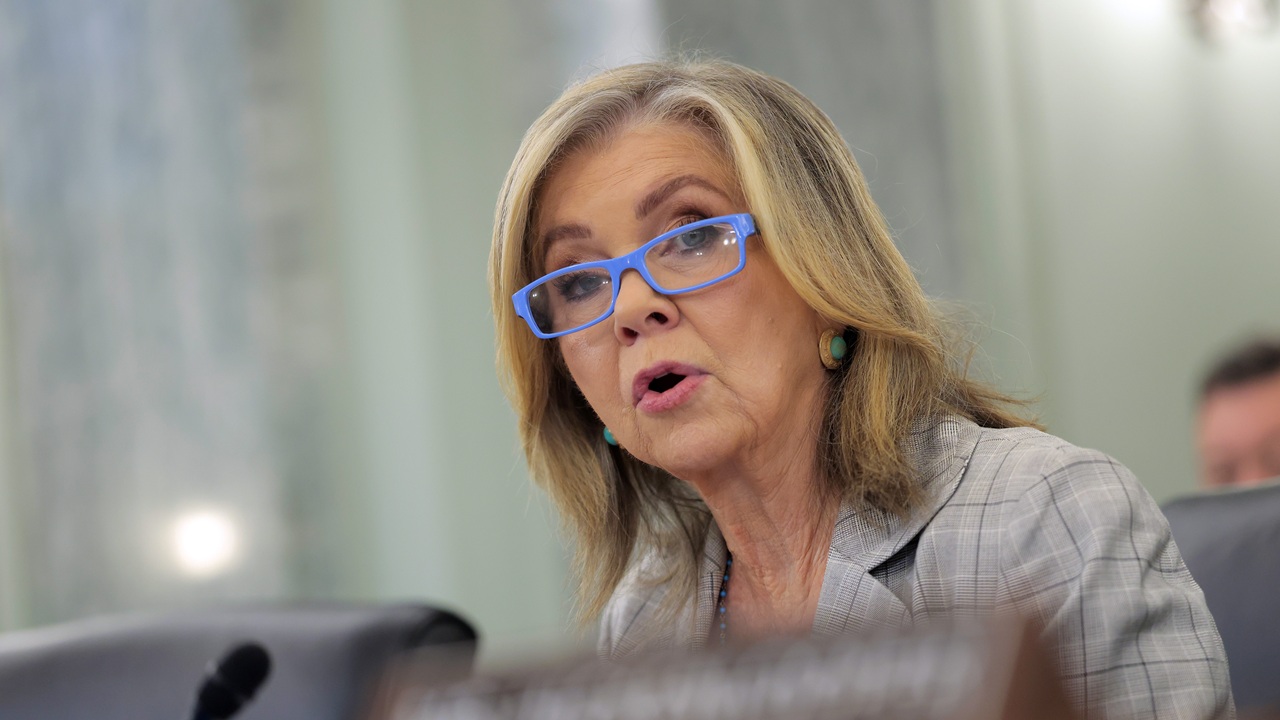
Based on public reporting, this appears to be the approach the White House and Sen. Marsha Blackburn, R-Tenn., are exploring through a compromise centered on the Kids Online Safety Act and the App Store Accountability Act. That would establish a national duty of care for social media platforms while creating a federal framework for age verification through app stores, where most children access AI services, games, and social media.
Conflict preemption would provide substantially greater national uniformity without becoming a blanket liability shield for Big Tech. States could continue filling genuine gaps in federal law, while private litigation could proceed where consistent with federal law. That strikes a better balance between protecting children, encouraging innovation, and preserving an appropriate role for the states.
The final option is field preemption. This is the broadest approach because it largely prevents states from regulating the same subject. Congress has traditionally reserved this type of preemption for heavily regulated issues, such as airline or pharmaceutical safety. Applying it to AI would therefore require a much more comprehensive federal framework than Congress has enacted to date.
Field preemption would largely eliminate the patchwork problem, but it would have to answer the concerns raised by child safety advocates during the AI moratorium debate. That would require a far more comprehensive legislative package—one that includes the SCREEN Act’s age-verification requirements for pornography websites, the App Store Accountability Act’s parental consent requirements for app downloads by minors, the Kids Online Safety Act’s duty of care for online platforms, and the GUARD Act’s private right of action against chatbot companies. Given that broad federal preemption could displace much of the ongoing state litigation, anything less would be difficult to justify.
That is a tall order for Congress.
Congress does not have to choose between protecting children and maintaining America’s leadership in AI. But if lawmakers want only one national standard, they must earn it by providing meaningful national protections.
Broader preemption demands broader federal protections.
We publish a variety of perspectives. Nothing written here is to be construed as representing the views of the Daily Signal.