Mayor Mamdani’s Relentless War on Landlords
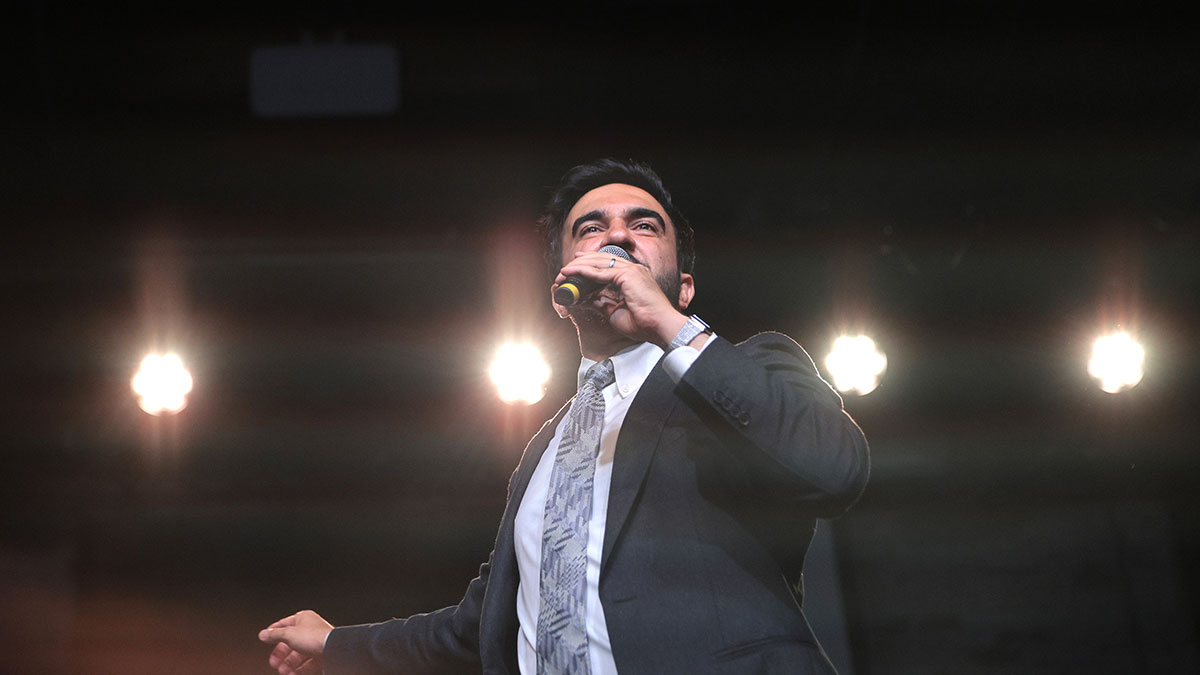
New York City Mayor Zohran Mamdani last week released his Rental Ripoff Hearing Report, with 23 policy recommendations allegedly built on testimony from five borough hearings held earlier this year. Perhaps wanting to preempt further criticism that his administration’s policies are hostile to landlords—most recently, a Rent Guidelines Board freeze on rent increases for rent-stabilized tenants—the report acknowledges that “High-Road” landlords exist and deserve the city’s support. But not yet: the report includes even more recommendations that will be economically detrimental to the private housing industry.
Mamdani clearly thinks such policies are good for him politically, but he’s playing with fire. As New York Apartment Association CEO Kenny Burgos noted, “You cannot fine a building into good repair.” The city is driving out private capital but lacks the financial capacity to step in and manage rental housing.
Finally, a reason to check your email.
Sign up for our free newsletter today.
Some of the report’s recommendations would be particularly damaging. For example, the report proposes that the city council pass legislation that would limit landlords to asking for income verification or a credit check, but not both. Further, the landlord, not the applicant, would pay the cost of a credit check. These measures are meant to address the reality that, with vacant apartments in short supply, landlords can sift through tenant applications and find the household most likely to pay the rent reliably. The Mamdani administration evidently believes this gives an undue advantage to applicants who make a good living, pay their bills promptly, and stay out of debt. But the upshot of this proposed fix would be to limit the information that landlords can obtain on prospective tenants, increasing business risk while shifting more costs to the property owners.
Another proposal, to encourage “tenant unions,” would deepen business risk for landlords even more. The report is vague about what “tenant unions” means—but if they’re akin to labor unions, which organize, bargain collectively with employers, and go on strike if an impasse occurs, then tenant unions would presumably be allowed to threaten a building-wide rent strike if their members’ demands were not met. Relatedly, Mamdani wants to expand the list of “rent-impairing violations” that justify tenants’ withholding rent. His administration would also seek state legislation to make rent withholding easier to defend in housing court.
Other recommendations are more technocratic in nature, aimed at making city enforcement targeting landlords more effective. These changes are, in principle, laudable. No tenant should have to live without heat, or with pest infestations or mold. The city should ensure that violations get corrected and fines collected.
But Mamdani’s focus on aligning city government with only one side of the tenant–landlord relationship raises a question: Is it really impossible to align landlords’ incentives with tenants’ needs? The report acknowledges that landlords are not all incorrigible criminals, but it draws no further insights from that observation. What makes a “High-Road” landlord? Do they enjoy more income because of the deregulatory history of their buildings? Or do they boast better operating practices from which other landlords could learn, with the city’s help?
A reader of the Rental Ripoff report might conclude that the Mamdani administration is perfectly happy to levy fines and penalties against recalcitrant landlords while denying them any relief on the income side of the ledger—to the point that the landlords simply walk away. Then the city, or its subsidized nonprofits, would become landlords of last resort for tens of thousands of housing units.
New York City did just that under Mayor Ed Koch in the late 1970s, which saw widespread foreclosures of distressed apartment buildings for nonpayment of property taxes. But back then, the city could maintain buildings by tapping into a surplus of Community Development Block Grant (CDBG) funding, thanks to President Jimmy Carter’s free-spending administration.
The CDBG funding surplus did not last. By the time Mayor Rudy Giuliani’s administration sold the last of the occupied “in rem” housing in the 1990s, operating expenses had become a significant drain on city resources. The buyers were “neighborhood entrepreneurs”—the “High-Road” landlords of their day.
Repeating the in rem housing experience would be irresponsible today, given the city’s bloated budget, relentless spending demands, and projected large deficits. Perhaps Mayor Mamdani can maintain his hostile posture toward the rental housing industry until he is safely reelected while staving off the consequences, but New Yorkers should not count on that.
Problems the city cannot or will not solve get kicked up to the state level. In the 2027 session, Governor Kathy Hochul and the legislature need to save the city from its own folly by rolling back some of the most punitive provisions of the 2019 Housing Stability and Tenant Protection Act. Doing so could free up enough income to flow to landlords so they can maintain buildings in an inflationary environment.
The Mamdani administration, for its part, should reconsider the tenor of its “rental ripoff” campaign. The city needs a thriving private rental housing sector. Achieving that will require more than paying lip service to responsible landlords.
Eric Kober is a senior fellow at the Manhattan Institute.
DonateCity Journal is a publication of the Manhattan Institute for Policy Research (MI), a leading free-market think tank. Are you interested in supporting the magazine? As a 501(c)(3) nonprofit, donations in support of MI and City Journal are fully tax-deductible as provided by law (EIN #13-2912529).