'Super Typhoon' Threatens China and Taiwan
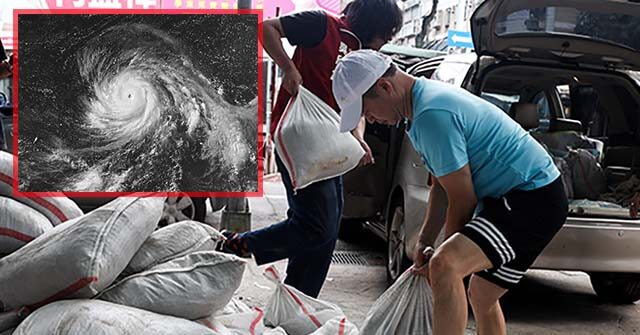
Super Typhoon Bavi intensified over the Pacific on Thursday and is bearing down on Taiwan and southern China, packing several feet of rain and winds of up to 124 miles per hour.
Current forecasts have the storm brushing Taiwan and making landfall in China’s province of Fujian on Saturday night.
The massive storm, currently over 620 miles wide, is poised to hit China almost exactly a week after Tropical Storm Maysak, which dumped a huge amount of rain on Hengzhou province and has reportedly caused 39 deaths from flooding.
If Bavi follows Thursday’s projections and blows through northern Taiwan, it will be the largest storm to hit the island since 1987. Taiwan is already canceling flights on Saturday and packing fishing boats into safe harbors in anticipation of Bavi’s arrival. Japan’s Okinawa prefecture has also warned residents to be on guard for effects from the passing storm.
“We should pay much attention to Bavi as it has spent a long time intensifying over the open Pacific, extracting energy from warm oceans and accumulating large amounts of moisture,” cyclone researcher Xiangbo Feng of Imperial College London told Reuters on Thursday.
“When it makes landfall or gets close to coastal regions, the damage could be catastrophic. A small change in Bavi’s track could have a significant influence,” he warned.
China’s state-run Global Times reported on Thursday that China’s National Flood Control and Drought Relief Headquarters has already activated a Level IV emergency response for Fujian and Zhejiang provinces, which are the areas most likely to be hit by Bavi.
A “super typhoon” is roughly equivalent to a Category 4 or 5 hurricane, with sustained winds of 115 to 120 miles per hour, according to varying regional standards. According to Chinese meteorological standards, Bavi has maintained super typhoon intensity for over 108 hours as of Thursday and is still growing stronger.
Meteorologists are optimistic that Bavi will begin weakening after it enters Chinese coastal waters on Thursday night and could be downgraded to typhoon status by the time it makes landfall, although it will remain a dangerous storm with a high risk of flooding. Taiwan is likely to begin seeing heavy rainfall from Bavi on Friday.
Another Global Times article noted that China’s typhoon preparations have come to include stockpiles of antivenom, because the flooding from massive storms tends to fill streets and homes with poisonous snakes.
This has been a persistent danger during recovery efforts from Typhoon Maysak in Hengzhou province, especially because the floods struck a snake farm in Hengzhou and released some 900 of its specimens, many of which were poisonous.
On Wednesday, local media reported a woman in the Hengzhou town of Yunbiao died from a snake bite. The victim, who was in her 40s, was apparently bitten on Monday, lost consciousness by the time rescuers found her, and could not receive medical treatment in time due to poor road conditions.
Health authorities and municipal officials have been using everything from loudspeakers to social media messages to warn people in flooded areas to stay indoors at night, avoid overgrown areas, and ensure they have access to antivenom treatments.