The Great Escape That Saved the Revolution
In August 1776, the fate of Washington’s army—in fact, the fate of the entire Revolution—lay on the muscled shoulders of the fishermen and sailors of the Marblehead Regiment.
A remarkable amphibious evacuation, including a miraculous fog, would create one of the greatest escapes in military history. On August 27, 1776, the Americans had lost several significant engagements in Brooklyn. The British and Hessians had Washington’s army trapped with their backs to the East River, and it looked like the Revolution might end just weeks after the signing of the Declaration of Independence.
The evacuation was set up two days earlier by an epic stand, an American Thermopylae, which initially saved Washington’s army from the British onslaught.
An audacious, suicidal charge by a regiment of Marylanders, known as Washington’s Immortals, bought Washington’s army a precious hour. Had the Marylanders not made their stand and General Howe, the British commander, pressed the attack on the American forts in Brooklyn Heights that afternoon, all the circumstances would have been aligned for a crushing American defeat.
The reprieve would last long. A nor’easter had pelted both armies for two days. The British had constructed siege lines and entrenchments around the American defenses. The Royal Navy planned to sail behind these defenses and cut off their escape, but the weather, wind, and tides refused to cooperate.
Washington then decided to evacuate Brooklyn and retreat to Manhattan. A mile-wide East River and the British Navy separated the two. The Marbleheaders faced the monumental task of transporting Washington’s men and materiel under the cover of darkness to screen their movement from watchful British eyes.
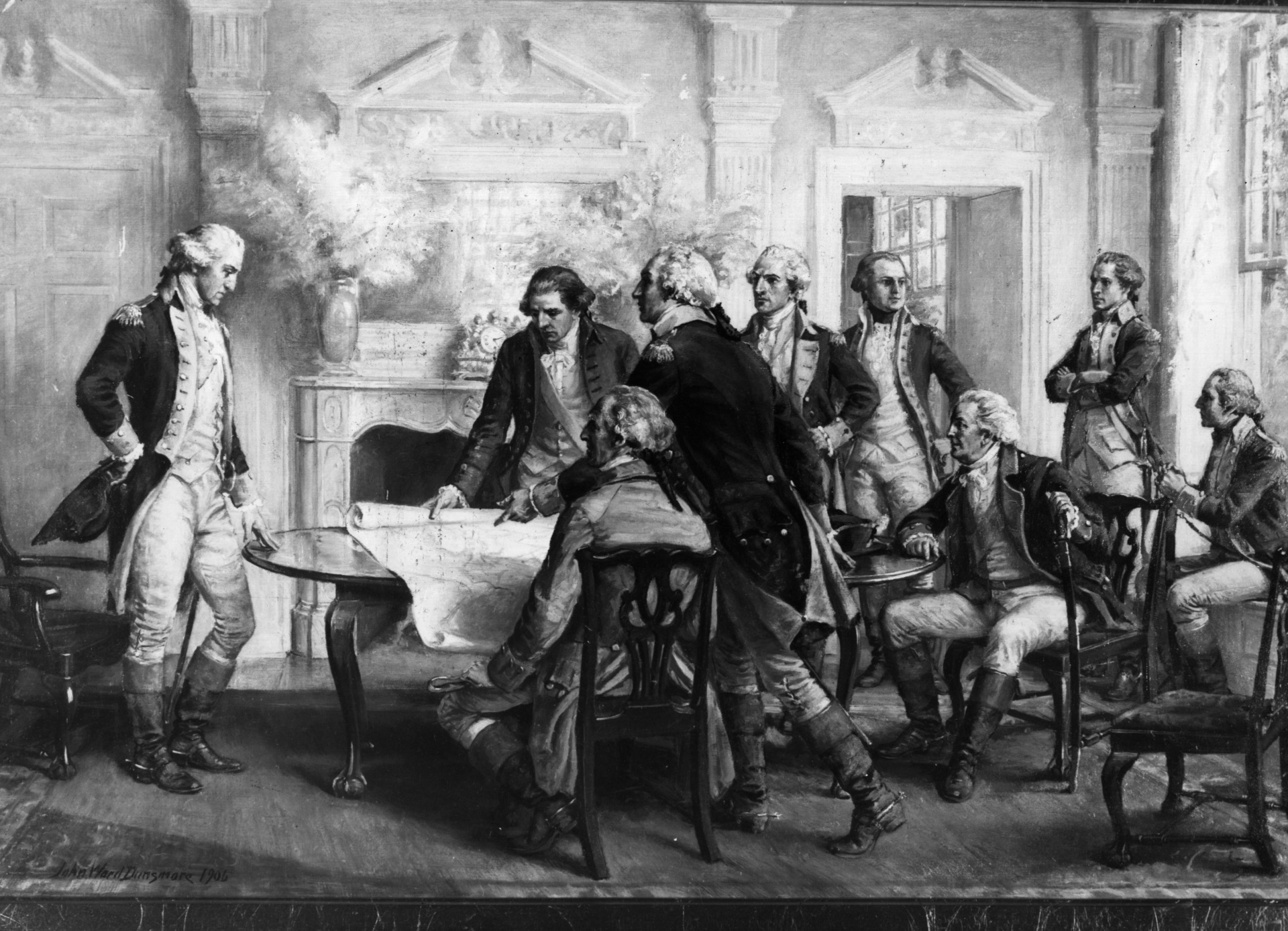
General George Washington’s Council of War in the house of Mr. Philip Livingstone in Brooklyn, after the Battle of Long Island in August 1776. At that time George Washington’s headquarters were in various houses in the area giving rise to the phrase,’ Washington slept here’. (Three Lions/Getty Images)
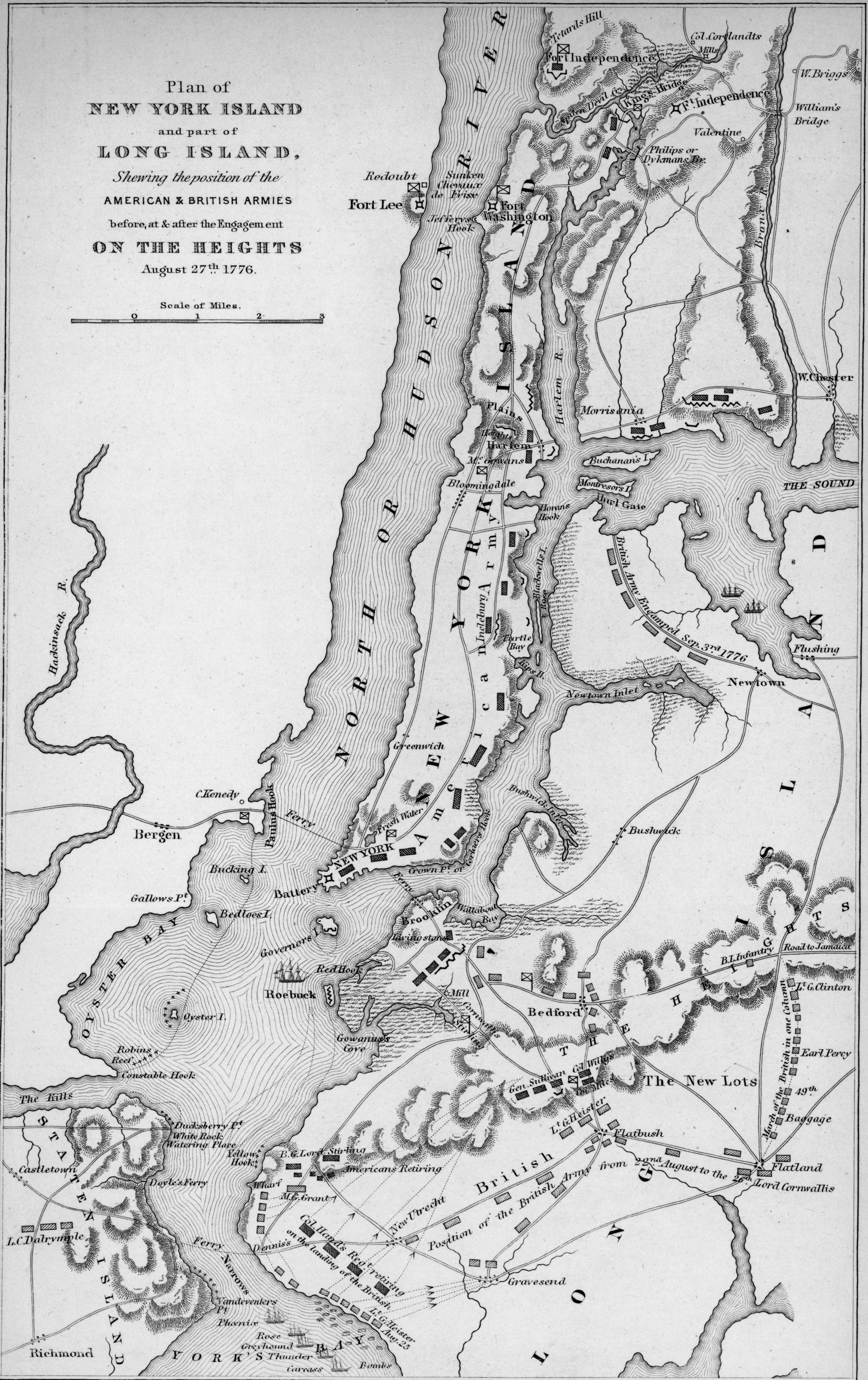
Map of New York Island and part of Long Island, showing the position of the Continental and British armies at the time of the Battle of Long Island on August 27, 1776. (Kean Collection/Getty Images)
The Americans not only had tens of thousands of British regulars and Hessian troops arrayed in front of them, but they would also need to pit their skills and strength against three extremely potent natural enemies: time, wind, and tide.
The Marbleheaders were the right men in the right place at the right time in history. For years, they had worked together as a team fishing in the Grand Banks in the icy Atlantic waters off Nova Scotia. These men, their leadership, their grit, and their priceless experience sailing the most treacherous waters in the world would be indispensable in accomplishing the near-impossible that night.
It was the middle of summer; therefore, the night would be short. Amphibious operations and disengagement under pressure are some of the most complex and dangerous in warfare. Even with a rearguard, the Americans rendered themselves vulnerable as they departed their defenses and boarded the boats. A British night attack might prove unstoppable.
Led by Colonel John Glover, the uniquely diverse Marblehead regiment was made up of men “having been brought up to the Seas” and included African Americans, a Spaniard, Native Americans, the young and old. The group forged bonds of steel evident even to outsiders which undoubtedly helped them accomplish the near-impossible task. Multiple family ties ran throughout the regiment, as well, including those of several father-and-son teams like Captain William Courtis and his son Private William Courtis Jr. or Captain Thomas Grant who was joined by his 12-yr-old fifer son, Thomas Grant Jr.
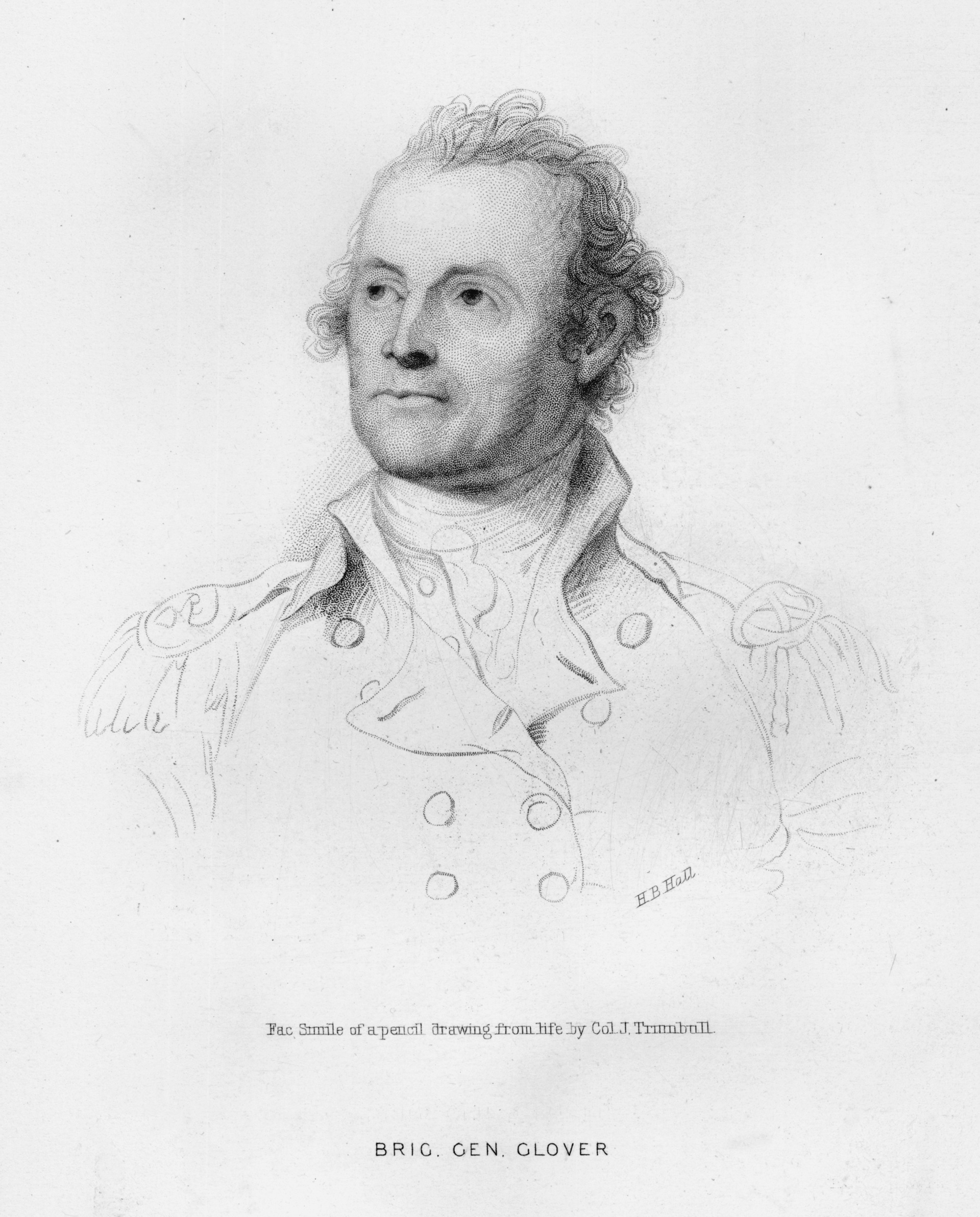
Portrait of John Glover, a colonel of the Massachusetts militia and Continental Army, who supervised the retreat and troop transport from Long Island in 1776. Engraving is facsimile of pencil drawing from life by Col. J. Trumbull. (Hulton Archive/Getty Images)
A historian of the day noted, “It was evident that this small reinforcement, inspired no inconsiderable degree of confidence. The faces that had been saddened by the disasters of yesterday, assumed the gleam of animation, on our approach, accompanied with a murmur of approbation in the spectators occasionally greeting each other with the remark, that ‘these were the lads that might do something.’”
The story of the Marbleheaders is told in The Indispensables: The Diverse Soldier-Mariners Who Shaped the Country, Formed the Navy, and Rowed Washington Across the Delaware.
The first boats manned by the Marbleheaders to make the crossing did not carry troops but horses, ammunition, cannons, and baggage. The decision to transport equipment, guns, and ammunition first had two significant consequences. First, it postponed the notification of the men about the retreat for as long as possible, decreasing the likelihood that word of the covert plan would reach the British. Second, it left the army without the ammunition and guns they would need to continue to hold out against the enemy, making retreat the only option.
In complete darkness, the soldier-mariners had to quickly acquaint themselves with the motley collection of sailing and rowed vessels assembled. Even the minimal light from a shuttered lantern might tip off the British about the operation underway. The sailors had to trust their instincts and nautical knowledge to guide them successfully in the mile-long journey across the river. The mariners took extraordinary measures to ensure secrecy and prevent the discovery of their clandestine mission, including wrapping their oars in cloth to minimize the sound they made dipping into the water. At any moment the British navy could sail up the East River and blow Glover’s motley flotilla out of the water. Miraculously, the wind never shifted in the direction to power the British sails up the river.
At approximately 10:00 p.m., Brigadier General Alexander McDougall gave the order to begin transporting the troops. Glover and his men moved the sick and injured to the boats first. After making the crossing and returning, they transported the Marylanders and other units which remained in the rear guard. To maintain secrecy as long as possible, the men were instructed not to speak or even cough. Orders were communicated in whispers. The soldiers had no idea where they were going until they boarded the boats.
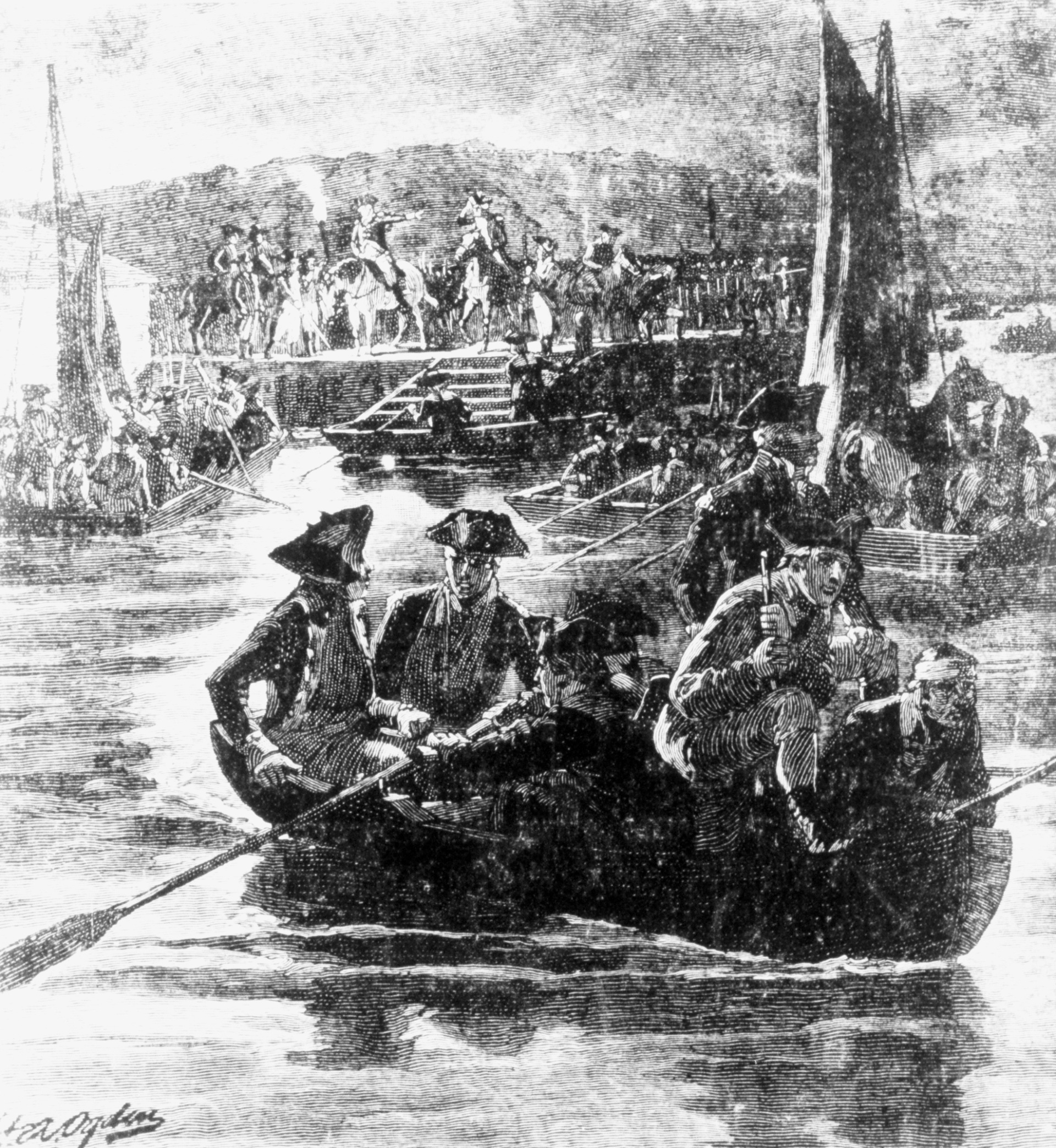
The retreat of the Continental Army on August 27, 1776, after the defeat in the Battle of Long Island. (Corbis via Getty Images)
In the early hours of the crossing, fortune appeared to favor the Americans. Carefully, the Marbleheaders dipped their cloth-coated oars into the murky, cold waters of the East River. The tide and the winds collaborated to push the boats swiftly across the waterway, and over the next two hours, Glover and his men made multiple crossings. One sailor recalled making a breathtaking eleven trips. Then the tide shifted, and their luck turned.
With every stroke of their oars, the Marbleheaders now fought against Mother Nature, who seemed hell-bent on sending the Americans downriver and into the clutches of the Royal Navy. For the sail-powered sloops, the combination of wind and tide proved insurmountable. Despite the best efforts of the expert seamen, the Marbleheaders nearly lost control of their vessels on their return trip across the river.
The weather and swirling river placed the evacuation in immediate peril. Glover’s men could not possibly deliver everyone across before morning using only the rowed boats. General McDougall sent Colonel William Grayson, one of Washington’s aides-de-camp, to find the commander in chief and apprise him of their situation. McDougall was of the opinion that a retreat was no longer possible.
Fortuitously, Grayson could not find Washington, so McDougall proceeded with the retreat. Before midnight, the fickle winds shifted again, making it possible to return the sloops to service. Once again, a series of the smallest details tipped favorably toward the Americans. Despite the miraculous wind shift, however, the Americans had lost precious time. Dawn was coming and with it the British Army.
At the embarkation point, chaos ensued. The troops now understood the necessity of returning to New York if they wanted to survive, and they rushed to get into the boats when their turns came. The sight of the men fighting for a place on the boats enraged Washington. Displaying his enormous strength, the commander in chief picked up the biggest rock he could find, stood near one of the vessels, and threatened to “sink it to hell” unless the men who had pushed others aside got out of the boat. The show of force immediately restored order.
The Marblehead soldier-mariners worked through the night and accomplished an ostensibly impossible task, transporting most of the Continental Army—thousands of men—across the East River in just nine hours. However, even this was not enough. When the first rays of dawn crept over the entrenchments, Americans were still manning fortifications. For those who remained in the trenches, the approach of daylight brought the chance of a renewed attack from the British—and certain death.
But then a thick fog miraculously appeared and cloaked the rest of the escape.
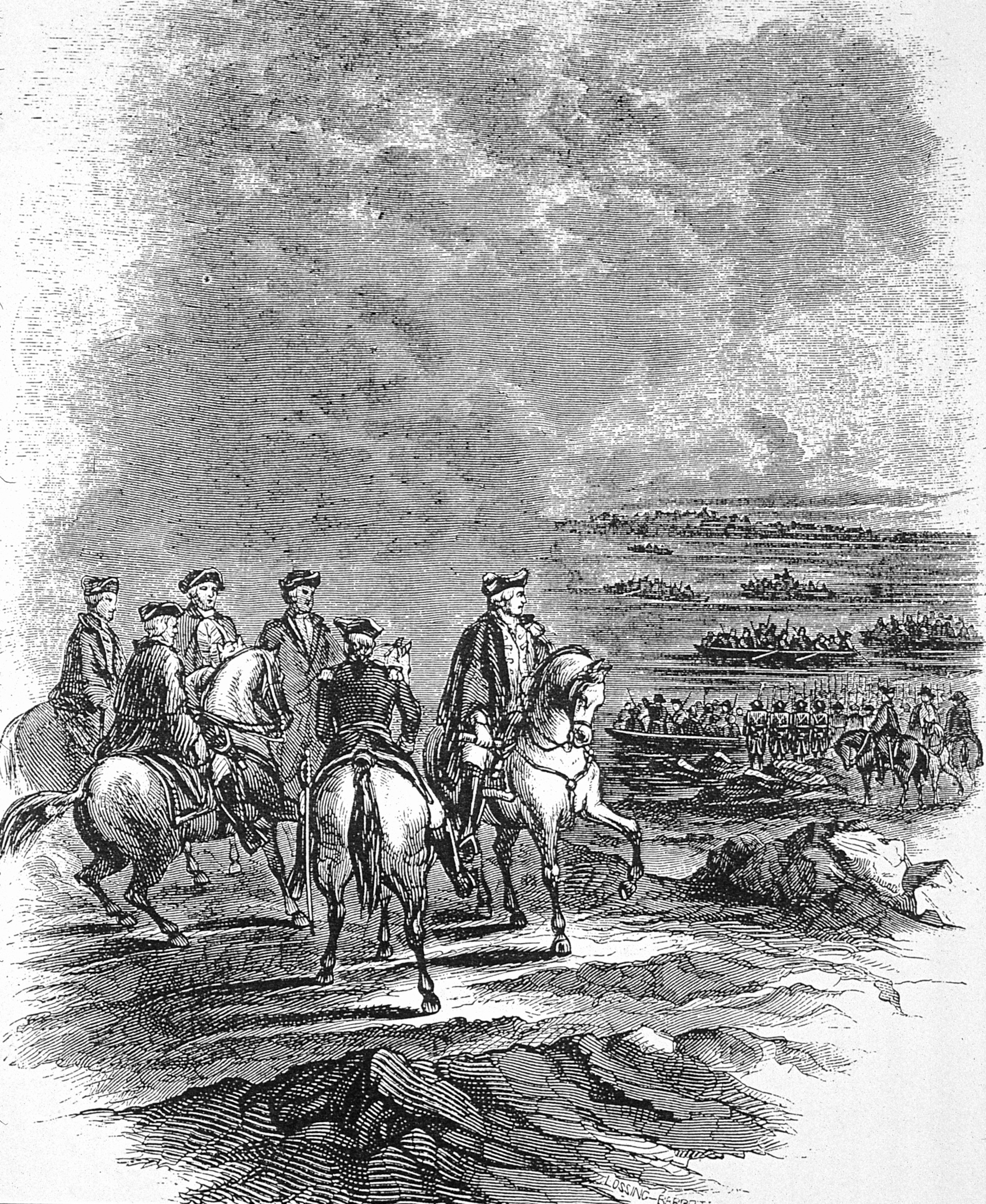
American troops crossing the East river into Manhattan following their defeat in the Battle of Long Island in August 1776. (MPI/Getty Images)
One of the soldiers who made the crossing in the early morning recalled that the water, which had been so turbulent the night before, was smooth as the fog rose with the dawn. The deus ex machina fog at exactly the right time and place proved crucial to saving the United States.
Among the last to cross the river was the commander in chief himself. Washington’s leadership proved as vital to the operation as the miraculous fog, the shift in the wind, the skill of the Marbleheader soldier-mariners, and all the other variables that combined to save the American army that day. Disregarding the concern of his officers for his own personal safety, the general stayed behind until the first rays of dawn at 6:00 a.m. to oversee the retreat and encourage the men. British troops did not discover the evacuation until nearly everyone was safely away.
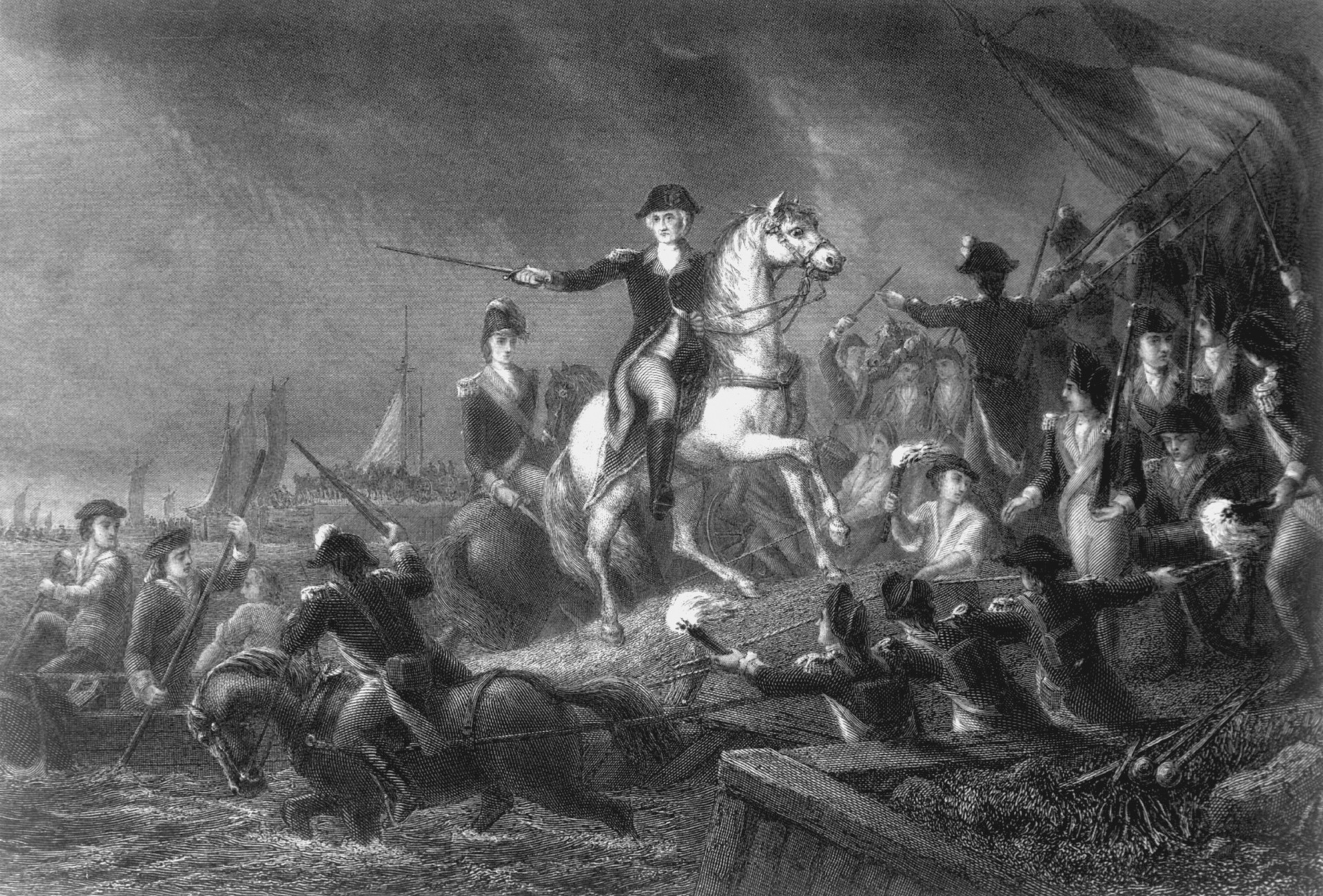
Illustration of General George Washington directing the retreat of the Continental Army across the East River, from Brooklyn to Manhattan, after their defeat at the hands of British forces during the battle of Long Island in August 1776. (Interim Archives/Getty Images)
Many Americans of the time saw the hand of God in the perfect timing and execution of the retreat. “Had it not been for the providential shifting of the wind, not more than half the army could possibly have crossed, and the remainder… must inevitably have fallen into the enemy’s hand. Had it not been also for that heavenly messenger, the fog, to cover the first desertion of the lines, …they must have sustained considerable losses.”
They could have added to that list of remarkable circumstances that made the famous crossing possible the indispensable men of Marblehead. A contemporary later observed, “This event, one of the most remarkable in the war, did much toward establishing the fame of Washington and confidence in his ability as a military leader. It would, however, have been impossible but for the skill and activity of Glover and his Marblehead Regiment.”
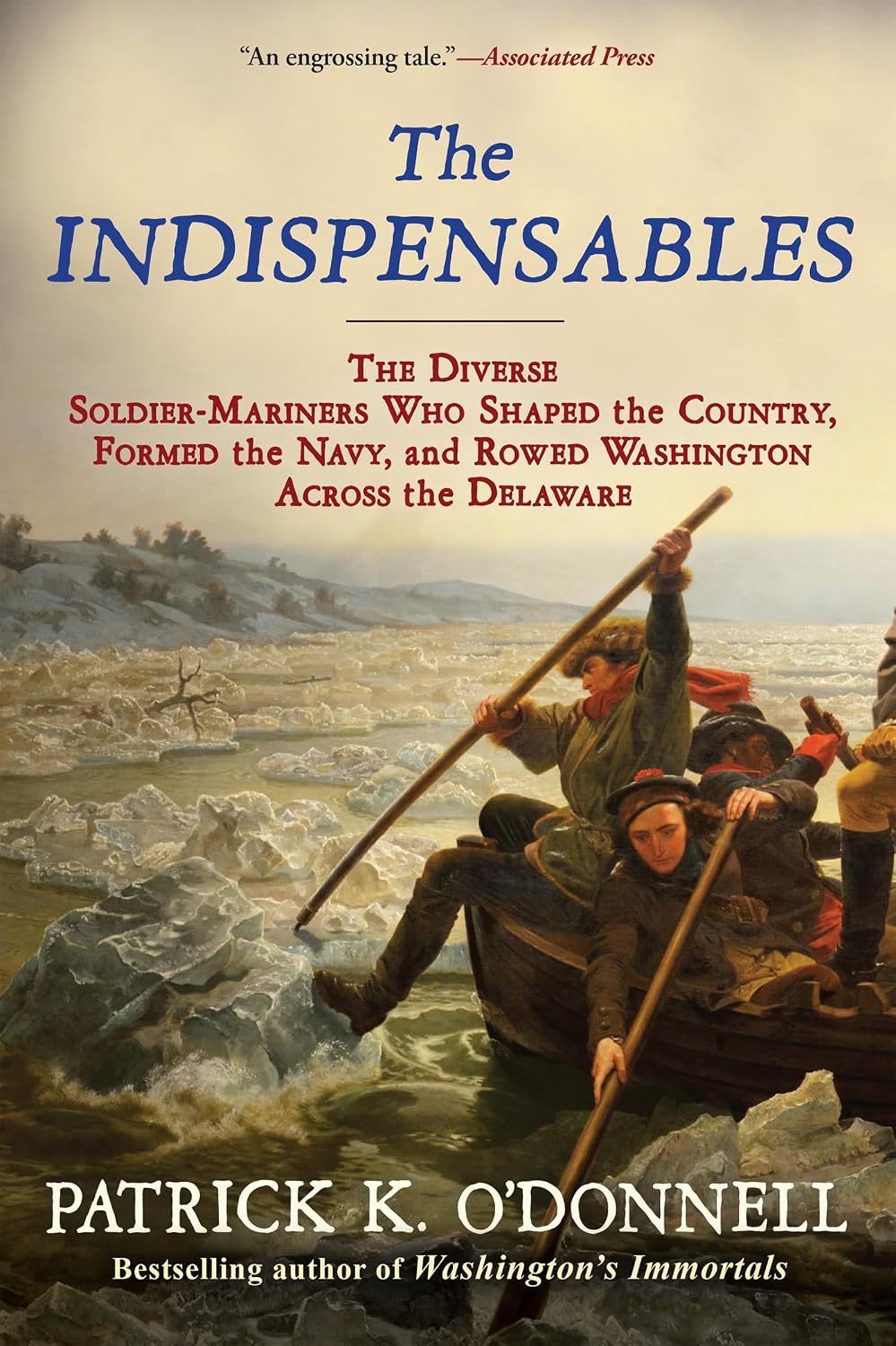
Patrick K. O’Donnell is a bestselling, critically acclaimed military historian and a leading authority on American elite and special operations units. The author of fourteen books, including Revolutionary Snipers: Washington’s Frontier Commandos Whose Marksmanship Forged a New Way of War and Helped Win the Revolution, The Unvanquished, The Indispensables, The Unknowns, and Washington’s Immortals, he is a senior fellow at Mount Vernon and has received numerous national awards. O’Donnell served as a combat historian with a Marine rifle platoon during the Battle of Fallujah. He is a director and the historian for The OSS Society and is a professional speaker who frequently lectures on America’s conflicts, espionage, special operations, and the Revolutionary War. He has provided historical consulting for DreamWorks’ award-winning miniseries Band of Brothers and for documentaries produced by the BBC, the History Channel, and Discovery. Follow his work at PatrickODonnell.com and @combathistorian.