Update: Confirmed Ebola Cases in Africa Rise Above 500
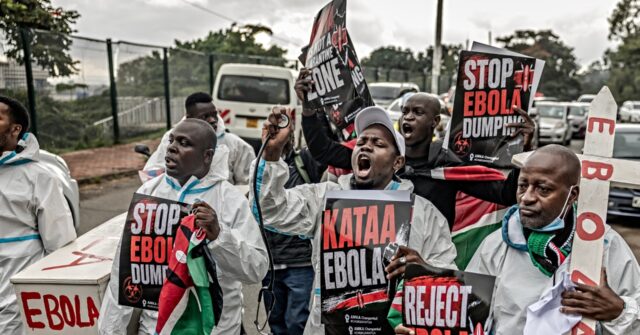
The latest World Health Organization (W.H.O.) update on the Ebola outbreak centered in Democratic Republic of Congo (DRC) this weekend confirmed 534 cases of the disease in the area, including 93 confirmed deaths.
The outbreak, which the W.H.O. identified in May but has conceded could have begun as early as January, was first identified in Ituri province, DRC, and has spread into Uganda. Of the 534 confirmed cases, 515 of those were documented in DRC and the rest in Uganda. Uganda has documented two of the 92 confirmed deaths and four of the 16 recovery cases. Another 117 people are being monitored as suspected but unconfirmed cases of Ebola.
Ebola is a viral hemorrhagic fever that has caused numerous outbreaks in central and western Africa in the past century. The current outbreak is being causes by the Bundibugyo strain of the virus, for which there is no known treatment and no approved vaccine. As a result of prior outbreaks, scientists have developed a vaccine to address the Zaire strain of the virus and some antiviral treatments, but health experts do not believe at press time that they can be used against Bundibugyo, leaving health workers in the epicenter with few options to manage cases.
The updated numbers show an alarming growth in the spread of the virus, but also suggest that local authorities and the W.H.O. have established a more functional screening structure. In late May, the number of suspected Ebola cases was close to 1,000 and the number of suspected deaths at 223. Officials have since reduced those numbers through testing, finding that many suspected cases were cases of malaria or other local infections with similar symptoms.
Containing the outbreak has proven a major challenge for health workers due to a variety of frustrating factors on the ground, including widespread mistrust of health workers, local practices such as traditional burials that involve contact with infected persons, and an ongoing conflict in which multiple warring militias, including at least one associated with the Islamic State, are vying for control of the territory of eastern DRC.
Both local and international aid workers have faced significant violence while attempting to establish Ebola isolation and treatment centers, and many locally do not believe that Ebola is a real virus and fear that health workers addressing outbreaks are there to kill locals as part of “population control.” Some also do not believe that Ebola is treatable with standard medical care, choosing instead to seek the aid of traditional herbalists.
Authorities have documented at least three attacks by angry mobs in May against treatment facilities. Attackers typically seek to obtain the bodies of their loved ones to perform traditional burials, which expose those engaging to the disease, or to help living patients “escape” from what they believe is a planned killing.
The Congolese news outlet Radio Okapi reported on Saturday that the DRC has deployed United Nations peacekeepers in Ituri to aid with security against Ebola treatment centers. The peacekeepers are helping “protect health personnel and medical facilities in an area where misinformation and distrust of the response remain present,” the website noted. They are also offering enhanced security at burials where proper health protocols are taking place to prevent locals from attacking them in protest of a lack of traditional practices.
The W.H.O. moved to address the distrust and attacks by sending its director-general, Tedros Adhanom Ghebreyesus, to the local capital of Ituri, Bunia, at the end of the month. Tedros wrote an open letter to the Congolese people asserting that, as an African himself, he understood the distrust that many have of international aid, and that he would travel there to personally address concerns.
“Trust must be earned, it cannot be assumed. We have not always done things correctly. But I promise you, we are here to learn as much as we are here to help,” he wrote in his letter.
The agency also published a statement the last weekend of May, alongside the government of the DRC, asking community members to support the efforts to end the outbreak.
“Central to this response is the recognition that communities are at the heart of the solution. Success will depend on the trust, engagement, and leadership of local communities,” the statement read. “National and provincial authorities, with support from WHO and partners, are intensifying dialogue with community leaders, women’s groups, youth representatives, religious leaders and the private sector to better understand local concerns and co-develop solutions that are culturally appropriate and effective.”
Tedros is currently in neighboring Uganda to oversee actions to limit the spread of the virus there. He applauded the government of Uganda for its travel screenings and described the overall response to the outbreak as “prompt and capable.”
Radio Okapi noted on Saturday that “acts of resistance and threats against response teams seem to be gradually decreasing” in the past few weeks. In an interview published on Monday, Jean-Jacques Muyembe, director general of Congo’s National Institute of Biomedical Research (INRB), appeared to agree.
“We have strengthened our diagnostic capacity by deploying new laboratories, such as in Mongbwalu, which allows us to quickly analyse reported cases in the epicentre of the outbreak,” he explained. “Contact tracing has also improved, the population is more aware, and working conditions are better.”