Apple goes to war with the British designer of the iPhone - AOL
When Apple sued OpenAI last week, claiming the company behind ChatGPT had sought to steal its trade secrets, one name was conspicuously absent from the lawsuit.
Sir Jony Ive, the British designer whose collaboration with Steve Jobs led to Apple’s most creative years, was not mentioned in the 41-page document, despite his company, io Products, and co-founder Tang Tan being named as defendants.
Ive has recently been working with OpenAI to develop new products and Apple’s lawyers appeared to go out of their way not to mention him by name, stating that io was founded by “former Apple leaders”.
But the company’s legal manoeuvres against Ive’s new partners suggest a rift between Britain’s most celebrated designer and the company that made him a household name.
“Apple is effectively suing Jony Ive,” said Gene Munster, a longtime follower of the company at Deepwater Asset Management.
‘I’m done working with a--holes’Ive, 59, is a part of Apple lore. His multicoloured iMac helped save the company in 1998 before the iPod’s minimalist white design and the single-button iPhone turned it into the world’s biggest company.
He left the company in 2019, in a carefully choreographed exit designed to minimise concerns from investors.
Ive set up his own design studio, LoveFrom, and said he would continue to work with Apple.
However, confidants at the time said he had become increasingly detached after the Apple Watch’s 2015 release. Tim Cook, Apple’s chief executive, called the claims “absurd”.
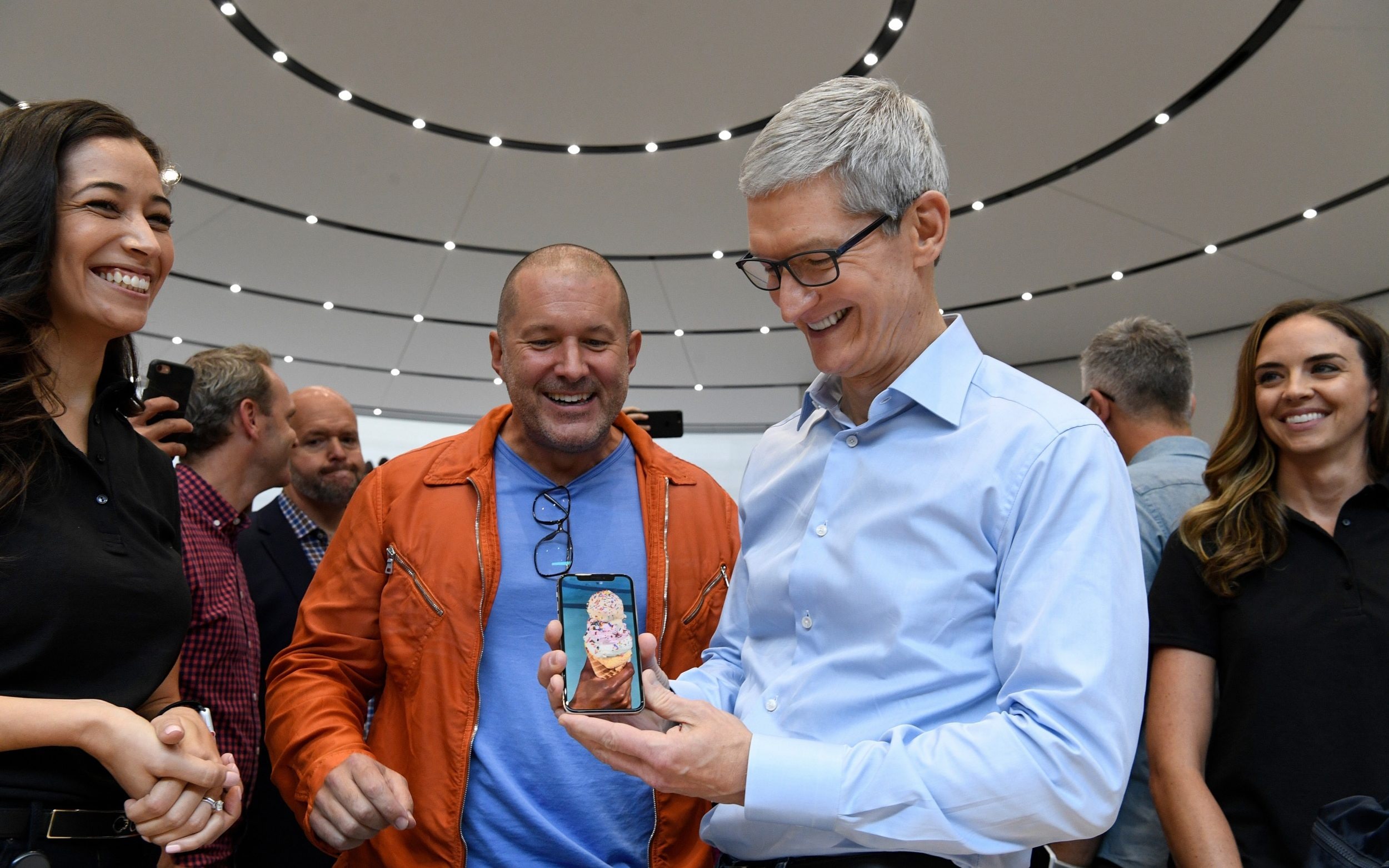
Sir Jony Ive (left) and Tim Cook in 2017. The pair worked closely at Apple for years - David Paul Morris/Bloomberg
A three-year contract between Apple and Ive’s studio was not renewed in 2022 and a series of pet projects followed, including designing the King’s coronation emblem as well as Ferrari’s first electric vehicle, the €550,000 (£470,000) Luce that horrified some Italians when it was unveiled in May.
In 2024, Ive secretly set up io Products, hiring a string of his old Apple colleagues, including Tan, who was the company’s head of design for the iPhone, and started working with OpenAI.
The relationship was made official the next year, when Sam Altman, the boss of OpenAI, announced he was buying the start-up for $6.4bn (£4.8bn), a precursor to the company launching an AI device.
Ive himself did not join the company but said he would be deeply involved. “I have a growing sense that everything I have learned over the last 30 years has led me to this moment,” he said.
The British designer, knighted in 2012, has hinted that his relationship with Apple had gone sour.
“Part of my grumpy belligerence now is I’m done working with a--holes,” he said earlier this year when unveiling the Luce. “I’m so happy that we can place creative excellence right at the centre of what we’re doing.”
In a veiled dig at Apple, he said his OpenAI work was driven by a feeling that “humanity deserves better” and said that he felt responsible for some of the negative effects of technology, which include smartphone addiction.
There is still no sign of the ChatGPT device, which Altman has said will be “the coolest piece of technology that the world will have ever seen”.
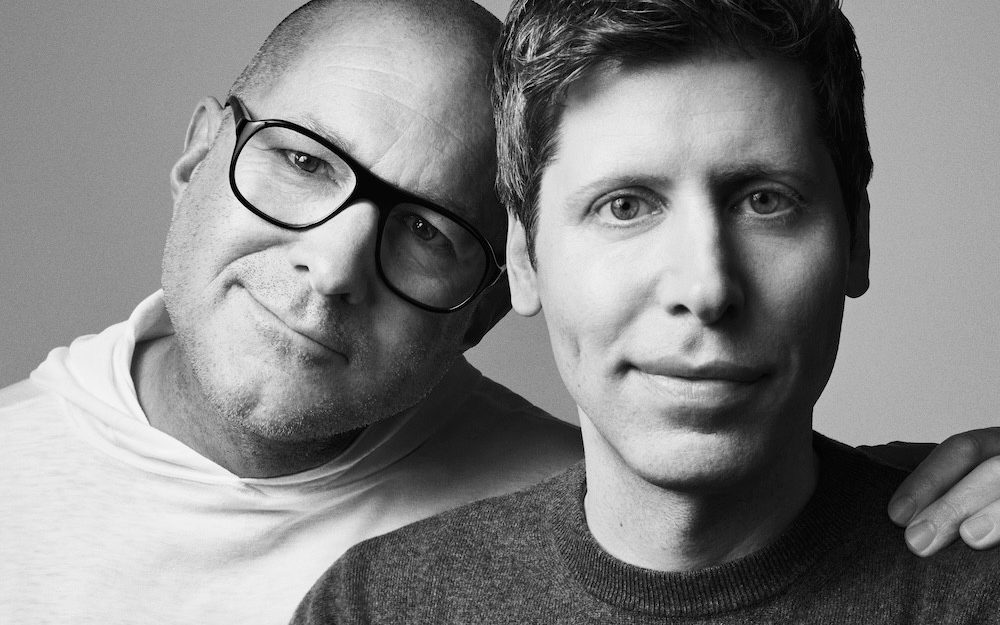
Sam Altman (right) is working on an AI device with Sir Jony Ive
But OpenAI is expected to unveil it in the coming months. Signs point to a screen-free, portable, puck-style speaker that can listen to conversations and answer questions.
Advertisement
Although not a direct rival to the iPhone, Apple is set to launch a new high-powered version of Siri alongside its latest phones – putting the two companies in competition.
Apple is also expected to unveil a foldable iPhone it hopes will be the year’s must-have gadget.
Having the man who once would have designed it promoting something else will rankle with Apple executives, especially if it is designed to disrupt the iPhone.
The ChatGPT device is not expected to go on sale until next year, but may well be announced in the autumn, when companies such as Apple seek to hog the limelight.
The two companies have gone from allies to rivals.
Two years ago, Apple struck a deal with OpenAI that would mean ChatGPT would handle some Siri answers. It has since chosen to work with Google.
Complicating the picture further, Laurene Powell Jobs, Steve Jobs’ widow, has invested in io Products and is said to be among the first to have seen the OpenAI device.
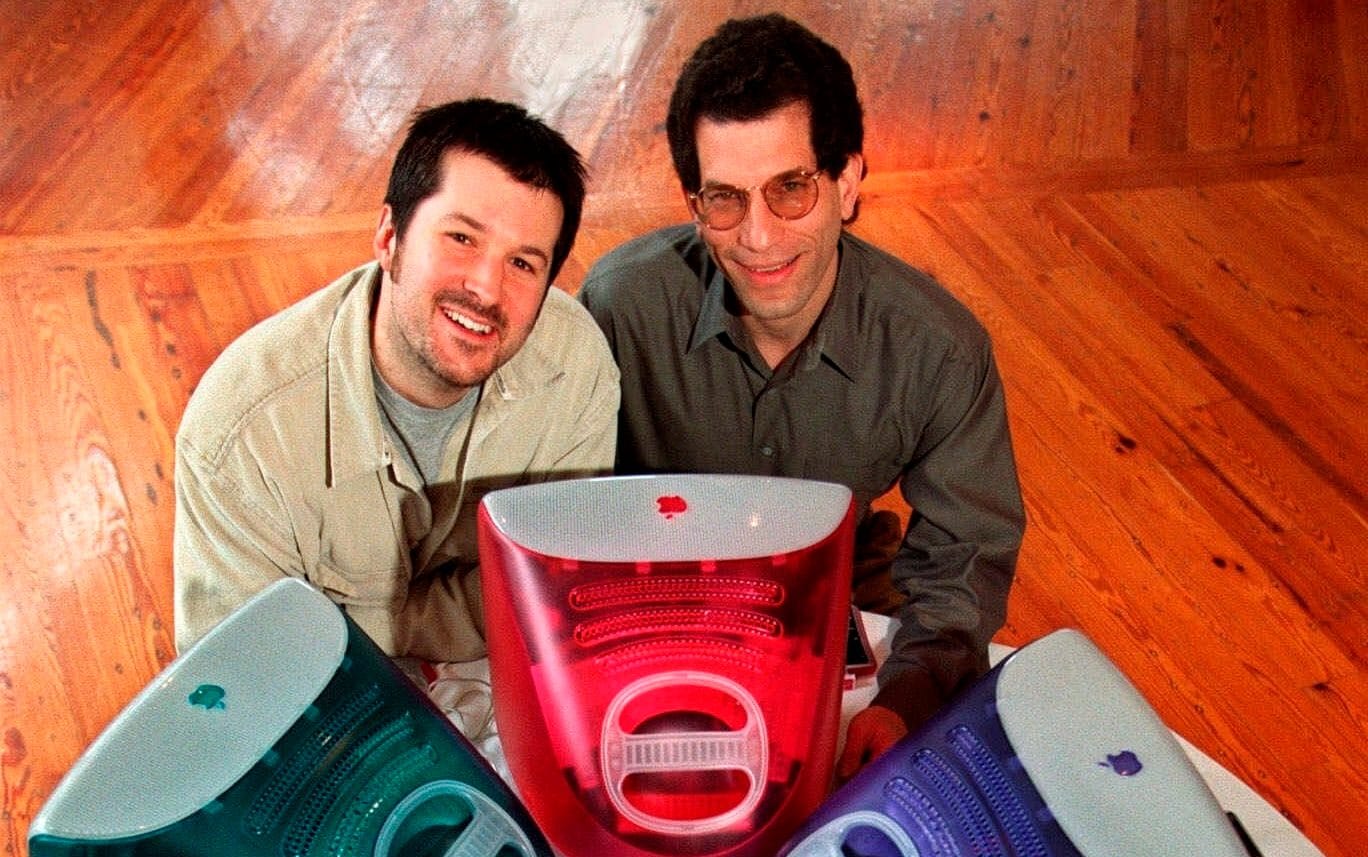
Jony Ive and Jon Rubinstein, who was once Apple’s senior vice president of engineering, in 1998, with the tech giant’s iconic multi-coloured Mac - Susan Ragan/AP
OpenAI has also hired a slew of Apple employees in the last year.
In its lawsuit, filed on Friday night, Apple alleged that this was part of “a pattern of theft of Apple’s trade secrets by OpenAI employees who were formerly at Apple”.
It said Tan, one of Ive’s io co-founders, had asked Apple employees in interviews to divulge details of the company’s secret projects, and that OpenAI had asked candidates to bring Apple prototypes along.
Apple claimed the company had realised that making successful gadgets was harder than anticipated, and as a result had resorted to taking “unlawful shortcuts” as it is under financial pressure to deliver a trillion-dollar public listing.
The company also said OpenAI had failed to reply when Apple enquired about the claims, forcing it into legal action.
On Tuesday night, OpenAI responded, saying there was “no evidence this complaint has merit”. Documents seen by NBC also cast doubt on claims the company had stonewalled Apple, suggesting communications had actually gone dark after a lawyer representing Apple mixed up the names of two OpenAI employees with the last names “Wang” and “Chang”.
Apple’s lawsuit has been characterised as an attempt to put more employees off leaving. “At a minimum, this will slow OpenAI’s efforts. At a maximum, it will end their device efforts,” says Munster.
Even if he was not named in Apple’s lawsuit, Ive may well get dragged into the case should it go to trial.
“It is quite possible that Jony Ive and other founders of io Products will be deposed in this case since they are likely to be identified as having information relevant to Apple’s trade secret misappropriation claims,” says Elizabeth Rowe, an intellectual property expert at the University of Virginia.
Ive’s 30-year partnership with Apple was one of the world’s most lucrative collaborations. Their break-up could be similarly explosive.