Trump’s legacy and the price of political expediency
America may be on the verge of making one of the greatest strategic mistakes in modern history — not because our military lacks the strength to prevail, but because our politics may lack the courage to finish the job.
Advertisement
For the first time in nearly half a century, the regime that has financed terrorism against the United States, Israel, our Gulf allies, and much of the West appears genuinely vulnerable. Yet instead of asking whether this historic opportunity should be seized once and for all, too much of our political debate shifted almost immediately to gasoline prices, election polling, and partisan advantage.
America’s adversaries have long understood that democracies can be weakened by manipulating public opinion through propaganda, disinformation, and increasingly sophisticated social media campaigns. Russia, China, Iran, and other authoritarian regimes exploit political divisions because they know democracies often lose the will to fight long before they lose the ability.
Advertisement
What is more troubling is that, in my view, too many influential voices within the progressive movement and much of today’s mainstream media reinforced that dynamic — not through coordination, but by framing the conflict primarily through its domestic political consequences rather than its strategic objectives.
The political message became familiar: This is “Trump’s war.” Inflation is Trump’s fault. Higher gasoline prices are Trump’s fault. End the conflict, elect us, and your economic pain will disappear.
Advertisement
Whatever the intent, this message places enormous pressure on an administration to curtail military operations before their strategic objectives are achieved, despite the strategic victory that should naturally follow the tactical victories achieved by America and Israel since October 7.
Imagine if, during the final months of World War II, Americans had concluded that the economic sacrifices of victory had become too burdensome and demanded that President Franklin Roosevelt — or, after Roosevelt’s death, President Harry Truman — halt the war before Nazi Germany or Imperial Japan had been decisively defeated. Previous generations understood that temporary sacrifice was often the price of achieving a lasting peace.
Advertisement
That is the question before us today.
Are we willing to endure temporary economic discomfort if it offers the opportunity to permanently weaken a regime that has spent nearly half a century waging war against the United States and its allies through terrorism?
Advertisement
If political pressure forces America to settle for merely damaging the Iranian regime rather than decisively ending its ability to finance terrorism, dominate the Middle East through proxy armies, and ultimately obtain nuclear weapons, historians may conclude that political expediency will accomplish what Iran’s military never could.
Since 1979, Iran has financed and armed Hezb’allah, Hamas, Palestinian Islamic Jihad, Shiite militias in Iraq, the Houthis in Yemen, and other proxy organizations responsible for attacks that have killed Americans and countless civilians throughout the Middle East. Every president since Jimmy Carter recognized the threat. Each sought to contain it by different means — sanctions, diplomacy, deterrence, covert action, or limited military force — but none fundamentally ended Iran’s ability to project power through terrorism and proxy warfare.
Advertisement
Then something extraordinary happened.
For perhaps the first time in decades, Iran’s strategic position appeared genuinely vulnerable. Its proxy network had been severely weakened. Hezb’allah had suffered devastating losses. Hamas had been crippled militarily. Syria had become a far less reliable partner. Iran itself found its military infrastructure under unprecedented pressure.
Victory was finally within reach.
Whether one agrees with President Donald Trump’s decision or not, he demonstrated something few political leaders willingly do: He appeared prepared to risk his presidency, his political future, and ultimately his historical legacy in pursuit of what he believed was a rare opportunity to permanently weaken the world’s leading state sponsor of terrorism.
History will ultimately judge whether that decision was correct. What cannot honestly be disputed is that it required accepting extraordinary political risk.
Political expediency is not a Democrat vice or a Republican vice. It is democracy’s oldest temptation. The question is whether, at moments of historic consequence, statesmen are willing to rise above it.
In this instance, I believe that today’s progressive movement and too many Democrat leaders have allowed short-term political advantage to eclipse what should be a historic strategic opportunity. Rather than asking how the United States might permanently weaken the world’s leading state sponsor of terrorism, much of the public conversation became focused on the next election.
That same political calculation can also be seen, in my view, in the willingness of many Democrat leaders to embrace or tolerate candidates whose rhetoric and positions would have been politically disqualifying for much of our nation’s history. The Democrats’ nomination of Graham Platner for the U.S. Senate in Maine, despite his publicly reported remarks, raises legitimate questions about where those standards now lie. Among the statements attributed to Platner are “Why don’t black people tip?,” (2013); his response to a video of an American soldier killed by the Taliban, calling him a “dumb MF” who “didn’t deserve to live” (2019); and, perhaps most strikingly, his 2021 declaration: “I got older and became a communist.”
Nor is Platner alone. Texas congressional candidate Maureen Galindo proposed converting an ICE detention facility into a prison for “American Zionists.” New York congressional candidate Darializa Avila Chevalier publicly joked that after forgetting napkins, she “just wiped my hand on the American flag behind me.” Representative Rashida Tlaib (D-Mich.) has repeatedly used the phrase “from the river to the sea,” while many prominent Democrat leaders have been reluctant to unequivocally repudiate that slogan or others such as “globalize the intifada.”
Taken together, these examples raise legitimate questions about whether maintaining partisan unity has too often taken precedence over drawing clear moral boundaries. More broadly, they suggest that rhetoric and positions previous generations of Americans would have regarded as politically disqualifying are now increasingly tolerated — or, at times, embraced — in the pursuit of electoral success.
Political parties are ultimately judged not only by the candidates they reject, but also by the candidates they elevate.
If history concludes that victory was within reach and America chose political expediency instead, the greatest tragedy will not be that our military lacked the strength to prevail. It will be that our politics lacked the resolve to finish what history unexpectedly placed within our grasp.
Political expediency may yet accomplish what Iran never could.
History has not yet been written. Let us prove that America’s political courage is equal to its military strength.
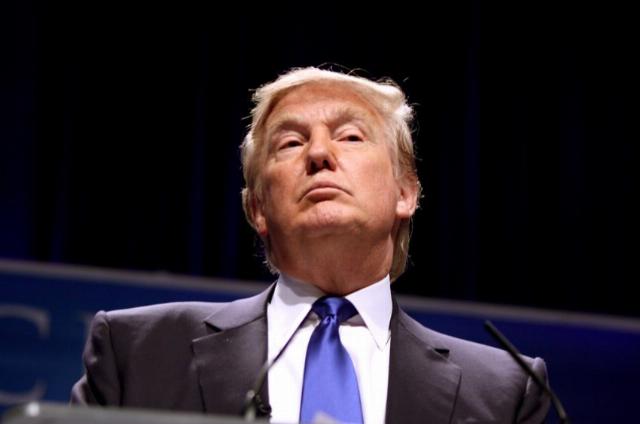
Image: Gage Skidmore via Flickr, CC BY-SA 2.0.