That pesky 14th Amendment
When reading through the U.S. Constitution, the 14th Amendment marks a significant departure — not in intent, but in the first adoption of the language of complex legalese when compared to the previous language thereof. The entry just before the 14th
Amendment to the Constitution, the 13th Amendment, simply states in its entirety that “neither slavery nor involuntary servitude, except as a punishment for crime whereof the party shall have been duly convicted, shall exist within the United States, or any place subject to their jurisdiction. Congress shall have power to enforce this article by appropriate legislation.”
Plain-spoken, concise, and unambiguous, especially when compared to the subsequent additions to the supreme law of the land. Henceforth, however, the lawyers sharpened their pencils and got seriously into the mix. Unraveling the objective meaning of the 14th Amendment is actually an eternal task, meaning that all results will be subject to interpretation. This is not how law should be administered.
Advertisement
It is painfully obvious that “birth tourism” should not be valid, but it still is. And bedeviling the argument over birthright citizenship is the meaning of the term “the jurisdiction thereof.” Yeah, subject to interpretation — which is not a good foundation for a legal principle.
Kurt Schlichter at least hints at the SCOTUS majority’s motive being a reluctance to rock the boat, since a dilemma would occur over the disposition of possibly millions already having questionable citizenship — and makes a good case for this not being the end of the struggle to rationalize America’s immigration policy. It may be reasonable to assume that the fuse has been lit for the eventual correction of this defect.
Advertisement
What should also be mentioned is a reminder of why John Roberts is the current chief justice of the U.S. Supreme Court. Back when he was being considered for a position as an associate justice, the then–chief justice, William Rehnquist, suddenly assumed room temperature. For the sake of efficiency, the “rulers” of America pushed Roberts up into the vacated position.
Henceforth, we have languished under the judicial dictates of the Roberts Court. Pursuant to the latest “birthright” decision, renewed attention to the SCOTUS and its future has been uncorked. Both sides are gearing up, I suppose, for a protracted struggle. Whoever said the Supreme Court reads the election results knew what he was talking about.
Advertisement
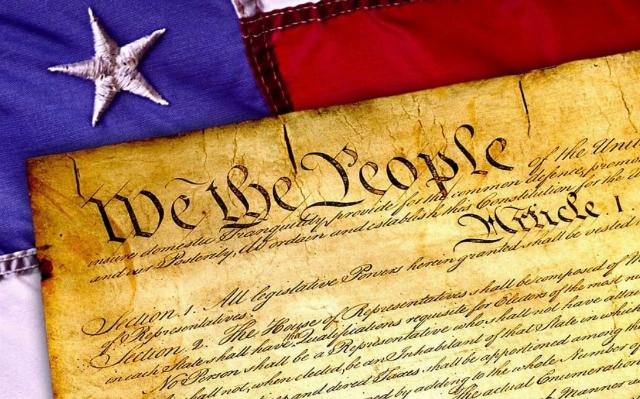
Image via Pxfuel.
Advertisement