Solar panels and geography
Several years ago, I had a memorable conversation with my nephew from Minnesota about solar panels. He was enthusiastic about the technology and wondered why I had not installed solar panels on either of my homes in Florida. From his perspective, the decision seemed obvious. Solar panels would reduce my electric bill, help the environment, and increase the value of my property. Why wouldn’t I take advantage of such an opportunity?
Advertisement
From my perspective, the calculation looked entirely different. Our conversation was not really about solar panels. It revealed something far more fundamental. We were evaluating the same technology through two entirely different risk models. He saw an asset. I saw a conditional liability.
That contrast illustrates a broader problem in modern public policy. We increasingly evaluate technologies through generalized national narratives while overlooking the local conditions that ultimately determine whether those technologies create value or create risk.
Advertisement
Technology does not exist in a vacuum. It exists within geography. That geography often determines whether a technology becomes an asset or a liability.
In northern climates, a home is primarily exposed to vertical forces: snow loads, ice accumulation, freezing temperatures, and seasonal weather cycles. A rooftop solar array in Minnesota is largely a static structure. Once installed, its principal concerns involve electrical maintenance, roof penetrations, and normal equipment aging. The structural risk profile remains relatively predictable.
Advertisement
Coastal Florida presents an entirely different engineering problem. Here, the dominant threat is not gravity; it is uplift. A hurricane does not simply bring rain. It subjects buildings to extreme wind forces, turbulent airflows, wind-driven debris, rapid pressure changes, and flying objects generated by neighboring structures. Everything attached to a roof becomes part of that engineering equation.
Properly engineered rooftop solar systems installed to modern Florida standards are designed to withstand very high wind speeds. Many perform well during hurricanes. But engineering for high winds is not the same as eliminating risk. Installation quality, roof condition, attachment methods, the age of the system, and the severity and direction of the storm all influence performance. Every additional structure attached to a roof changes the risk calculation.
Advertisement
If a system fails during a major storm, the consequences may extend beyond the replacement cost of the panels themselves. Damage to the roof deck, water intrusion, debris impacts, and potential liability if detached components strike neighboring property all become part of the homeowner’s exposure.
Insurance companies understand this reality. Insurance is the commercial pricing of risk. Where additional structural risk exists, insurers attempt to quantify it through underwriting requirements, premium adjustments, engineering standards, and coverage limitations. Their business depends upon understanding localized probabilities rather than national narratives.
Advertisement
There is another widespread misconception. Many people assume that rooftop solar automatically provides electricity during a power outage following a hurricane. In most cases, it does not. Standard grid-connected residential solar systems are designed to shut down automatically when the utility grid loses power. This prevents electricity from flowing back onto damaged power lines where utility crews may be working. Unless homeowners invest in battery storage or specialized backup equipment, their solar panels typically produce no usable electricity during a blackout. Ironically, the homeowner retains the structural exposure while receiving none of the anticipated emergency power benefits.
Florida’s own electric utilities illustrate the same principle. The state ranks among the nation’s leaders in solar generation, yet much of that capacity comes from large utility-scale installations rather than residential rooftops. Utilities can locate solar farms where engineering, maintenance, land availability, and system reliability produce the most favorable balance between risk and return. They are optimizing an entire electrical network rather than asking individual homeowners to absorb localized structural risks.
Advertisement
My nephew and I were not arguing over the science of solar energy. We were looking at different geographies. His experience led him naturally to emphasize energy production, environmental benefits, and long-term savings. My experience as a Florida homeowner required me to think about hurricanes, roof integrity, insurance exposure, liability, and storm recovery.
Neither perspective was irrational. Each was shaped by the physical environment in which we lived.
The larger lesson extends far beyond solar panels. Public debates increasingly promote technologies as though they possess universal value independent of place. Yet geography continues to impose realities that no national narrative can erase. Climate, terrain, infrastructure, insurance markets, and local hazards all influence whether an innovation creates more value than risk.
Technology is rarely good or bad in the abstract. It is appropriate or inappropriate for a particular environment. The mistake is assuming that a solution optimized for one geography automatically becomes the best solution for every geography.
Reality is local. The farther public policy drifts from that simple truth, the more often it mistakes broad narratives for sound judgment.
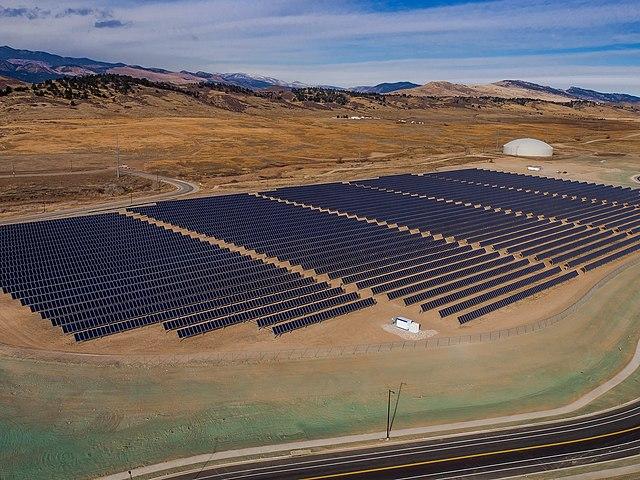
Image via Wikimedia Commons, public domain.
.jpg)