Fixing the Chicago public schools
The academic performance of the Chicago Public Schools continues to deteriorate. Chicago schools score the worst of any big city in America. Currently, only 18 percent of students are proficient in math, with reading scores not much better. There are schools in Chicago with zero students proficient at grade level. Meanwhile, Chicago has one of the most expensive education systems in the world, with per capita student expenditures approaching $30,000 per year. Average compensation for teachers approaches $100,000 per year, with an estimated benefit cost near an additional $60,000. This is with one of the shortest school days in the country at five and a half hours of class time per day.
Advertisement
Rather than focus on failing academics and devoting resources to improving the students, the Chicago Teachers’ Union (CTU) has instead decided to focus on political activities. Only 17 percent of CTU expenses goes to teacher resources. The bulk of spending, nearly $5 million last year, goes to political expenditures and lobbying. The teachers themselves have used their position to focus on May Day–type protests and attacking law enforcement personnel and operations rather than academic performance. As former union president Albert Shanker once said, “I’ll start caring about the students when they start paying union dues.”
This is not sustainable as a practice and is one of the leading causes of the exodus from Illinois. It doesn’t have to be this, way given the resources of the state and the high academic success of our universities and better schools. The Chicago Public Schools are rotten from top to bottom as the administration, the city and state government oversight, and the unions are opposed to focusing on academic performance. They cannot be fixed from within. The only hope is to eliminate the Chicago Public Schools entirely and go to an all–private school system.
Advertisement
The way this would work is that we would have a two-year transition period, where private providers can be selected or certified and school assets can be sold to the new providers. Parents can receive information on different school choices and make decisions for their children’s enrollment selections. Proceeds from the sale of school properties and assets would be distributed back to the taxpayers as property tax rebates. The over $1 billion school reserve balance would also be refunded to the taxpayers. For rental properties, the tax rebate would be required to be paid directly to the tenants using a square footage allocation. After this two-year transition, public schools in Chicago would cease to exist. Every student will have the advantage of receiving a private education.
We would eliminate the property tax as a school financing vehicle. Currently, 15–30 percent of rents in Chicago go directly to fund public sector schools. Chicago renters will welcome a huge rent reduction. Instead, schools would be funded by direct tuition payments by parents, with government support based on income levels. I recommend limits be placed at 10 percent of family income for one student, 16.6 percent for two students, and 20 percent for three or more. Support would come directly from the state and would still be less than the state pays to Chicago Public Schools currently.
Advertisement
The nature of the schools would change. While I see the neighborhood schools continuing for the average student, specialty schools would be created for students with disciplinary or attention issues, as well as for the gifted students. Other schools might be created that would focus more on developing skills such as in creative arts.
As schools would return to the free market, I would expect innovations to be tried and quickly adopted. A true free market in education services would result in Chicago rapidly going from the worst schools in the country to the best education system in the world, all while providing substantial tax relief, especially for property taxes. After these successes, the system can be adopted statewide.
Advertisement
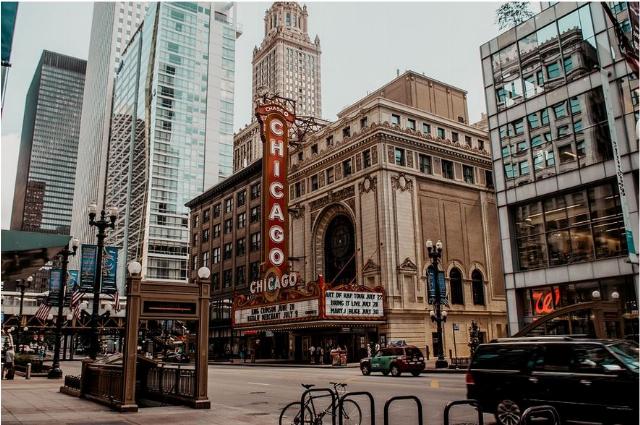
Image via Pixabay.
Advertisement