Trump and the deal born of strength
When Trump defends the interim agreement signed with Iran on June 17, his critics repeat the same old mistake: They confuse tactics with retreat. In their eyes, if an American president enters negotiations after a hard military campaign and maximum pressure, he must have backed down. But the reality is exactly the opposite.
Advertisement
This agreement, now in its first days of implementation, is the continuation of the very pressure policy that brought Iran where it could no longer shift the costs of its behavior onto America, Israel, and Washington’s allies. The central difference between Trump’s approach and Obama’s agreement lies precisely here: Obama offered concessions in the hope of changing Iran’s behavior; Trump first raised the cost of Iran’s behavior, and then pulled negotiation out of strength.
To understand this moment, one has to move beyond Washington’s daily noise. The Trump administration turned the campaign to prevent Iran’s ruling system from acquiring a nuclear weapon from rhetoric into battlefield reality. For years, Washington spoke about “all options being on the table,” but that phrase often sounded more like diplomatic theater than actual policy. Trump ended that ambiguity. His message to Tehran was clear: America will no longer allow Iran’s nuclear threat to hide behind endless negotiations, legal maneuvering, and technical fog. That transformation of threat into cost built America’s new deterrence.
Advertisement
This deterrence was not limited to the nuclear file; its effects could be seen across Iran’s regional behavior. The blow to the top of Iran’s decision-making structure and the killing of Ali Khamenei were not merely symbolic; these moves shook the regime’s structure of confidence. For years, Khamenei had been the central face of hostility toward America, support for proxy networks, and insistence on expanding regional influence. When such a point of power is damaged, the message does not stop in Tehran; it reaches every actor that counted on a fixed command center. From this angle, Iran’s reduced sensitivity toward the Lebanon front and its limited capacity to respond in certain regional confrontations are not simple signs of weakness; they are signs of changed calculation.
That changed calculation explains the significance of the interim agreement now entering its 60-day negotiating period. Critics say any agreement with Iran means repeating the JCPOA. This reading is both lazy and inaccurate. The JCPOA emerged from diplomatic optimism; the interim agreement emerges from pressure, war, and deterrence. Under the JCPOA, Iran felt it could receive economic concessions while preserving regional influence. Today, Iran faces costs it cannot simply ignore. Negotiation, therefore, is not a reward to Iran; it is the management of the next phase after Iran has been weakened.
Advertisement
In this picture, Israel’s security must not be removed from view. No American administration in recent decades has gone as far as the Trump administration in standing for Israel’s security. It treated Iran’s threat as the principal strategic danger to Israel and was prepared to pay a price to alter the balance. But support for Israel does not mean Washington must accept every demand made by Netanyahu’s government without question. This is the distinction that Trump’s domestic critics and some RINOs deliberately ignore. Trump can stand with Israel and, at the same time, say Tel Aviv’s tactical overreach must not hold America’s broader interests hostage.
This is precisely the point that discredits the old accusation that America is surrendering to Israel. If Trump were merely following Netanyahu’s lead, there would be no reason for him to resist some of his demands today. If his policy were simply warmongering, he would not have entered a 60-day negotiation process at all. And if his objective were to grant concessions to Tehran, the pressure campaign and field operations before the agreement would make no sense. Contrary to the caricature built by his opponents, the current policy combines power, support for allies, and the ability to recognize the right moment to stop escalation.
Advertisement
The countries of the Persian Gulf have understood this shift better than many analysts in Washington. For years, they moved between fear of Iran, doubts about America’s commitment, and concern over open ties with Israel. But the recent war, and the fragile ceasefire now under test, showed that when the main regional threat is weakened, space opens for a new security order. A deeper bond among America, Israel, and the Persian Gulf states to contain Iran is not merely a temporary arrangement; it could begin a new phase of normalization, defense cooperation, and even the revival of the Abraham Accords. Put simply, weakening the primary source of instability in the Middle East creates political space for larger agreements.
Opponents will say this path is dangerous, costly, and may push Iran back toward tension. These concerns should not be dismissed entirely. No agreement with Iran is without risk, and no war remains without cost. But foreign policy is never a choice between a perfect option and a bad one; it is a choice among imperfect options. Should America, after applying effective pressure, use the current 60-day negotiating window to lock in its gains, or return to an endless war that consumes lives, taxpayer dollars, and strategic focus? Trump’s answer is clear: Power must produce results, not merely headlines.
Advertisement
In the end, Trump’s interim agreement with Iran, signed on June 17, should be understood from the place his critics refuse to look. This agreement came from a changed balance of power. Trump showed Iran that its nuclear path and regional adventurism carry costs; he showed Israel that America is serious about defending its security; he showed the Persian Gulf states that no regional order is possible without containing Iran; and he showed his domestic critics that negotiation, when conducted after pressure, can be an instrument of power rather than a sign of fear.
Perhaps that is precisely what makes Trump’s opponents so nervous: When they expected retreat, he advanced a policy that turns war into leverage for agreement, and agreement into the consolidation of deterrence.
Advertisement
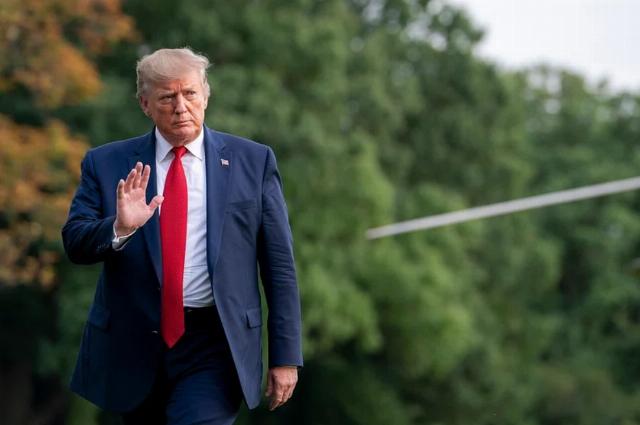
Image via Raw Pixel.