The real AI revolution
Microsoft CEO Satya Nadella recently laid out a clear-eyed view of the AI era that cuts through both Silicon Valley hype and regulatory doom-mongering. He offers a strategic recognition that artificial intelligence creates a new kind of cognitive partnership, one where human judgment and institutional memory become more, not less valuable.
Advertisement
Nadella distinguishes two forms of capital. Human capital, in the form of knowledge, experience, relationships, pattern recognition, and moral judgment. Token capital, in the form of the AI models, agents, and systems that execute, scale, and optimize. The term “token” in AI, particularly in large language models (LLMs), is the fundamental unit of text (or other data) that the model processes. Nadella's breakthrough insight is that as token capital grows, human capital does not diminish. It compounds. Humans set the goals, provide the context, and exercise final judgment and decision-making. AI handles the drudgery at superhuman speed.
The real competitive moat for companies, i.e, that durable edge protecting a company from rivals, Nadella argues, is building an "internal learning loop," whereby agentic AI systems continuously absorb a firm’s own workflows, proprietary data, and hard-won institutional memory. Companies that own this loop retain sovereignty. Those that outsource everything to a handful of frontier models (OpenAI, Google, Anthropic, or worse, foreign adversaries) risk becoming hollowed-out shells.
Advertisement
This mirrors the globalization and outsourcing debates of previous decades. When core capabilities left American shores, political backlash followed. More, legal protections evaporated; patents, trade secrets, and proprietary processes vanished under weak enforcement and adversarial exploitation. The same will happen again if a few AI giants commoditize every company’s expertise.
The capital economy might, in the blind pursuit of immediate return, naively render human capital vulnerable, at least in the early stages. Goals of resilience and longevity will, nonetheless, ultimately prevail, and reorient those capable of preservation, while those incapable will be absorbed or perish.
Advertisement
The political economy, however, will not tolerate a return to the technological equivalent of historical offshoring globalization. Americans did not build the world’s most dynamic economy to become digital sharecroppers on someone else’s platform, whether that platform is foreign or controlled by a handful of coastal tech oligarchs. Trump’s America First realism offers the natural antidote: aggressive innovation at home, strategic protection of critical technologies, and policies that keep sovereignty over our own data, models, and institutional memory firmly in American hands.
Nadella’s warning is timely. While America leads in frontier AI today, excessive reliance on a narrow set of external models creates vulnerability, for example to model updates, pricing power, data extraction, and potential foreign influence. Particularly given great power competition with China, ceding institutional memory to a handful of labs is strategic negligence.
Advertisement
Real strength comes from dispersed power and robust competitive private enterprise and not from centralized control, whether by government bureaucrats or a small cadre of AI priests in San Francisco. Instead of heavy-handed regulation that hands advantages to slower-moving adversaries, the best protection comes from aggressive American innovation, targeted safeguards on critical technology, and policies that encourage every company to build and own its own learning loops.
History confirms this pattern. Previous technological leaps, steam, electricity, computing, did not extinguish human ingenuity. They amplified it for those bold enough to harness the ingenuity and its benefits. AI is no different. The winners will be organizations that treat AI as a force multiplier for human capital rather than a replacement for it.
Advertisement
America’s edge has always been our people: restless creators, tinkerers, risk-takers, hard workers, and free people who turn abstract possibility into concrete results. Nadella’s framework reminds us that technology serves human purpose, not the other way around. The companies and nations that remember this will thrive. Those that forget, chasing pure token efficiency while discarding lived judgment, will fade.
The AI revolution is not a threat to American excellence. It is the latest proving ground for exceptionalism. The question is whether we will build sovereign learning organizations that honor human capital or surrender to dependency on whoever trains the biggest model next.
Advertisement
While coastal elites debate whether AI will end humanity or require new federal overlords, Satya Nadella quietly points toward the conservative truth: free human beings with skin in the game, building on their own knowledge and memory, remain irreplaceable. Tokens are tools. Judgment is sovereign. America still has the people and the will to lead, if we refuse to outsource our future.
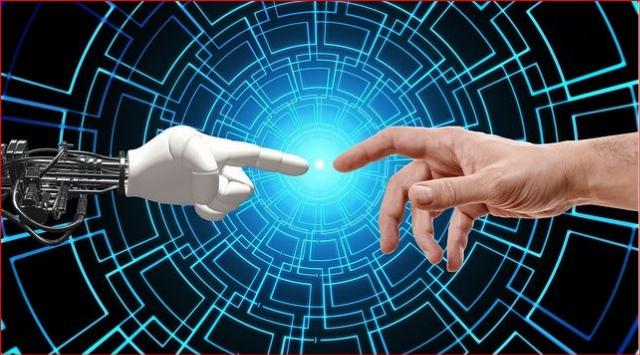
Image: Pixabay