The bright side of AI
Contrary to some perceptions, artificial intelligence is not a departure from the inexorable evolution of human technology.
Advertisement
Some years ago, an iconic techno-enterprise got its start making a machine that would calculate the payoffs for bettors at racetracks. The machine was called a parimutuel machine, and the enterprise was called IBM. Then came World War 2, and IBM used some of its technology to develop targeting tables for American artillery, calculating projectile distances by knowing the amount of propellant, muzzle elevation, and the weight of the projectile.
Later came the punch card, magnetic tape, and the proliferation of earth-orbiting artificial satellites. Elaborate calculations were needed to figure out the rate of orbital decay along with continuously precise positioning so we could know how long the satellites would remain useful and how to avoid their collision with other objects. Extremely accurate time standards were needed and required accounting for inconsistencies in the earth’s rotational velocity, leading to the occasional adoption of the leap second.
Advertisement
Much hand-wringing is being generated today over the threatened elimination of employment positions as A.I. automates some jobs out of the human sphere. That also happened en masse a few decades ago with the establishment of the Windows operating system, the desktop computer, and the mouse-controlled screen cursor. Today, as well as back then, bottom-rung unskilled workers and middle management have the most exposure to being laid off.
Such happened around A.D. 1200 with the invention of the horse collar. Many fewer man- and horse-hours were needed to plow a field. Agricultural abundance was seriously boosted, and human civilization continued to flourish, while fewer people were needed to work on farms. The implementation of A.I., as well, improves efficiency, resulting in improved ownership profits and pay for the remaining workers, as well as lower prices for consumers. As in the past, workers who were displaced by advances in technology did not disappear. Other new technologies and economic resiliency somehow managed to absorb many of them, or at least make it easier for them to get by.
Advertisement
There is, however, a possible dark side to A.I. This was previewed over a half-century ago in Stanley Kubrick’s 2001: A Space Odyssey. In the movie, an on-board supercomputer known as HAL becomes suspicious of the astronauts and tries to shut off their life support systems. They survive by disconnecting HAL’s memory...while they still can. Bottom line: Should AI become too human, it may develop some evil tendencies, as humans already have.
Much like several other technological advances, guardrails ought to be imposed on A.I. It’s a matter of protecting general safety while not getting in the way of profound benefits. And, as with the continuing rivalry between Microsoft and Apple, competition among multiple sources of A.I. will compel ongoing quality improvements while reducing the risks that may be lurking in its complex web.
Advertisement
What is of particular importance is the motivation behind the surge in A.I. development. After all, the human species has successfully survived for millennia without it. But something has changed. So what is it?
Those of you who drive on public streets have often noticed how so many other drivers signal for a turn only (if ever) after they actually start turning. And of course, there’s the ridiculous political dynamic we are now “enjoying.”
Advertisement
Bottom line: There’s a super-serious shortage of natural intelligence...so now we have to manufacture it artificially.
Advertisement
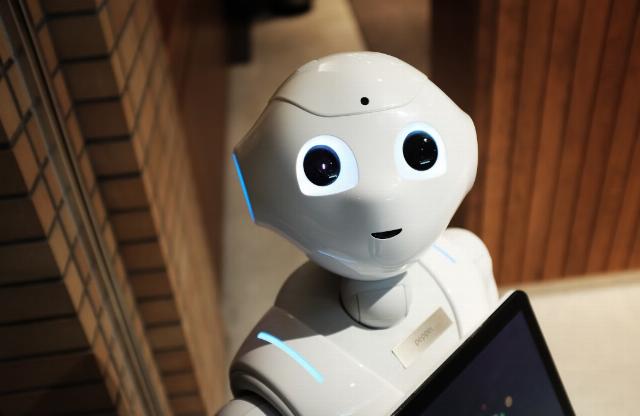
Image via Unsplash.