Where Texas meets Iran
The skyline of Midland, Texas, and the smog-filled streets of Tehran may be 7,000 miles apart, but in 2026, their fates are inextricably linked. As the Islamic Republic of Iran faces its most volatile internal crisis since the 1979 Revolution, the global energy market is bracing for a “Supply Shock” unlike any seen in the modern era.
Advertisement
For the Texas oil industry, the stakes are paradoxical: The fall of a geopolitical rival could either be the ultimate victory or mean a catastrophic price war.
Since the 2025 election, the White House has moved from a strategy of “containment” to “maximum economic strangulation” regarding Iran. Current estimates suggest that despite sanctions, Iran has been leaking roughly 1.5 million barrels of oil per day into the “shadow market.”
Advertisement
If a regime change occurs, these “ghost barrels” will be legalized, and an additional 2 million barrels of latent capacity could flood the market. For the Permian Basin, which has seen record-breaking production levels in early 2026, this influx of supply represents a direct threat to the current price floor of $75 per barrel.
The Trump administration’s 2026 energy policy — dubbed “Energy Dominance 2.0” — is built on the assumption that Texas can outproduce any global competitor. However, a democratic or “Free Iran” would likely seek immediate Western investment to rebuild its crumbling infrastructure.
Advertisement
Texas-based giants like Halliburton and Baker Hughes are reportedly already drafting “Day After” contingency plans. The goal? To pivot from seeing Iran as a sanctioned rival to a massive reconstruction client.
The real catalyst for this shift is the 2026 Trade and Security Act, which imposes a 25% tariff on any nation facilitating Iranian oil exports. This has effectively backed China — Iran’s largest customer — into a corner. According to recent reports from the American Petroleum Institute, the goal is to bankrupt the IRGC (Islamic Revolutionary Guard Corps) before they can finalize their nuclear breakout.
Advertisement
If the Iranian regime falls this year, we will witness the greatest transfer of energy influence in history. Texas will no longer just be a producer; it will be the architect of a new Middle Eastern energy grid.
But for the independent wildcatters in the Permian, the message is clear: Efficiency is the only survival strategy. In a world where Iranian oil is “free” again, only the most cost-effective Texas wells will keep the lights on in Midland.
Advertisement
Now let us try to look into which Texas firms win the “Post-Regime” Iran.
If the geopolitical dam breaks in Tehran, the ensuing flood won’t just be oil — it will be a tidal wave of infrastructure contracts. Unlike the aging fields of Venezuela, Iran’s oil industry is structurally sound but technologically starved. For the heavyweights in Houston and Dallas, the “Iranian Opening” represents the largest untapped service market of the decade.
Advertisement
In early 2026, American oil producers have already signaled a bullish stance on stabilizing a post-regime Iran. The most immediate beneficiaries will be the companies that provide the “hardware” of the oil field:
Rebuilding Iran isn’t just about getting oil out of the ground; it’s about moving it. Iran’s pipeline infrastructure is notorious for leaks and inefficiencies. Texas-based Kinder Morgan, one of the largest infrastructure companies in North America, has the financial expectations for 2026 already baked into its “growth through transition” strategy. Its expertise in large-scale natural gas transport would be the “missing link” for Iran’s South Pars field, the largest gas reservoir in the world.
Texas companies are wary for a reason. History is littered with disputes, like the famous Oil Field of Texas, Inc. v. Iran, where Houston-based firms spent years in international courts fighting for unpaid equipment leases after the 1979 Revolution.
To mitigate this in 2026, the American Petroleum Institute (API) is advocating for “contract sanctity” as a prerequisite for any Texas firm entering the territory. According to API president Mike Sommers, the industry is skeptical of entering any market without ironclad legal protections from the host government.
The “Texas-Iran” connection is a high-reward, high-volatility play. Although oil prices have spiked recently due to disruption fears, the long-term play is in the modernization phase. The winner won’t be the country that gets the oil first, but the Texas companies that get the contracts to build the pipes, sensors, and rigs that make the new Iranian energy economy possible.
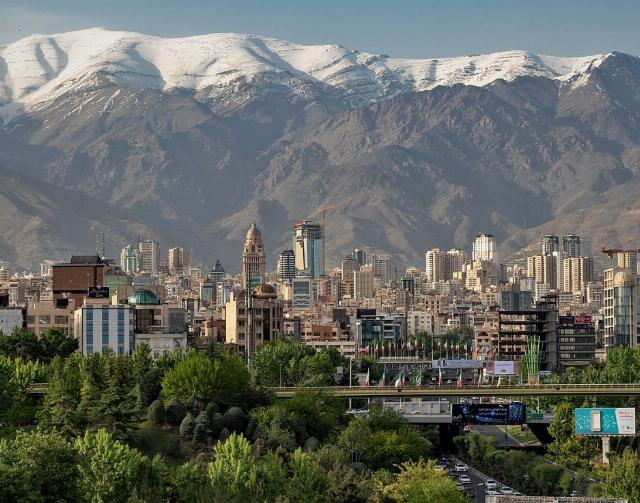
Image: Ninara via Wikimedia Commons, CC BY-SA 4.0.
