The Liberal Call of the Wild
Occasionally, a video pops up on my screen of wild creatures fighting to the death: a lion and a hyena, an anaconda and a crocodile, and so on. These videos prove that the natural world is not all peace and love. Most wild creatures are either predators or prey, and there is nothing innocent or idyllic about life in the wild.
Advertisement
Granted, some humans are “predators,” too, but most of us are far more civilized than a mountain lion or an alligator. Most humans have learned to respect others, obey the law, support and nurture their families through decades of growth, love their country, and worship God. This is the meaning of civilization, and it is an enormous step above what happens in the wild.
Radical environmentalists teach that wilderness is superior to human civilization. In fact, one of the guiding tenets of environmentalism is the quasi-religious belief that wilderness takes precedence over human civilization. From an environmental point of view, it is human populations that should be reduced in number, whether by forced sterilization, euthanasia, or other means, and wild animals that should be protected at all cost.
Advertisement
One can see the effects of this belief in the liberal opposition to growth. When a new subdivision goes up, environmentalists bemoan the loss of “habitat,” as if humans don’t need a habitat as well. When an obscure species is threatened — or not even an established species, but a questionable sub-species — environmentalists sue to place vast regions off limits to development, especially to fossil fuel development. If it’s a choice between water for agriculture that provides food for humans or water for Pacific salmon, liberals choose the salmon.
If wildness is one’s touchstone, the radicals’ ultimate goal is to eliminate human civilization altogether: no more fossil fuels, no more industry, no more subdivisions, and certainly no more data centers. But radicals cannot see the great virtues of human civilization: the security that we enjoy as well as the comfort of nice homes, a secure food supply, the value of education and culture, the contribution of medicine, the opportunity to work and then enjoy an abundant life in retirement. Wild animals do not enjoy a retirement; when they become too old to compete, they are killed and eaten.
Advertisement
Environmentalists have a right to express their opinion, but their opinions are often nonsensical and contradictory. Liberals proclaim the need for species protection, yet in a state of nature, species are constantly being driven to extinction and replaced by stronger or smarter species. Liberals believe that very large areas should be preserved for wilderness, but for what purpose? Without human beings, there would be no one to continue protecting species and maintaining diversity. The Mississippi River would be taken over by carp with no food for native species, and no threatened species would be kept live in breeding programs at zoos. It is human beings who work to maintain a balance.
Some would say that non-profit groups like the Sierra Club seem to be more interested in promoting the liberal ideology of wildness — and in fundraising for their own benefit — than they are in actually preserving wilderness. (The Sierra Club CEO’s reported salary and benefits was over $5 million in 2023, the most recent year for which I have information. Though this is less than most CEOs earn, it is still a lot of money.) Anyone who donates to such groups could simply purchase a plot of land and allow it to go wild or remain wild. If enough people truly cared about preserving wilderness — say, just 10 million in the U.S. — and each one worked to donate ten acres, that would produce an enormous reserve, the size of 80 Yellowstone National Parks. Environmental groups have not done this; the fact is that those who contribute to such groups enjoy the status of contributing to groups that talk about saving the Earth. They are supporting the ideology — the talking points — of environmentalism rather than the environment.
Advertisement
How many environmentalists have actually climbed Mt. LeConte or Mt. Cammerer in the Great Smoky Mountains — difficult 10- and 20-mile hikes — as I have many times? How many of them have spent hundreds of days in true wilderness? How many of them actually know the flora and fauna they claim to protect? On a hike with members of one such group, I found that they stopped after less than a mile of easy walking, pulled out and consumed a delicious lunch and bottle of wine, and then decided to return to their starting point. They drove off satisfied that they had “spent time in nature” when they had barely gotten out of their cars.
Conservatives truly care about nature. We do not want to live amid unhealthy air and water, and we want to allow wild creatures to live in protected domains such as Yellowstone. African elephants, especially “forest elephants,” now face extinction, as do tigers (with three subspecies already extinct), something that should concern everyone. Overall, half of all animal species are declining in numbers, and tens of thousands face extinctions. These facts are worrisome because animals deserve compassionate treatment, and most of them enrich our lives as long as we respect the fact that they are wild animals and sometimes dangerous.
Advertisement
But talking about the environment and suggesting that conservatives don’t care does nothing to preserve species. Nor does using species protection as an excuse to block development of human resources or needed living space. That approach only creates hostility and backlash. Those who really care about species protection could work to expand protected areas so that humans and wilderness can exist together.
The most misguided behavior is the inflated claim of some environmentalists that “humans are the problem” and thus human numbers should be reduced. Human civilization is remarkable beyond anything that wild creatures can achieve. In ancient times, it was recognized that human beings possess an element of divinity that should be recognized for what it is: a higher order of life than that of wild creatures. We must protect the environment and the habitats of wild animals, but we must always remember that civilization is superior to wilderness. In the words of Sophocles, “numberless are the world’s wonders, but none more wonderful than man.”
Advertisement
Jeffrey Folks is the author of many books and articles on American culture, most recently Heartland of the Imagination (2011).
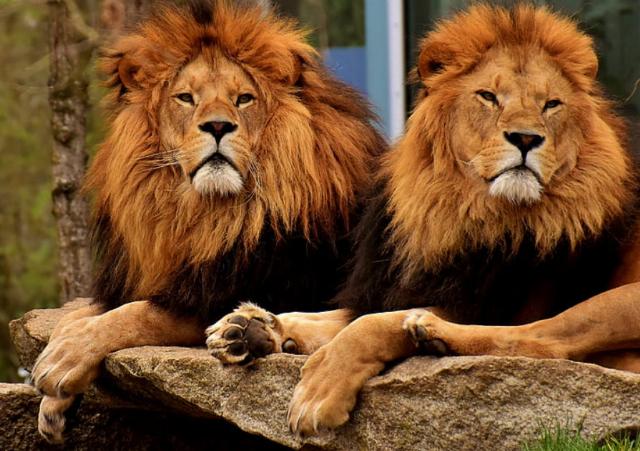
Image via PickPik.