Reforming North American Trade
President Trump mentioned that he “may not renew” the United States-Mexico-Canada Agreement (USMCA), the replacement of the North American Free Trade Agreement (NAFTA) that he signed during his first term.
Advertisement
This remark naturally concerned people who have built their businesses on NAFTA commerce, but there are so many misunderstandings about the NAFTA/USMCA program that evaluating both its current status and its future requires some background.
NAFTA dates to the late 1980s and early 1990s, when we still believed in the dream of free trade -- the idea that if we lowered our trade barriers, our trading partners would too (Newsflash: They didn’t).
Advertisement
At that time, we were watching “developing nations” on the Pacific Rim take over manufacturing from western nations at a surprising pace. Western nations were looking for a way to keep manufacturing at home, so the idea of the Free Trade Agreement (FTA) -- a treaty that rewards predominantly domestic manufacture and sourcing with reciprocal duty-free treatment -- was born to serve this goal.
Picture a typical manufactured good -- a sump pump, washing machine, or automobile. Such products have dozens or hundreds of parts. Final assembly employs people, sure, but even more than that, the original manufacture of all those components employs many more.
Advertisement
NAFTA, like all successor treaties of its class, set up complex Rules of Origin, with different, specific tests for every classification, requiring the manufacturer to study the Bill of Material (BoM) of each product to see if a sufficient percentage was made in the member territory.
Make a product in the USA, Canada, or Mexico -- and make sure that enough of its components were also made in the USA, Canada, or Mexico -- and the finished product will get duty-free treatment when shipped between these three nations.
Advertisement
There is no penalty if not; you could still manufacture and ship products that don’t qualify, you just can’t claim the duty-free treatment.
Hopefully, the savings of five or ten percent in duties would make it worthwhile for such companies to do more local (in-region) sourcing.
Advertisement
Over the past 30-plus years, an enormous amount of cross-border trade has developed across North America, certainly keeping some assembly here that might otherwise have moved to Asia -- but gradually, more and more of the parts got outsourced to Asia, so, in truth, many allegedly NAFTA-qualifying products no longer meet the purpose that NAFTA intended.
By the early 2000s, it became clear that many North American manufacturers didn’t understand the above goals or programs, didn’t know there were specific rules of origin, and didn’t train their staff to follow them.
Advertisement
Companies were issuing FTA certificates on their own products without performing the NAFTA tests to see if they qualified. Many even carelessly issued certs automatically, on everything they shipped, no matter where the products were made.
Taken one by one, such issues obviously constitute fraud and tax evasion, and have resulted in numerous penalties over the years, sometimes in the hundreds of millions of dollars each.
But taken as a group, such issues prove a general failure of the program. The USA, Canada, and Mexico continued to bleed manufacturing, while China continued to gain market share.
Something had to be done.
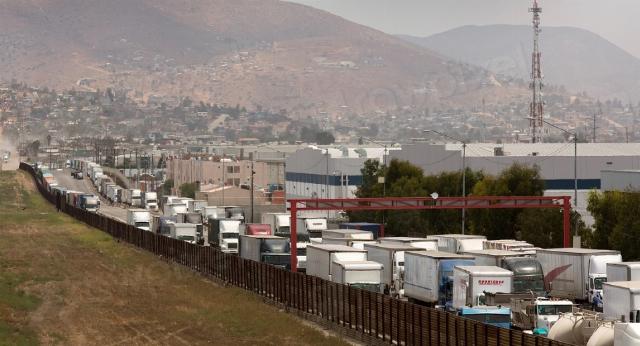 So, during the first Trump term, NAFTA was renegotiated and renamed the USMCA.
They tightened some rules a bit and improved our neighbors’ legal protections for workers’ rights and intellectual property, but in the end, they didn’t make many changes, and it didn’t solve the ongoing problem: this FTA simply wasn’t keeping manufacturing in North America.
Due to a lack of awareness, training, and enforcement, it has failed.
The goal of keeping manufacturing here is obviously still the correct goal, but whether FTAs are the way to get there is in question.
The USMCA has a sunset provision, and it requires periodic review and intentional renewal. Negotiators are currently working on the 2026 review.
While it’s conceivable that it could be terminated with six months’ notice, the odds are against that. It’s more likely that it would simply be scheduled for termination when its statutory time runs out in 2036.
Negotiators may come up with some tweaks to the program this year and maybe annually, each time requiring higher domestic content percentages or similar improvements, making compliance more complicated with every revision.
But eventually, a political reality needs to set in.
The problem really isn’t with the agreement itself; it’s with the fact that the manufacturers of the United States, Mexico, and Canada either aren’t patriotic enough to try to source locally, or aren’t educated enough to realize that local sourcing is required, or aren’t honest enough to obey the law and follow the USMCA’s requirements. Or all of the above.
A strong case can be made that ignorance of the law remains the main problem, that too many manufacturers simply aren’t aware of the purpose and methodology of FTAs. They think of FTAs as tax-cut plans, not as encouragements to inspire and reward local manufacturing and local sourcing.
The government should have focused on education all along. We are cutting business taxes and federal regulations; we are encouraging the development of new domestic production. USMCA users need to understand how these seemingly separate issues are supposed to work together.
While we watch this play out over the next decade, as we wonder whether the USMCA will last forever or be terminated in 2036 (or earlier), what should America’s private and public sectors do?
This much is clear, to begin with: the government needs to do more outreach, with more emphasis on the philosophy behind our FTAs, and America’s businesses need to do more internal training to ensure that they follow the law. Either source enough locally to qualify for the program, or don’t try to obtain the program’s duty-free benefits. Never issue unsubstantiated FTA certificates. It’s as simple as that.
Rather than worrying about whether the USMCA will last past 2036, America’s businesses need to focus on whether they will.
For generations, America’s businessmen have been told that delivering shareholder value required buying the cheapest parts from the cheapest sources, no matter how distant those “low-cost country” sources may be. Such unpatriotic, self-destructive advice has always been wrong, and public sentiment has proven it to be incredibly unpopular as well.
The best advice to anyone concerned about the future of the USMCA is simply this: educate your engineering, purchasing, legal, and product development teams about the workings of FTAs, to prevent the painful audits and costly penalties that come from FTA abuse. Turn away from dependence on Chinese vendors, and open your minds to domestic sourcing.
If an American business wants its government and its fellow Americans to support it, then it needs to start supporting its fellow American businesses as well.
Image: RawPixel.com