Our War against Iran Makes Sense
On June 21, 2025, the U.S. bombed three facilities in Iran dedicated to nuclear enrichment, which enrichment would have allowed Iran to move in a short time to making nine nuclear bombs. This was a terrific mission that took more than 35 hours of flight time, and Iran’s three facilities deep in the mountains were decimated. Despite the success of the bombing in destroying these sites, satellite photos “showed trucks leaving Iran’s Fordow site just before U.S. airstrikes” said to be carrying enriched uranium. “Now, over 400kg of highly enriched uranium is unaccounted for. ... [The] U.S. calls the strikes a success — but where is the uranium?”
Advertisement
Subsequently, Pres. Trump initiated Operation Epic Fury in March 2026. At that point in time, he announced that the air strikes against Iran had four purposes:
The same website that lists President Trump’s objectives for these attacks also lists statements by a variety of military leaders as well as by our secretary of War and secretary of State.
Advertisement
This writer was particularly gripped by the statement of purpose for our attack made by Admiral Brad Cooper: “Our military in the Middle East is undertaking an unprecedented operation to eliminate Iran’s ability to threaten Americans, as they’ve been doing for nearly half a century.”
This statement carries a broader vision of the military venture in Iran that needs to be received by the public. Admiral Cooper understands clearly that the threatening and killing of Americans that Iran has done for decades is the right and sufficient justification for our aggressive stance. He understands that Iran’s portrayal of the USA as the Great Satan to stir up the animus of the Muslim world (and particularly the Shi’ite believers within that political and religious culture) is in service to a bloodthirsty ideology of belligerence, hatred, and violent disrespect of Western mores and beliefs.
Advertisement
“Threaten Americans.” Think about this. The present ayatollah government wants to threaten us with suffering and death because we believe in life, liberty, and the pursuit of happiness. The leadership of Iran, under the acronym IRGC, hates us because we live under phrases like “endowed by our Creator with certain inalienable rights” and “all men are created equal.” They are obsessed that so many of us live claiming to be Protestant or Catholic Christians. Their envy of our economic successes drives them into a murderous rage, as even their own oil productivity and production depends upon the engineering knowledge and exploratory gifts of the West.
When this writer briefly taught high school at a private school in Iran two years before the present fanatical scoundrels took control of that country, U.S. engineers laughed discreetly at the Iranians who were on their teams who were building missile manufacturing and launching facilities for the Iranian army. At a party in my apartment at the time, an American engineer said that if there was a testing protocol in place at a missile manufacturing site and parts were not available for the test to be properly completed, the Iranians would go ahead anyway. The engineer said this would be like having three people lay a pipe. The first would dig the trench, the second would put in the pipe, and the third would fill up the trench and cover the pipe. However, he mockingly said of the Iranians that if the second man was not there to put in the pipe, Iranian three would reflexively fill in the trench without the pipe.
Advertisement
After the 1979 revolution that brought the ayatollahs to power, all the books in the library at the school where I had taught were burned in the courtyard of the school. The American principal of the school who had lived and worked in Iran for decades left the country in 1980, and the school today is exclusively for boys.
The only aspect of Admiral Cooper’s above statement that needs to be qualified is that our operation in Iran is an “unprecedented operation.” The vast scope and advanced weaponry involved are certainly unprecedented, but in the early years of our republic, we faced an extremely violent threat from the Barbary pirates of the Islamic world for thirty years, from 1785 until 1815.
Advertisement
Those pirates captured two of our ships as early as 1785, and each one had 25 sailors. Thomas Jefferson, who was serving as our ambassador to France at the time, tried to negotiate, but the reader will not be surprised that the negotiations got nowhere. Then the U.S. government changed from the Articles of Confederation to our present Constitution, and George Washington became our president. Nevertheless, headway in recovering the kidnapped sailors went nowhere. In fact, about two fifths of the American sailors captured died of disease and horrible conditions in captivity.
The U.S. kept on negotiating and negotiating, but the piracy and capture of our sailors did not abate. Only after we defeated the British soundly in the War of 1812 did the Islamic enemies in Algiers retreat from their piratical ways, because that victory showed our growing strength and also smashed the British-Algiers alliance that was in effect at the beginning of the War of 1812.
Advertisement
After the treaty ending our war with Great Britain, the USA declared war on Algiers in 1815, and Commodore Stephen Decatur was put in charge. Without the British there for support, Dey Omar, head of Algiers, reluctantly accepted the treaty proposed by Decatur that called for an exchange of U.S. and Algerian prisoners and an end to the practices of tribute and ransom. Having defeated the most powerful of the Barbary States, Decatur sailed to Tunis and Tripoli and obtained similar treaties. In Tripoli, Decatur also secured from Pasha Qaramanli the release of all European captives. The U.S. Senate ratified Decatur’s Algerian treaty on December 5, 1815.
Thus, it was thirty years before Islamic aggression against the USA was resolved. It took strong leadership, a show of strength successfully used against Algiers, and growing U.S. naval might to win the day.
Today, the threat of Islamic hatred of the West by Iran is even greater. We have been tested by the ferocious Iranian terror machine for 46 years as they have supported proxies throughout the region. However, now we have leadership ready to face the challenge head on, the strategies and materials to stop the advance of the Iranian hate machine, and the clarity of vision to know that national protection cannot be deferred for one more day.
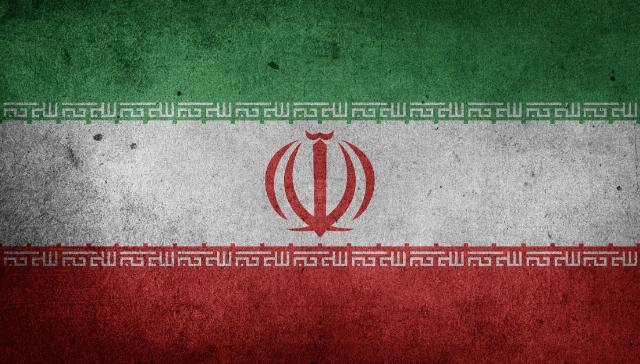
Image: Chickenonline via Pixabay, Pixabay License.