The Rings of Power and the Trump Tariffs
The Supreme Court has heard the case. Are President Trump’s IEEPA tariffs — both the “fentanyl tariffs” on China, Mexico, and Canada and the “reciprocal tariffs” on everybody — a legal use of the law, or are they an illegal overreach?
Some analysts reduce it to basics: Opponents say tariffs are taxes, and taxes must originate in Congress. Supporters say tariffs are foreign policy tools, and foreign relations are controlled by the president. Supporters say that in IEEPA, Congress delegated their authority to the president; opponents say that such a delegation was illegal. Opponents say that the delegation is only in case of an emergency; supporters say that if the rapid loss of our manufacturing sector and complete dependence on our enemies doesn’t constitute an emergency, then what the heck does?
It’s not nearly as clear a choice as some assume.
But in this case, perhaps in an unusual way for a Supreme Court ruling, there are more tangible results, both good and bad, on both sides. And though the Supreme Court is supposed to try its best to make decisions based on the law itself without considering externals, that’s simply impossible. They must consider the externals; they can’t help it.
The press opposes these tariffs, so the public mind is constantly reminded of the massive tax collection on importers — which have indeed been terribly painful for importers dependent on those goods. Components that you can get only from China, agricultural goods that you can get only from the tropics, finished goods that we could get from anywhere, but we like the cheap prices of the imports...the tariff cost has been an unbearable burden for those who have no choice in vendors. This cost has put many companies in jeopardy, including many who voted for it, not anticipating how high, how costly, the policy would become.
But supporters also look at the purpose behind the tariffs. The tariffs have done three positive things. They’ve increased government revenue to potentially reduce the deficit. They’ve caused a huge rebalancing of world trade, both in converting some purchasing to domestic sources and at least moving lots of import purchasing to other foreign suppliers, moving away from China, our most dangerous enemy. And they’ve resulted in a fascinating and complex array of trade deals, differing widely from country to country, opening up foreign markets to our goods, increasing our exports, and getting foreign companies to build new factories here in the USA.
When SCOTUS considers the law from its lofty perch, each of the nine justices must also, even if silently, consider the practical result of overturning these tariffs. Will it save the importers from the unanticipated tax hell in which they’re stuck? Yes. But how much of these other good results might be undone as well?
To draw an analogy from literature, the Supreme Court is finding itself in the position of the Council of Elrond, in J.R.R. Tolkien’s epic masterpiece The Lord of the Rings.
A brief summary for those unaware: A demonic villain, Sauron, taught the craft of making magic rings to the elves of Middle Earth. Three of the elves’ rings, made with this technology, were used to build and protect two wonderful kingdoms, Lothlorien and Rivendell. But Sauron secretly crafted a master ring of evil, the One Ring, enabling him to build armies of orcs and conquer the free people of Middle Earth.
When it was discovered that the One Ring had fallen into their possession, the Council’s task was to decide whether to hide it, use it, or destroy it. The benefits of its destruction were clear — the likely destruction of Sauron’s fortresses and armies, the permanent weakening of Sauron himself. But there were risks, too; much that was created with the elven rings might be weakened or even destroyed as well.
It is to the credit of the leaders of the council that they were willing to sacrifice their own kingdoms for the greater good. They balanced the positives and negatives and voted for the greater good.
No analogy is perfect, much less one drawn from fiction. But I think it is worth noticing that there are huge tradeoffs involved. Members of the Council of Elrond literally sacrificed their own countries to save the world. What will the members of the Supreme Court choose to sacrifice in this ruling?
And just for the record, unlike the Lord of the Rings example, it’s not nearly as clear in our case which side is the evil one.
In a nation in which the tax burden is well over 50% already — and no Democrat in America seems to mind that a bit — is a ten- or twenty-percent tariff really such a horrific affront that it objectively overwhelms the advantages of global rebalancing (which is helping dozens of other struggling nations) and paying down the national debt?
In a nation in which we have struggled to create and keep manufacturing plants in business, can we afford to blow up all these agreements that have put hundreds of billions of dollars in such investment in motion? We need those new plants; we need those increases in jobs, in tax revenue, in local development.
And in a nation suffering from deficits, do we really want to refund all these hundreds of billions of dollars that have already been collected? If the tariffs are revoked, the government will need to sort out how to manage those refunds — by individual petitions and protests, or by automated issuance of checks? And what of the companies already out of business since the tariffs were collected, or acquired or merged? And what of those import entries already used in duty drawback programs?
In the final analysis, both retention and revocation of the tariffs have positive and negative outcomes. How to weigh these choices?
Frankly, as much as we like to think — thanks to Justice Marshall — that the Supreme Court should be the final arbiter of all government actions, it’s really just not true. It cannot be.
The potential results that this Supreme Court has to weigh — on this decision perhaps more than any other — are just not the kinds of considerations for which our justices were trained or enabled. These choices aren’t just above their pay grade; they’re in another division entirely.
With this decision, our Supreme Court must make a choice that they never anticipated facing. Which choice — upholding the IEEPA tariffs or revoking them — is, on balance, the evil one?
So much has been built with these tariff negotiations, so many trillions in jobs, export sales, and both global and domestic development, that wiping out all those wins just to reduce a single, avoidable tax (you never have to import, after all; you can purchase most things domestically) just might not be as easy a call as some onlookers assume.
John F. Di Leo is a Chicagoland-based international transportation manager, trade compliance trainer, and speaker. Read his book on the surprisingly numerous varieties of vote fraud (The Tales of Little Pavel), his political satires on the Biden-Harris years (Evening Soup with Basement Joe, Volumes I, II, and III), and his 2024 collection of public policy essays, Current Events and the Issues of Our Age, all available in eBook or paperback, exclusively on Amazon.
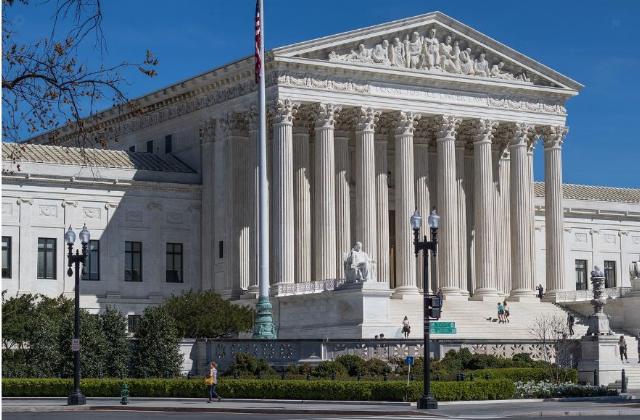
Image via Pixabay.