Lupita Nyong’o doesn’t understand women in the Odyssey
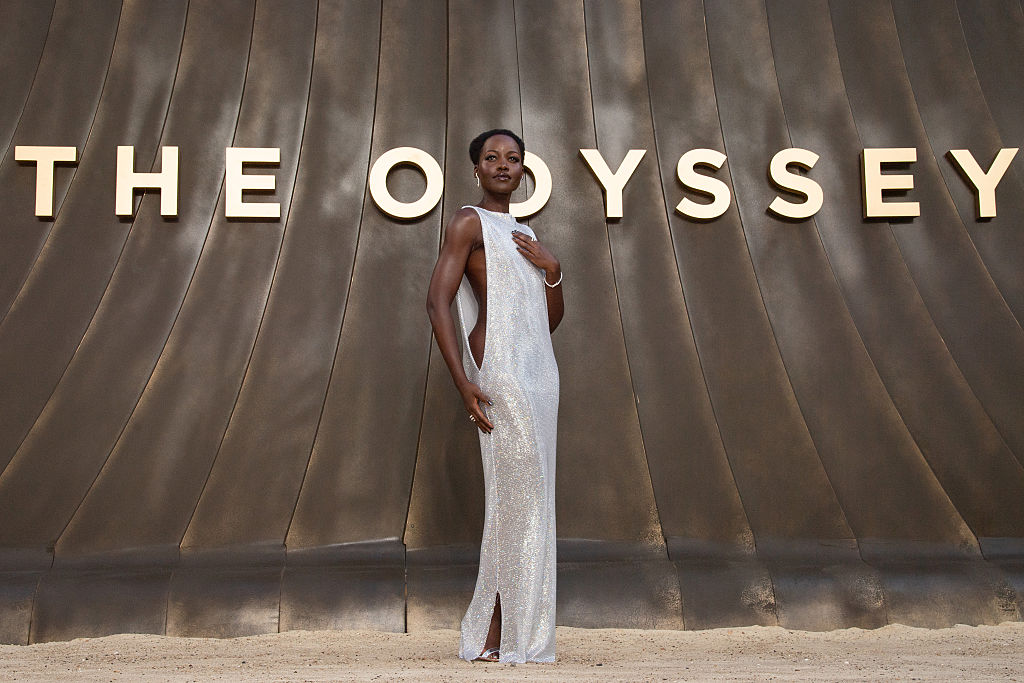
In promotional interviews for Christopher Nolan’s film adaptation of Homer’s Odyssey, the actress Lupita Nyong’o has been chastising the father of Greek epic for failing to give the women in his stories their due. “Very little time is spent in the perspective of women,” said Nyong’o, who plays Helen of Troy, the fabled queen of Sparta who appears in both the Odyssey and its companion poem, the Iliad. It has become standard for actresses playing mythic heroines to complain about female underrepresentation in classic literature. In the case of the Odyssey, however, it’s a laughably poor fit.
The Odyssey is obsessed with the richly varied character traits of its female characters. Nyong’o is playing a woman, Helen, whose choice to run away from her husband sparks the war that sets the Odyssey‘s events in motion. She’s also playing Clytemnestra, the unfaithful wife of the Greek hero Agamemnon whose betrayal hangs over the Odyssey in powerful contrast to Odysseus’s wife Penelope. Penelope, for her part, is one of the most justly famous women in all of Western literature. She appears in the Odyssey before Odysseus himself, speaks before he does, and is portrayed throughout as a match for his world-famous wits.
When we do finally meet our hero, almost the very first thing he says is that Penelope means more to him than even the most dazzling superficial beauty. The goddess Calypso offers him immortality and ceaseless lovemaking. Odysseus readily admits to Calypso that she is physically more impressive than his wife: “For you are ageless and never die. / All the same, I wish and I long every day to go back to my home / And to see my day of return.”
In other words, the poem only makes sense if Penelope’s unique qualities as a person move Odysseus more deeply than any physical gratification — if her mind and heart matter more to him than Calypso’s perfect body. Later on in the work, as he muses wistfully about marriage, Odysseus describes the perfect union between man and wife as one of homophrosunē, a union of minds. He is surely thinking of his longed-for Penelope.
He is talking to Nausicaa, another of the poem’s beautifully drawn female characters. She is the young princess of Phaeacia, brimming with tender hopes for a husband. Despite what that description might lead us to expect, the poem completely resists portraying Nausicaa as a flighty girl. She stands out from her companions for her courage and good sense, fired as she is with resolve by the (again, female) goddess Athena.
Nausicaa advises Odysseus to bypass the king of Phaeacia and go straight for Arete, the queen, whose judgment carries decisive weight in the court: “If she harbors friendly thoughts in her heart for you, / Then there is yet hope you’ll go home and see your friends.” If, that is, you can convince the queen.
That’s just in the first quarter of the poem. Throughout, the Odyssey is intensely interested in its female characters — in their effects on world affairs, in what they have to say, and in their complexities as fully rounded individuals. Nyong’o is a very talented actress; it’s still perfectly possible that her performance in Nolan’s movie will be excellent. But it’s a shame to hear her retailing worn-out accusations of misogyny against one of the world’s greatest poems, which doesn’t remotely deserve them. The women of the Odyssey don’t need Nyong’o or Christopher Nolan to leap to their defense. They have stood beautifully on their own for hundreds of years. Homer intended them to.