Democrats Will Become All One Thing or All the Other
American politicians have made a lot of famous speeches. Franklin Roosevelt told the nation in 1933, “The only thing we have to fear is fear itself.” In 1961, John Kennedy urged the nation, “Ask not what your country can do for you, ask what you can do for your country.” Ronald Reagan minced no words in 1987 when he stood at the Berlin Wall and challenged the general secretary of the Communist Party of the Soviet Union, saying, “Mr. Gorbachev, tear down this wall.” The inspirational and unifying nature of these speeches is embedded in American history.
Advertisement
But other, lesser-known speeches are cautionary tales, some of which are more prescient than others. It’s been 168 years since then-U.S. Senate candidate Abraham Lincoln spoke at the Illinois Republican Convention on June 16, 1858, and delivered his “House Divided” speech. Many are familiar with Lincoln invoking scripture when he told the convention delegates in his opening paragraph, "A house divided against itself cannot stand.” But less well known is what Lincoln said next, and which seems relevant in today’s evolving political landscape, particularly within the Democrat Party.
In addressing the issue of slavery, Lincoln said, “I believe this government cannot endure, permanently, half slave and half free.” He then spoke one of the most ominous passages in American politics. “I do not expect the Union to be dissolved; I do not expect the house to fall; but I do expect it will cease to be divided. It will become all one thing, or all the other.” The same might be said of today’s Democrat Party as socialism rises among its ranks, unabashedly and rapidly, to confront a dwindling number of centrists. It is a house divided.
This divide runs fundamentally along the lines of capitalism and socialism. Polling by Gallup last fall showed that 66 percent of Democrats had a positive image of socialism, a rise of 16 percentage points from 2010. It’s anyone’s guess how many Democrats will support socialism in the years ahead, but if recent events are any indication, that number can be expected to grow unabated. The primary election results for candidates running under the banner of Democratic Socialists of America or with the DSA’s backing speak for themselves.
RecommendedAdvertisement
Consider this Fox News report following the May 19 primary elections. “Tuesday’s primaries produced outright wins, apparent victories and runoff advancements for more than a dozen candidates linked to or backed by the DSA, including candidates for Congress, state legislatures, and local offices.” In what was called a “shockwave,” election, Pennsylvania state House representative and self-proclaimed socialist Chris Rabb won the Democrat Party nomination for the state's 3rd district in Congress.
The political momentum among Democrats clearly favors socialists. Between the growing support of socialism among surveyed Democrat voters and wins by their candidates at the ballot box, we’re seeing a significant erosion of support for what historically has been a more moderate party focused on blue-collar and kitchen table issues, and less hostile toward capitalism, law and order, and property rights.
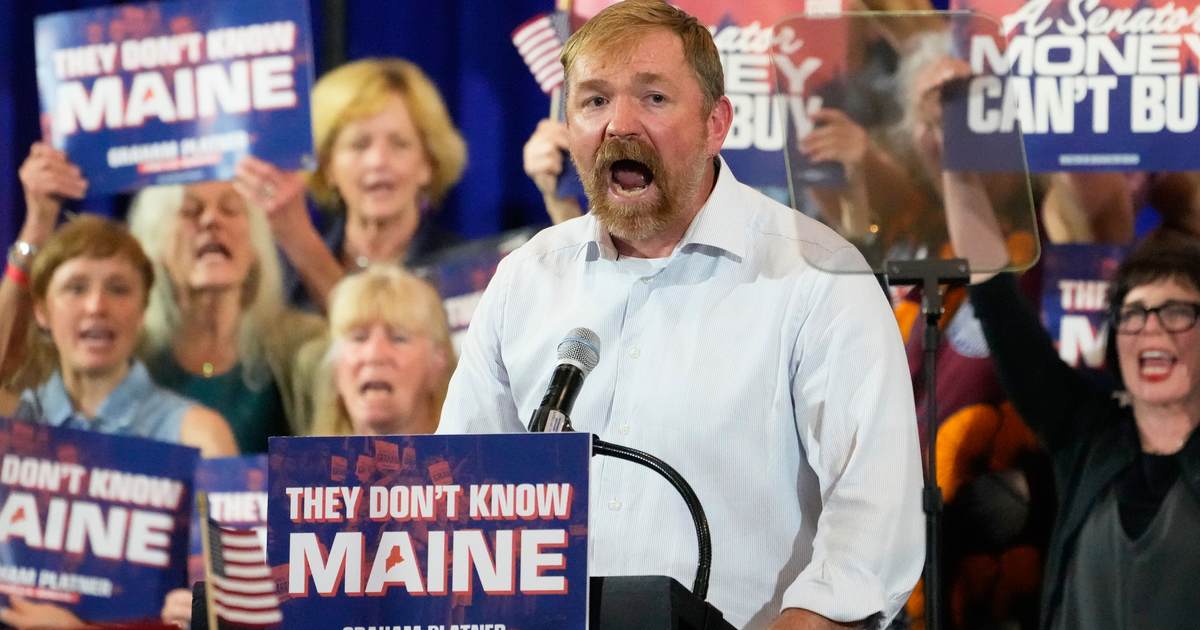
So potent is this growing sentiment that stalwart New York Democrats like Sen. Chuck Schumer and U.S. Rep. Hakeem Jeffries of the 8th district are too timid to speak ill of a person like Graham Platner, their party’s newly minted nominee for U.S. Senate in Maine, who has described himself as both a communist and a socialist. But the success of Platner and others of his ilk isn’t so mysterious.
Advertisement
The socialist playbook tends to focus not on policy or opportunity but on envy and anger, and this strategy produces electoral success for a simple reason: It works. A growing slice of the Democrat base likes it because campaign activism centered around envy and rage is a lot easier than campaigning on issues and policies to address them.
The trend lines are clear. Socialism and its political cousins are demonstrably on the rise among Democrats, while what used to be ordinary, historical Americanism is on the decline. When the party’s House and Senate leadership fear their base so much that they’re unable or unwilling to express concerns about a nominee like Platner and similarly ideological candidates, it’s apparent that the centrist bloc of Democrats is being squeezed out of the party, one election cycle after another.
Will the results of the 2026 cycle arrest the ascent of socialism? Perhaps, but it’s not certain that even electoral defeat would dissuade the Democrat base from their socialist aspirations; it’s an even money bet they could double down on their agenda. The Democrat Party has been around for nearly 200 years and is unlikely to dissolve in the immediate future, but it is a house divided against itself. It is half socialist and half free. Only party loyalists can decide whether and when it will become all one thing or all the other.
Advertisement
Editor’s Note: Do you enjoy Townhall’s conservative reporting that takes on the radical Left and woke media? Support our work so that we can continue to bring you the truth.
Join Townhall VIP and use promo code FIGHT to receive 60% off your membership.