Signing Their Death Warrants
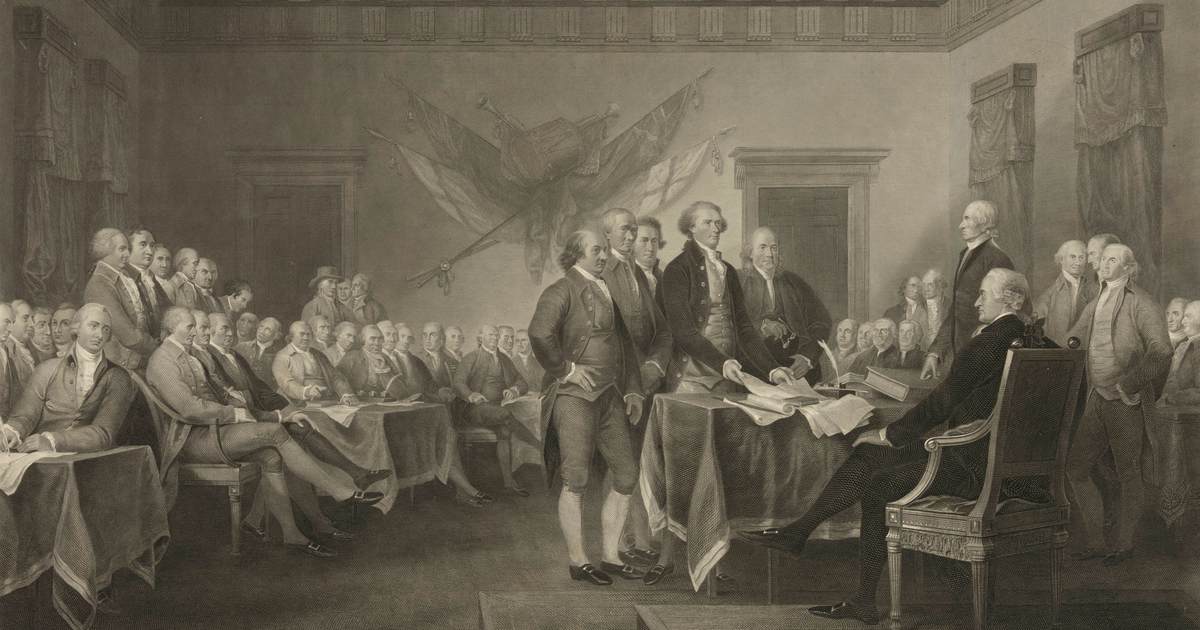
I’ve had the privilege of standing in some remarkable places.
I’ve walked through the White House, where every room reminds you that decisions made there eventually find their way into kitchens and living rooms across America. I’ve stood inside the United States Capitol, where history has been debated, delayed, defended—and, every now and then, ignored.
Advertisement
But no place has ever gotten under my skin quite like Independence Hall.
I’ve been there more than once, and every single time I leave, I find myself asking the same question: Would I have signed it? Not after Washington won. Not after Yorktown. Not after schoolchildren memorized the opening lines of the Declaration. I’m talking about that day, that room, that moment—when nobody knew how the story was going to end.
The first time I walked into Independence Hall, I was honestly surprised. Not by what was there. By what wasn’t.
It isn’t enormous. It isn’t intimidating. It isn’t the towering cathedral of democracy our imaginations tend to create. It’s just… a room. And that’s exactly the point. The power isn’t in the walls. It’s in what happened inside them.
If you ever visit Philadelphia, don’t rush through it because your tour guide is already moving toward the Liberty Bell. Hang back for a minute. Look at the chairs. Look at the windows. Picture July without air conditioning. Imagine sweat running down collars, the smell of parchment, and the scratching of quills across paper.
Then let yourself ask the question history almost never asks us.
Would I have signed my own death warrant?
Because that’s exactly what many of those men believed they were doing.
On July 4, 1776, the Continental Congress adopted the Declaration of Independence. Over the following weeks, the delegates signed the engrossed copy that would become one of the most consequential documents in human history.
RecommendedAdvertisement
But to them, it wasn’t history.
It was evidence.
Evidence of treason against the British Crown.
And the punishment for treason wasn’t a stern lecture, a fine, or a prison sentence.
It was death.
I’ve often wondered what the ride home must have been like. Did they rehearse the conversation? Did they pull into the drive and sit there a little longer than usual? Did they look at the lights inside the house and realize everything may have changed before they even opened the front door?
“Honey… I signed it.”
Can you imagine saying those words?
“I may have just placed everything we own—and everyone we love—in jeopardy.”
Their homes. Their businesses. Their reputations. Their families. Their futures. Everything.
Yet they signed anyway.
We often misunderstand the Founders because we meet them in bronze and marble. They never knew themselves that way. They were husbands, fathers, lawyers, merchants, farmers, and neighbors. They disagreed with one another constantly. They argued over strategy, philosophy, timing, and politics. They represented different colonies, different economies, and different religious traditions.
What united them wasn’t that they agreed about everything.
It was that they agreed on one breathtaking truth.
Our rights do not come from government.
They come from God.
That single idea changed the course of history.
Advertisement
Kings believed rights flowed from the throne. Governments believed liberty existed only because governments allowed it. The Declaration turned that thinking upside down. Government exists to protect rights it did not create.
That idea remains every bit as revolutionary today as it was two hundred and fifty years ago.
Now, honesty requires us to acknowledge something else. The nation they launched did not immediately live up to its own creed. Slavery stood in direct contradiction to the words, “all men are created equal.”
History shouldn’t pretend otherwise.
But history should also recognize that the Founders wrote down a principle greater than themselves. Because they did, future generations possessed a standard by which America could be challenged, corrected, and improved.
That too is part of the American story.
Every time I leave Independence Hall, I look back one last time.
Not because it’s an old building.
Because I know what happened inside it.
Fifty-six ordinary men walked into that room carrying doubts, disagreements, fears, and families. They walked out having pledged their lives, their fortunes, and their sacred honor to an idea no one could guarantee would survive.
History remembers them as Founders.
I suspect most of them simply hoped to be remembered as men who did their duty.
This week our nation celebrates 250 years. There will be fireworks, flags, parades, backyard barbecues, and children chasing sparklers across front lawns. I hope we enjoy every minute of it.
Advertisement
But somewhere between the parade and the fireworks, I hope we remember that quiet room in Philadelphia.
No orchestra.
No applause.
No certainty.
Just ordinary men deciding that liberty was worth more than comfort.
Every time I leave Independence Hall, I look back one more time because I’m wondering whether, had I been standing in that room on that sweltering July afternoon, I’d have had the courage to pick up the quill.
I hope I would.
Because 250 years later, America doesn’t need another generation that’s merely grateful for liberty.
She needs one still willing to pay the price to preserve it.
Editor's Note: Do you enjoy Townhall's conservative reporting that takes on the radical Left and woke media? Support our work so that we can continue to bring you the truth.
Join Townhall VIP and use promo code FIGHT to receive 60% off your membership.