The Questions Illinois Never Asked
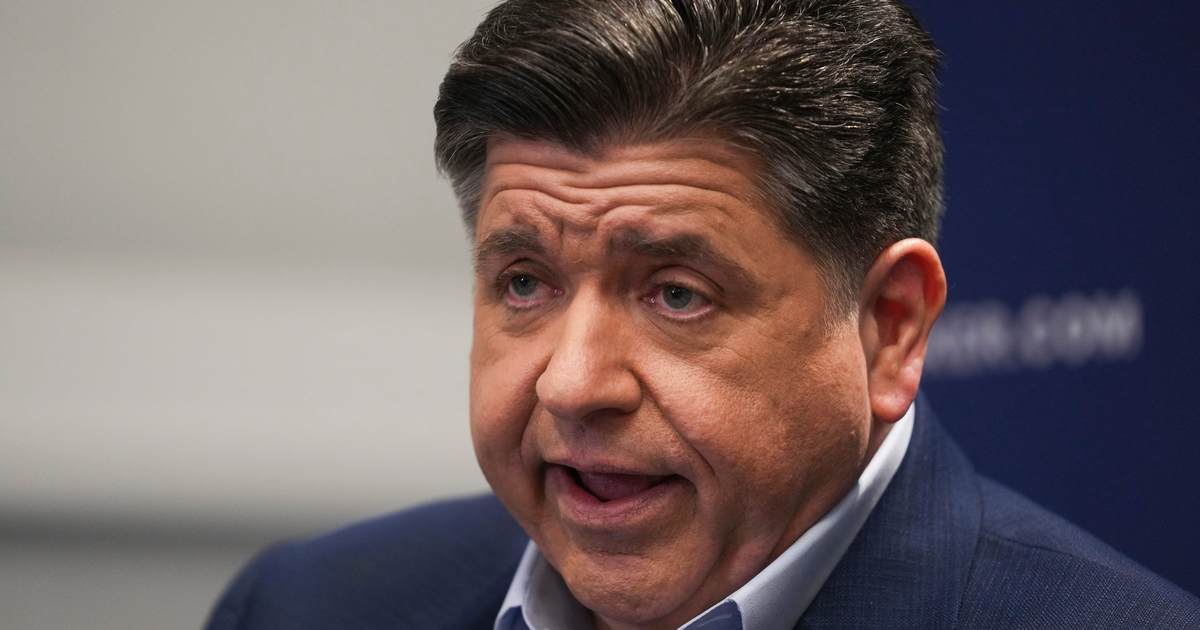
Governor J.B. Pritzker has repeatedly argued that when tragedy exposes possible failures in government, leaders have a duty to ask difficult questions, investigate what went wrong, and pursue reform.
Advertisement
If that is the standard, then Illinois families have every right to expect it to be applied here at home.
That is precisely why Judicial Watch's recent Freedom of Information Act request concerning the death of my daughter, Katie, is so troubling.
When Judicial Watch sought records from the Governor's office, I wasn't looking for sympathy.
I wasn't expecting a phone call.
I wasn't searching for an apology.
I wanted to know whether Illinois' highest office had done what every responsible government should do after a preventable tragedy that exposed possible failures in public policy.
Did anyone ask how this happened?
Did anyone ask whether Illinois' own policies should be reviewed?
Did anyone ask what could be changed so another Illinois family would never endure what ours has?
According to Judicial Watch's review of the Governor's FOIA response, there was virtually no evidence that Katie's death prompted that kind of inquiry.
The most revealing part of the Governor's files wasn't what they contained. It was what they appeared to lack: any meaningful curiosity about how Illinois might prevent another family from experiencing the same loss.
That absence speaks louder than any press release.
RecommendedAdvertisement
Katie was twenty years old.
She was an American citizen.
She was visiting friends at the University of Illinois when the vehicle she was riding in was struck from behind at nearly 80 miles per hour by an intoxicated driver. Two young women were killed. Three others suffered devastating injuries.
According to court records, the driver had previously been removed from the United States, illegally reentered the country, and ultimately obtained an Illinois driver's license before the crash.
Whether one supports or opposes Illinois' immigration policies is beside the point.
Those facts alone should have prompted obvious questions inside state government.
How did someone previously removed from the United States obtain an Illinois driver's license?
Were Illinois' credentialing standards adequate?
Were existing safeguards followed?
If they were, should they now be strengthened?
If they weren't, why not?
Should Illinois review the policies that made this possible?
Could another family be spared by asking those questions?
These are not Republican questions.
They are not Democratic questions.
They are governing questions.
Yet Judicial Watch says the Governor's records reveal little evidence those questions were ever meaningfully pursued.
That should concern every Illinois family.
Advertisement
Governor Pritzker has been quick to call for accountability when tragedy occurs elsewhere. Following recent ICE-related incidents, he publicly demanded investigations, criticized federal policy, and argued that government has a moral obligation to examine itself when lives are lost. He has even questioned whether ICE itself should continue to exist.
Governor Pritzker has every right to advocate those positions.
But by doing so, he established a standard.
When tragedy occurs, government should examine policy.
Government should ask difficult questions.
Government should pursue reform when weaknesses are exposed.
I agree.
The question is why that standard appears not to have applied in Illinois.
Governor Pritzker has publicly argued that illegal immigration did not kill Katie.
A drunk driver did.
The driver unquestionably bears criminal responsibility.
But leadership requires asking the next question.
How did that driver come to be behind the wheel in Illinois?
How did he obtain an Illinois driver's license?
Should Illinois strengthen its credentialing standards?
Should coordination between state agencies and federal authorities be improved?
Should state law be reexamined?
Those questions do not excuse the criminal.
They determine whether government learned anything from what happened.
Advertisement
Governor Pritzker is not merely another governor.
He is arguably the most politically dominant governor in modern Illinois history. His extraordinary political influence has shaped nearly every major policy direction in Illinois. When policies succeed, his administration rightly claims credit.
The same standard must apply when those policies deserve scrutiny.
Power does not lessen accountability.
It increases it.
I am not asking Governor Pritzker to embrace my politics.
I am asking him to apply his own standard consistently.
If tragedy demands accountability in Washington, it should demand accountability in Springfield.
If tragedy justifies reexamining federal policy, it should justify reexamining Illinois policy.
If government has a moral obligation to learn from failure, that obligation begins at home.
Leadership loses credibility when accountability always points outward but never inward.
Katie's death presented Governor Pritzker with an opportunity to ask difficult questions about Illinois' own government.
Judicial Watch's review suggests that opportunity passed with little documented evidence those questions were seriously asked.
This is not about whether Governor Pritzker owed my family a phone call.
He didn't.
It is about whether Illinois government owed its citizens an honest examination of what happened and whether anything could be done to prevent it from happening again.
Advertisement
Every aviation disaster is investigated.
Every bridge collapse is examined.
Every major industrial accident is reviewed so future lives can be saved.
Government should hold itself to the same standard.
Its first responsibility is not to defend an ideology.
Its first responsibility is to pursue the truth, even when that truth is politically inconvenient.
Especially then.
Every morning I wake up knowing my daughter never will.
I have accepted that my grief is mine to carry.
What I cannot accept is the possibility that Illinois government moved on before it ever stopped to ask what happened—or whether another family could be spared.
Katie deserved more than condolences.
She deserved a government curious enough to ask how this happened...
courageous enough to examine whether its own policies played a role...
and humble enough to change them if they did.
Every Illinois family deserves that.
Editor’s Note: Democrat politicians and their radical supporters will do everything they can to interfere with and threaten ICE agents enforcing our immigration laws.
Help us hold these leftists accountable and expose their obstruction. Join Townhall VIP and use promo code FIGHT to receive 60% off your membership.